It sounds like a reasonable job: your liquid glass screen protector looks cracked, so how do you remove it? The honest answer starts with a correction — a liquid glass protector cannot crack, because there is essentially nothing there to crack. Liquid glass is a nano-coating measured in molecules, not a sheet of glass. If your screen shows crack lines, something else is going on, and working out what it is matters far more than “removing” the coating.
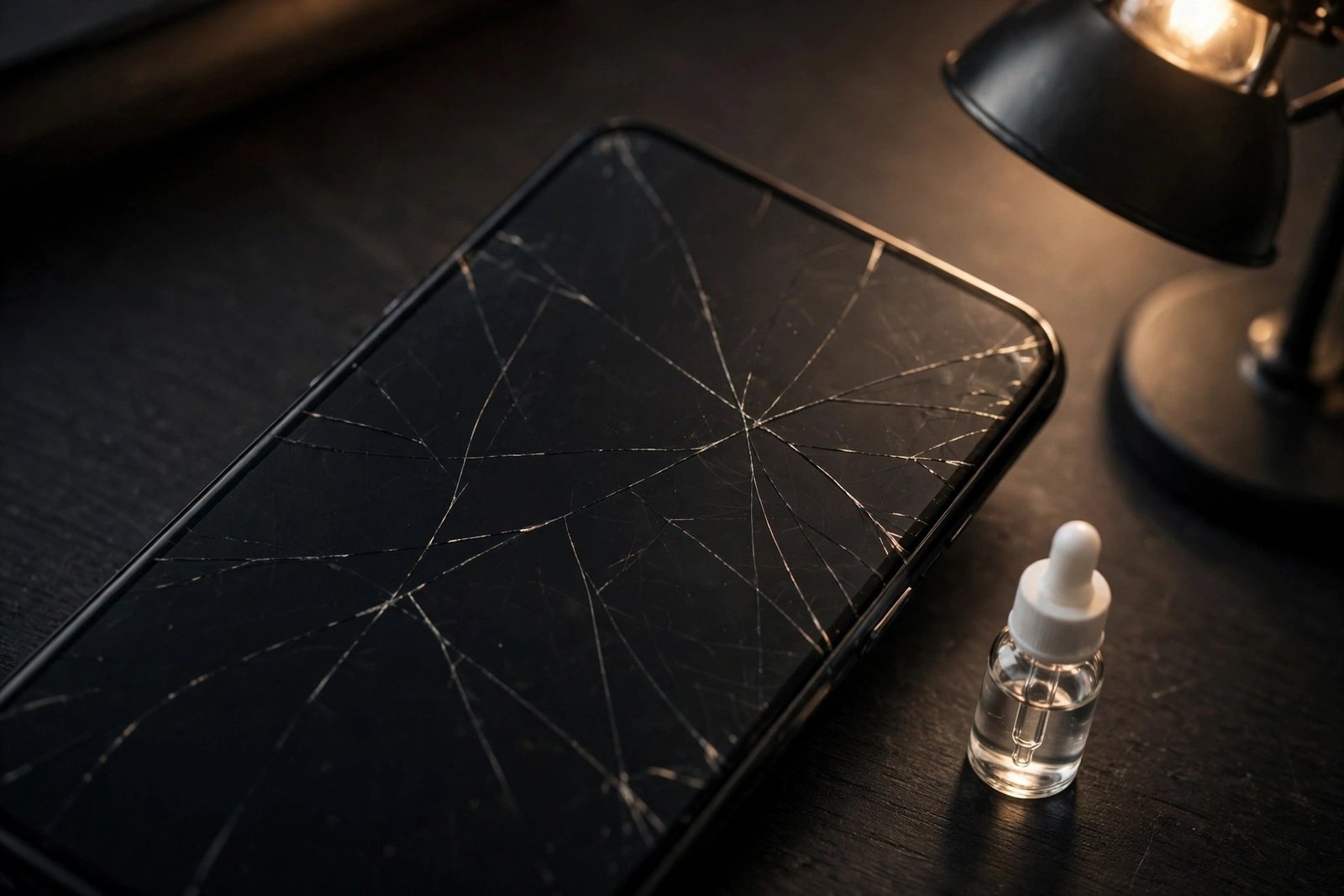
That cracked appearance is real, though; you are not imagining it. It is usually one of two things: the coating itself has worn, crazed or separated in a fine web pattern, or — more seriously — the actual screen glass underneath has cracked, which a nano-coating was never able to prevent. This guide shows you how to tell the difference, what can genuinely be done in each case, and why trying to strip the coating off is rarely the answer.
Key Takeaways
- A liquid glass protector is a nano-coating, not a physical layer — it cannot crack, peel or be lifted off like tempered glass.
- A “cracked” look usually means the coating has crazed or worn unevenly, or the real screen glass beneath it is cracked.
- The fingernail test is the quickest check: a crack you can feel catching your nail is in the glass, not the coating.
- Coatings wear away on their own over months of use. There is no safe household method to strip one instantly, and abrasive attempts risk damaging the screen.
- If the coating is merely crazed, options include reapplying a fresh coating or fitting a tempered glass protector over the top.
- If the screen itself is cracked, the only true fix is a screen repair — check your warranty or insurance terms first.
Why a Nano-Coating Can’t Crack
Liquid glass products are typically silicon dioxide suspended in a solvent. You wipe them on, the solvent evaporates, and the coating bonds to the microscopic texture of your screen, filling tiny pores and adding a very thin hardened surface. The finished layer is thousands of times thinner than a tempered glass protector. Cracking is something rigid, solid materials do when they are stressed beyond their strength — a film a few nanometres thick has no structure to fracture.
What a coating can do is wear. High-friction areas — where your thumb swipes, where the phone slides in and out of a case or pocket — lose coating first. The boundary between coated and worn areas can catch the light in fine, irregular lines that look remarkably like crazing or hairline cracks, especially under bright light at an angle. It is unsightly, but it is a surface-finish problem, not structural damage.
How to Tell Coating Wear From a Cracked Screen
Start with the fingernail test: run a fingernail very lightly across the lines. If your nail catches in them, there is a physical groove — that is a crack in the glass. If the surface feels perfectly smooth and the lines are only visible at certain angles, you are looking at coating wear. Next, look at the pattern. Glass cracks usually radiate from an impact point — a corner, an edge, a spot where the phone landed — and often keep spreading slowly. Coating wear follows your usage: a thumb-shaped zone, swipe arcs, a patch where a case lip rubs.
Finally, check function. Dead or erratic touch response along the lines, ink-like bleeding or discoloured patches in the display, or lines visible when the screen is off and sharply defined from every angle all point to real glass or display damage. Pure coating wear never affects touch and seems to shift or vanish as you tilt the phone under light.
- Photograph the marks with the screen off, under a lamp, then again in a day or two. Glass cracks grow; coating wear doesn’t. If the lines have spread or new branches have appeared, treat it as a cracked screen and get it assessed.
Your Realistic Options
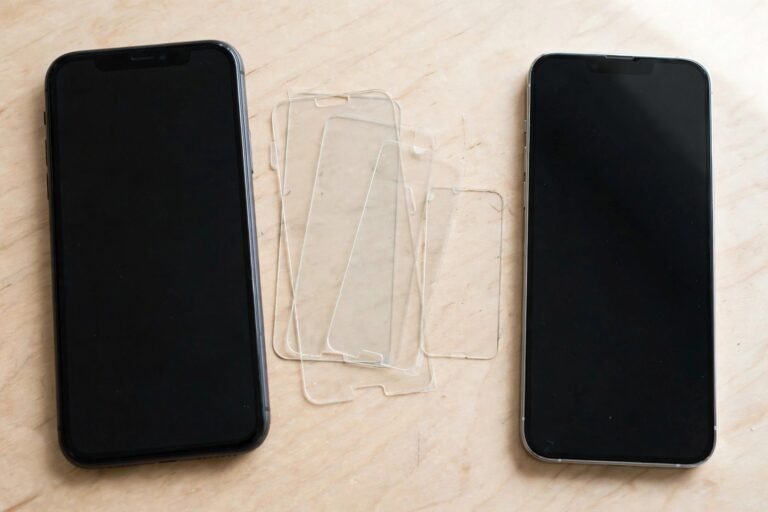
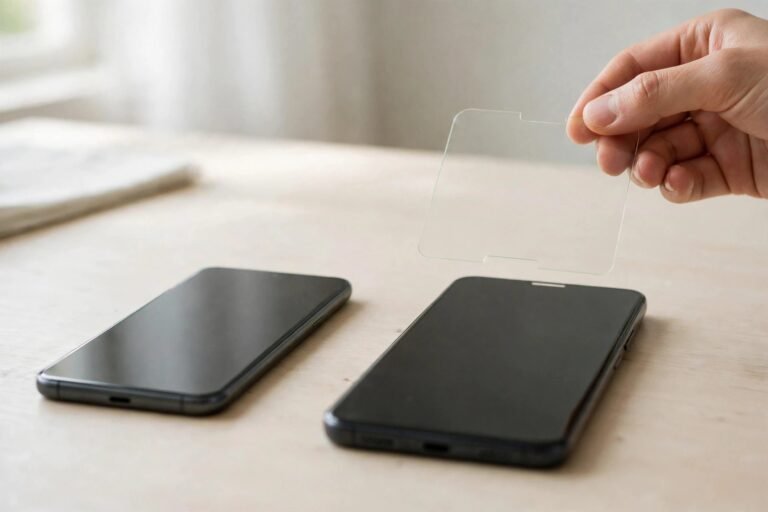
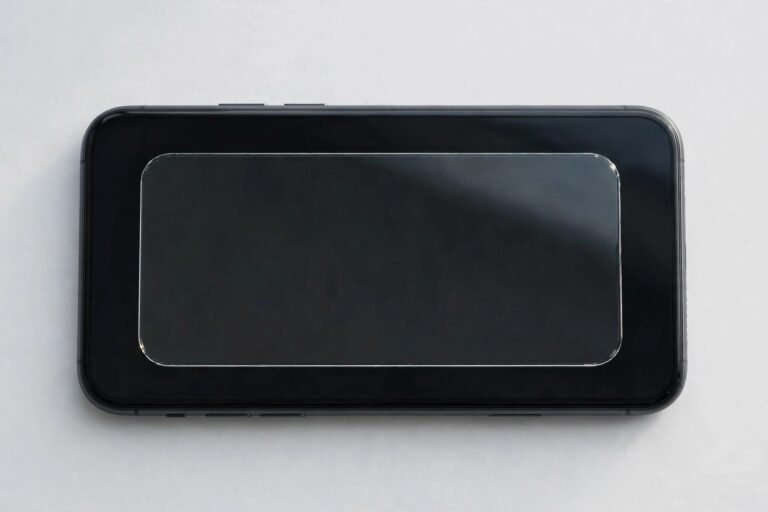
If it is coating wear, you have three sensible paths. First, do nothing dramatic: the remaining coating will continue to wear away naturally over the following months, and the pattern fades as it evens out. Second, reapply a fresh liquid coating following the product’s instructions — a new layer can visually even out a crazed finish, though it will not repair anything beneath it. Third, fit a tempered glass protector over the top. Its adhesive tends to fill and hide fine surface irregularities, and it gives you the real, replaceable protection the coating never could.
If it is a cracked screen, no coating, polish or home remedy will fix it — the repair is a screen replacement by the manufacturer or a reputable repairer. Check current warranty and insurance terms before paying, and back up the phone first, since cracks can spread and touch can fail suddenly. As a stopgap, a tempered glass protector over a cracked screen can hold loose fragments in place and keep the surface usable and safer to touch while you arrange the repair.
- Resist the internet’s removal hacks. Polishing compounds, toothpaste and abrasive pastes do not selectively remove a nano-coating — they attack the screen’s own oleophobic layer and can cloud the glass, turning a minor cosmetic issue into permanent damage.
Frequently Asked Questions
Can a liquid glass coating be removed at all?
Not peeled or lifted off — there is no layer thick enough to grip. In practice, coatings are removed by time and friction: they wear away gradually with everyday use over a period of months. Some manufacturers describe the coating as effectively gone once it has worn through; check the specific product’s current guidance rather than attempting chemical or abrasive stripping, which risks the screen itself.
My screen cracked even though I applied liquid glass. Was the product faulty?
Not necessarily. A nano-coating can add a little surface hardness and scratch resistance, but it provides very limited impact protection — it was never a substitute for a physical glass layer. A drop that cracks a bare screen will usually crack a coated one too. Some products bundle a limited screen-repair guarantee; if yours did, check the current terms and whether you registered within the required window.
Will fitting tempered glass over a crazed coating work?
Generally yes. Clean the screen thoroughly first, and the tempered glass adhesive will bond over the worn coating in most cases, visually hiding the crazed pattern. If adhesion looks patchy, the coating may be interfering — in that case, let the coating wear further or have the screen professionally cleaned before fitting. Never fit glass over a genuinely cracked screen as a permanent fix; treat that as a stopgap only.
You cannot remove a crack from something that cannot crack. Diagnose first — worn coating is cosmetic and manageable, a cracked screen is a repair — and the right path becomes obvious.