Screen protectors feel disposable, but they are not always single-use. If you have peeled one off to change a case, fix a crooked install, or check the screen underneath, it is natural to ask whether it can go back on. Sometimes it can — tempered glass especially can survive a careful removal and a successful refit.
Reuse is a procedure, not a shortcut. Success depends on how it came off, how its sticky side was treated while off the phone, and how honestly you judge its condition before refitting it. This guide walks through removing, washing, storing and refitting a protector — plus the limits beyond which a fresh one is the only sensible answer.
Key Takeaways
- Tempered glass reuses best — its rigid sheet keeps the adhesive layer even, while film usually stretches or creases during removal.
- The sticky side is sacred: never let it touch fingers, fabric, paper or a dusty surface while the protector is off.
- Rinsing the adhesive with clean lukewarm water and air-drying washes away dust and restores its grip.
- Store a removed protector sticky-side against its original backing film or a clean sheet of plastic, sealed away from dust.
- Every refit is weaker than the last — expect edges to lift sooner, and treat a reused protector as a stopgap.
- A cracked or chipped protector can never be reused; it has already done its job.
When Reuse Works — and When It Doesn’t
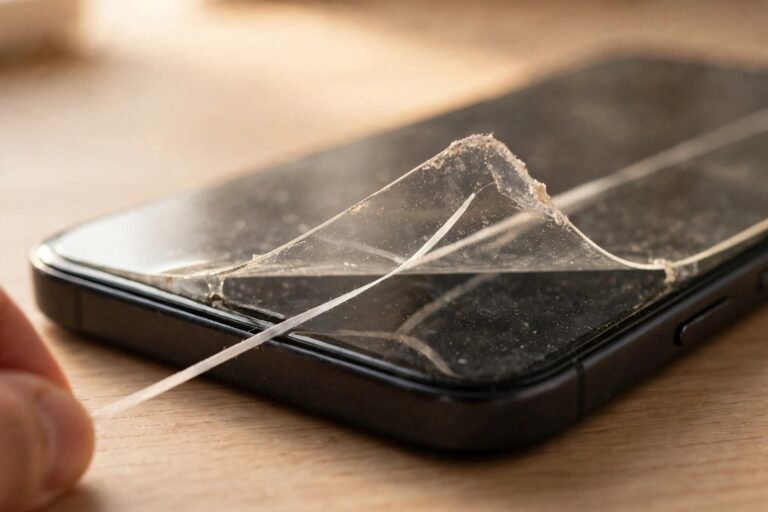
The best candidates for reuse are glass protectors that came off recently, in one clean piece, with intact edges and an adhesive side that still feels tacky and looks clear. A protector you lifted ten minutes ago to fix its alignment is ideal. A protector that has been carried loose in a bag, left sticky-side-up on a desk overnight, or peeled off after a year on a phone is not — its adhesive will be contaminated or dried out.
Film protectors rarely survive the process: peeling almost always stretches the flexible material slightly, and a stretched film will never sit flat again — it ripples, lifts at the corners and traps air in lines that no pressing will shift. If the protector you removed is film, plan on replacing it.
Step 1: Remove It Without Ruining It
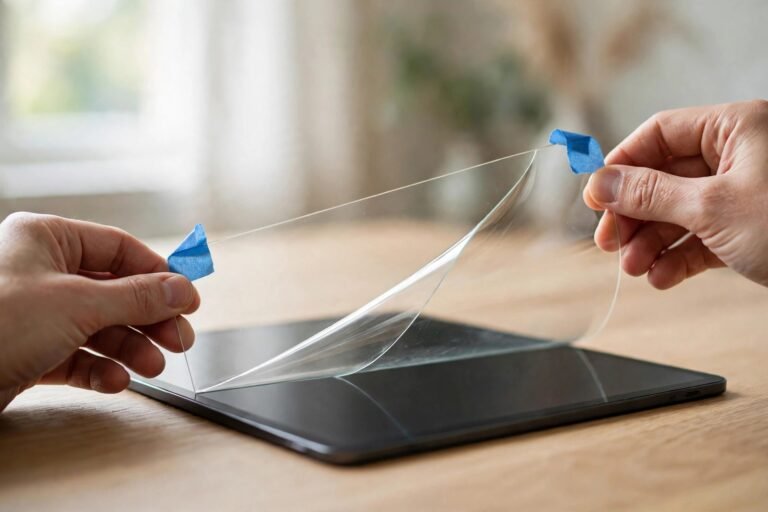
How a protector comes off decides whether it can go back on. Work a fingernail or a tab of sticky tape under one corner and peel slowly, at a low angle, keeping steady tension rather than tugging. Never lever it up with anything metal, and never bend it to speed things along: flexing tempered glass can crack the sheet, and bending any protector creases the adhesive layer into lines that show forever after refitting.
Work over a clean table, and hold the freed protector by its edges with the sticky side facing up. Decide straight away whether you are refitting it now, washing it, or storing it — one left lying around “for a minute” collects the dust that kills reuse.
Step 2: Wash the Adhesive Side
If the sticky side has picked up dust, lint or fingerprints, rinsing is the fix. Hold the protector sticky-side up under lukewarm running water and let the water carry the debris away, helping with one clean, wet fingertip if needed. If the adhesive feels greasy, a single drop of mild washing-up liquid worked gently across the surface and then rinsed thoroughly will shift it.
Then shake off the excess water and let the protector air-dry, sticky side up — never wipe it dry, because any cloth or towel will coat it in fibres instantly. Once it has dried, inspect it against the light and dab any stubborn specks off with a dust-removal sticker. As it dries, the adhesive’s tack returns, and washed glass often grips nearly as well as new.
- Let the washed protector dry in a steamy bathroom — humid air means airborne dust is far less likely to settle on the wet adhesive while it dries.
- Inspect the sticky side against a bright light at a shallow angle before refitting; every speck you miss now becomes a permanent bubble later.
Step 3: Store It Properly While It’s Off
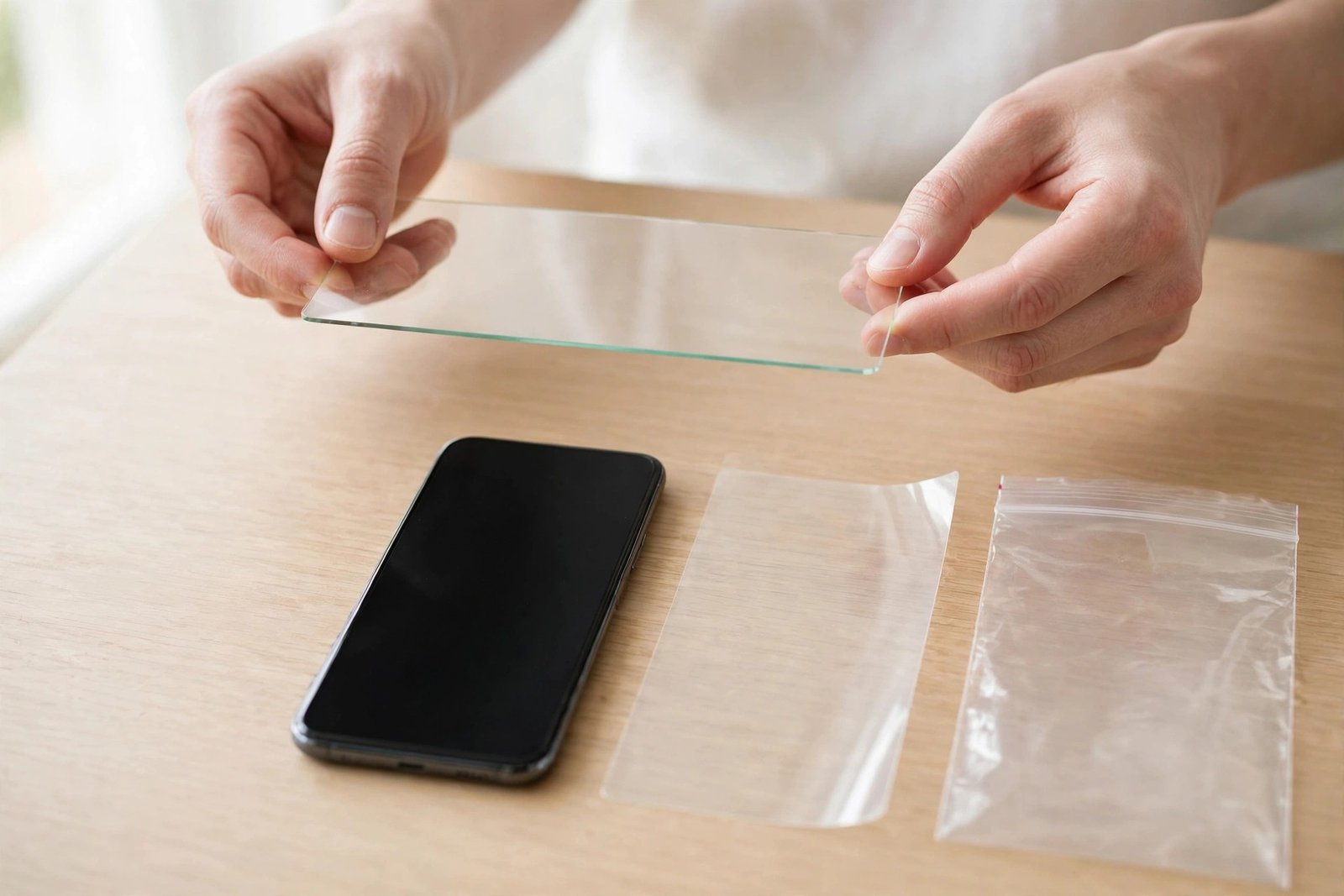
If the protector is not going straight back on, its sticky side needs a safe home. The best option is the original backing film it was peeled from when new — which is why that film is worth keeping. Press the protector onto it, sticky side down, and the adhesive stays clean and evenly supported.
No backing film? Lay the protector sticky-side against any clean, smooth sheet of plastic and slip the whole thing into a fresh resealable bag. Never use paper, card or tissue as the backing — their fibres transfer straight onto the adhesive. Add a small tape tab to the outer face marking the top edge, so you refit it the same way round.
Step 4: Reapply It Like a New One
Refitting uses exactly the same routine as a fresh install: steam the bathroom, clean the phone screen with the wet wipe, dry cloth and dust sticker, then align the protector, drop it on and press the centre to let the adhesive spread. Take the alignment seriously even though the protector is old — a crooked refit cannot be slid straight, only lifted and restarted.
Expect the adhesive to spread more slowly than when new, and give it a full day before judging small bubbles. If the edges still lift after 24 hours, the adhesive is spent — no pressing will revive it.
- Reuse works well as a temporary fix after a case swap, but order the fresh protector the same day — a reused one rarely has much life left in it.
- Never refit a protector over a dusty screen to save time: grit trapped under weakened adhesive is exactly how screens get scratched by the thing meant to protect them.
The Honest Limits of Reuse
Every removal stretches and contaminates the adhesive a little, and the bond weakens each time. A reused protector that no longer sits flat is worse than it looks: dust creeps in through the lifted edges, collects under the glass, and can scratch the screen it should be protecting. As a rule of thumb, one careful reuse of good tempered glass is reasonable — beyond that, or the moment it stops lying flat, replace it.
Frequently Asked Questions
How many times can I reuse a screen protector?
Realistically, once — and only for tempered glass that came off cleanly and was stored properly. Film protectors seldom survive even a single refit without creases or stretched corners. Judge by condition, not count: if the adhesive still feels tacky and the sheet lies flat, a refit is worth trying.
Can I reuse a cracked screen protector?
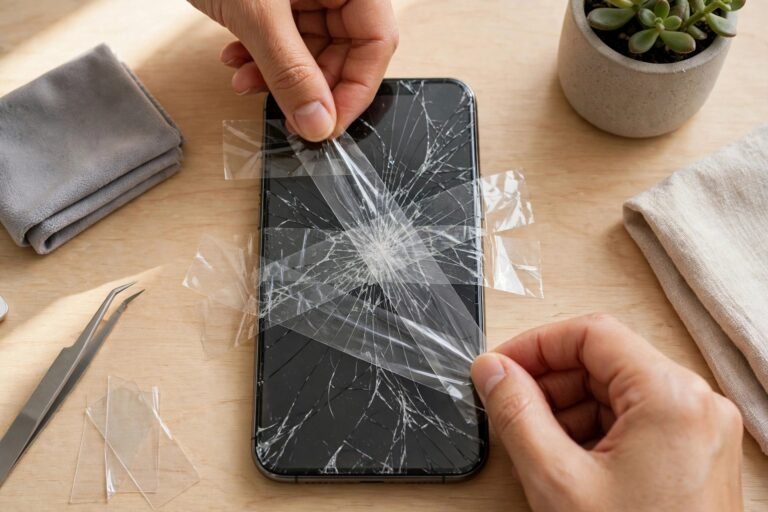
No. A crack means the glass has already fractured doing its job. The sheet is structurally weakened, its edges can be sharp, and it will not absorb another impact properly. Remove it — taped over first if it is heavily shattered — and fit a fresh protector instead.
Why won’t my protector stick after washing it?
Three causes cover most cases: the adhesive was still damp when you refitted it (give it longer to air-dry); soap residue was left behind (rinse again with plain water); or the adhesive is simply worn out. If a clean, fully dry protector still won’t grip, it is finished.
A carefully removed glass protector can earn a second life — wash it, store it face-safe, and refit it with modest expectations. When it stops lying flat, thank it for its service and fit a fresh one.