Modern screen protectors are designed to disappear. The best glass sits so flush, and the best film is so clear, that many people genuinely cannot tell whether a phone has a protector fitted at all. That uncertainty matters more than you might think — you could be relying on protection that is not there, or trying to fit a new protector on top of an old one.
Fortunately, a protector always leaves clues. Its edges, cut-outs and behaviour under light differ subtly from a bare screen, and once you know where to look, the answer usually takes less than a minute to find. Work through the checks below, from the least to the most hands-on.
Key Takeaways
- Look for a faint outline around the screen’s edge — a protector’s border catches light differently from the glass beneath.
- Run a fingernail to the edge: a tiny ridge or step usually means a protector is fitted.
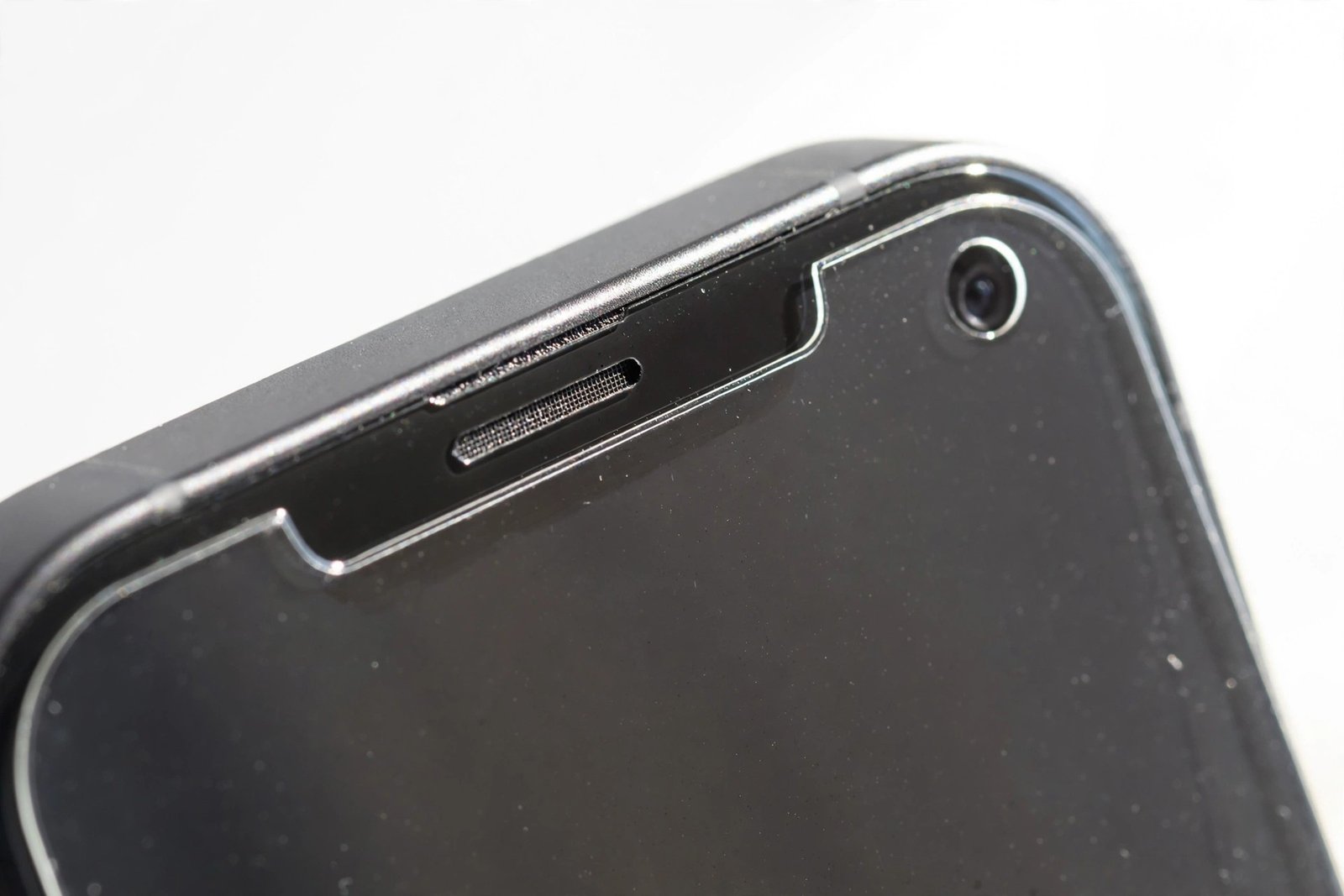
- Check the speaker and camera areas for cut-outs, rings or an extra layer line.
- Film is near-invisible and flush; glass is clearer to feel because it has real thickness.
- Scratches that stop at a border are on the protector, not the screen — good news if you find them.
- When in doubt, remove the case first — case lips hide protector edges completely.
Start With the Edges
Take the phone out of its case and hold it under a good light, tilting it slowly. A protector creates a second, faint outline just inside the screen’s border. On many phones the protector is deliberately cut slightly smaller than the glass, so look for a neat rectangular line a millimetre or two in from the edge, following the screen’s shape all the way round.
Reflections help here. Move the phone so light sweeps across the surface: a protector’s edge often flashes as a thin bright line, and the surface may reflect very slightly differently inside and outside the border. Glass protectors show this most clearly because their polished edges catch the light; film edges are subtler but still visible at the right angle.
- View the screen against a dark background with the display off — protector edges and cut-outs show up far more clearly than on a lit screen.
- Compare corners: manufacturers round a protector’s corners slightly differently from the phone’s glass, and a mismatch is easy to spot.
The Fingernail Ridge Test
Your fingernail is the most reliable tool you own for this job. Slide it gently across the screen towards the edge, or from the edge inwards. If a protector is fitted, your nail will catch on a tiny ridge — the step between the protector’s surface and the phone’s glass or frame. The ridge is small, but once felt it is unmistakable.
Try the test at several points: near a corner, along the bottom edge, and around the front camera or speaker. On phones with strongly curved screens, a film protector may wrap over the curve and the ridge can be harder to find, while a glass protector usually stops before the curve, making its edge easier to catch. Be gentle — you are feeling for a step, not trying to lift anything.
Inspect the Speaker, Camera and Buttons
Protectors must work around the phone’s features, and those workarounds leave evidence. Look closely at the earpiece speaker, front camera and any sensors: you may see a notch, a U-shaped cut-out, a circular ring around the camera lens, or a faint line where the protector’s material stops around the feature. A bare screen has none of these borders — the glass simply continues.
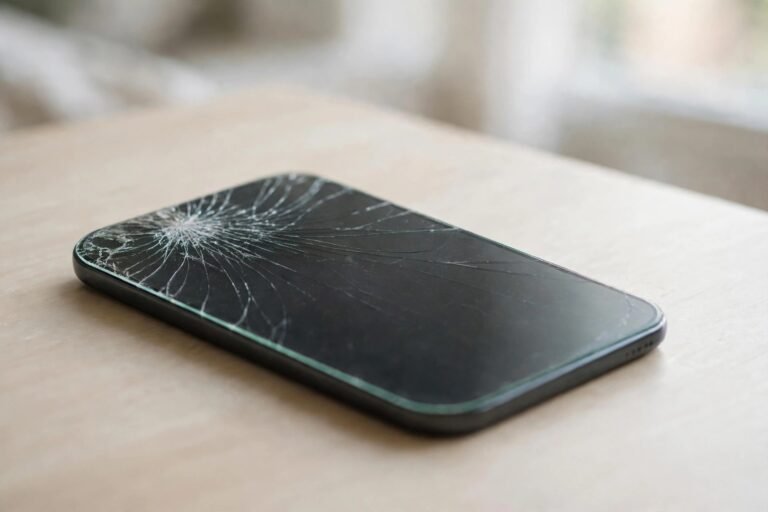
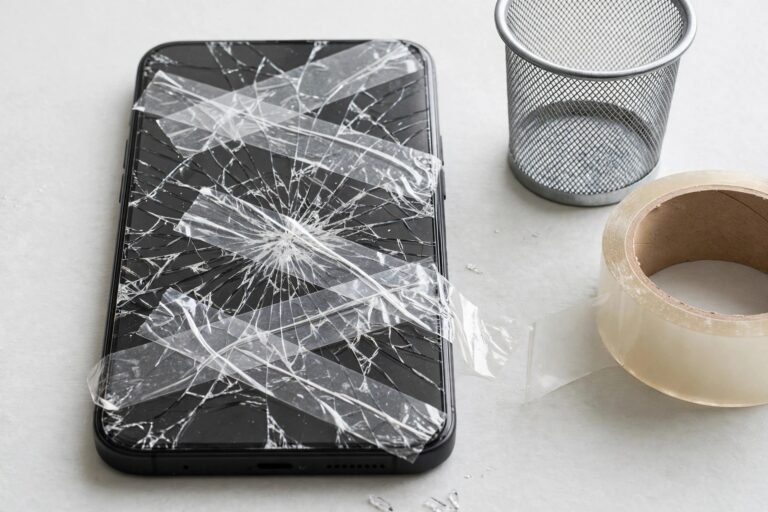
Also check the home button area on older phones, or the fingerprint sensor zone. A circular or oval outline there often reveals a protector. Finally, examine any scratches or chips: damage that ends abruptly at a clean line, or a cracked layer that seems to sit above an intact surface, strongly suggests the protector took the hit and the screen beneath may be fine.
- A magnifier app or a macro photo from another phone makes hairline edges and cut-out rings much easier to confirm.
- If the phone came from a previous owner or a refurbisher, assume nothing — some sellers fit protectors without mentioning them, and some remove them without saying so.
Film Versus Glass: Adjust Your Expectations
If your checks find only the faintest traces — no ridge, no visible step, just a hairline border — you are probably dealing with film. Film protectors are extremely thin and sit almost flush, so they can hide even from a careful inspection, especially matte or edge-to-edge designs. Glass, by contrast, has genuine thickness: a detectable edge, a cooler and harder feel, and a crisper tap sound when you flick it with a fingernail.
Still unsure? The honest answer is that a perfectly fitted film can be genuinely hard to prove without lifting a corner — and lifting a corner to check will usually ruin the fit. If it matters, for example before fitting a new protector, have a repair shop confirm it, or simply treat the phone as protected and inspect again once wear marks appear.
Frequently Asked Questions
Can I check without removing my case?
Only partially. A case with a raised lip hides exactly the edges you need to inspect, so the fingernail test and border check are unreliable until the case comes off. Removing it takes seconds and makes every other check far more trustworthy.
The screen looks scratched — is it the protector or the glass?
Follow the scratch to its end. Marks that stop at a consistent border, or a crack pattern sitting visibly above a smooth surface, are almost always in the protector. If the marks run right to the phone’s frame with no border anywhere, they are more likely in the screen itself.
Do new phones come with a protector already fitted?
Some do and some do not — it varies by brand, model and region, and the thin plastic sheet used for shipping is sometimes mistaken for a protector. Use the edge and ridge checks on your specific phone rather than assuming either way from the brand alone.
A protector wants to be invisible, but it cannot hide from a fingernail, a tilted light and thirty seconds of attention — check before you buy a second one.