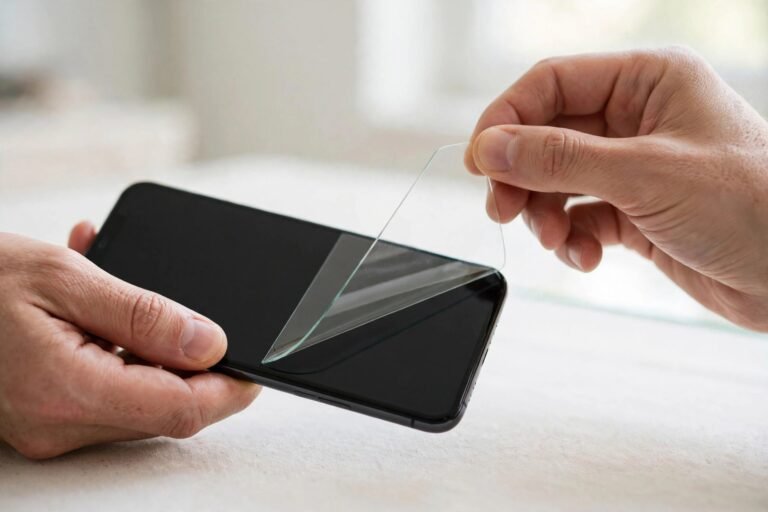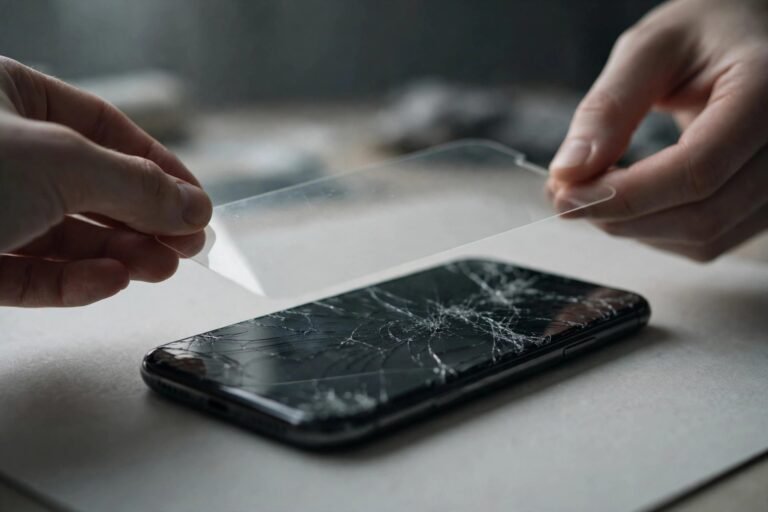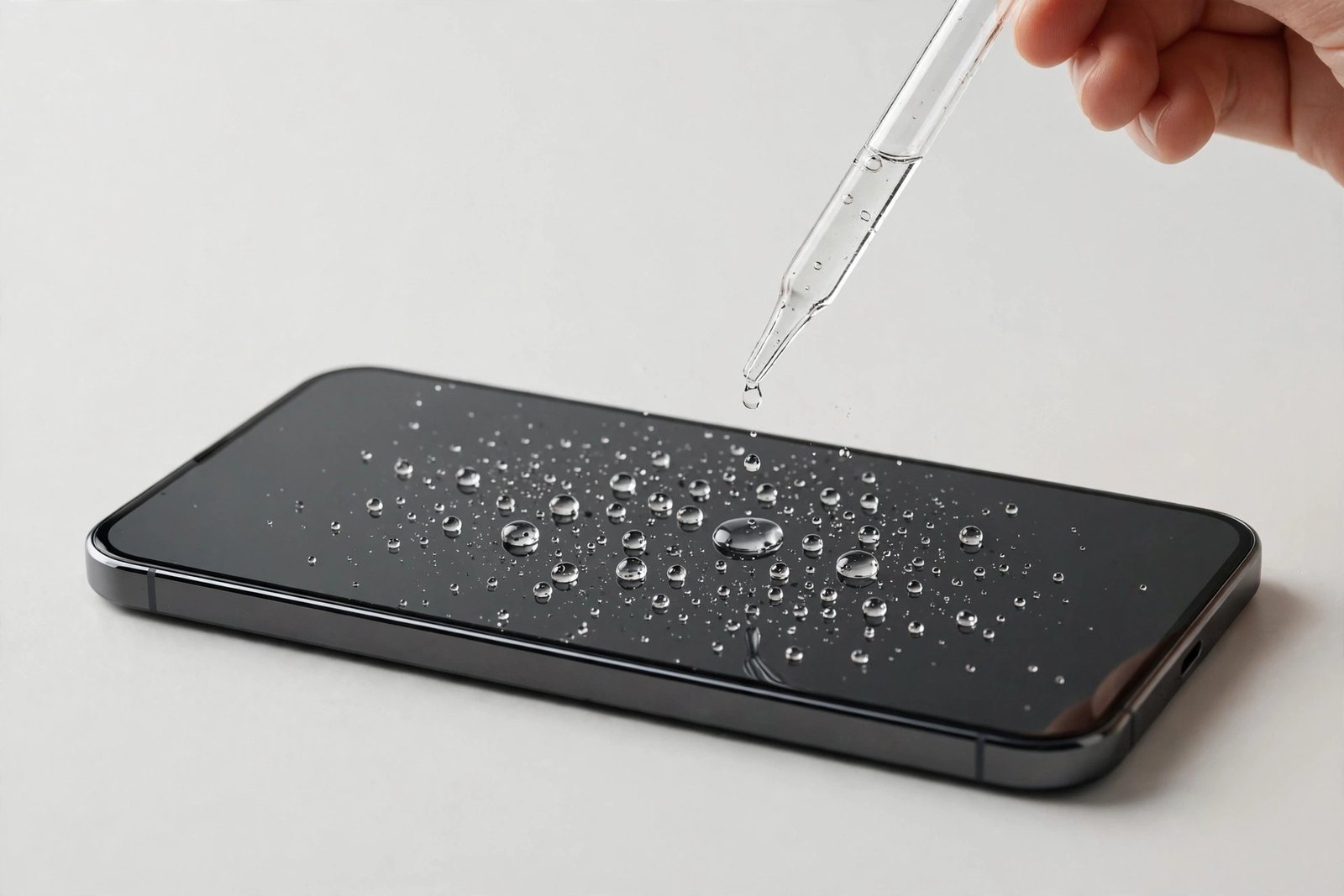
Liquid screen protectors promise the impossible: invisible, wipe-on protection with no glass to align, no bubbles, and no edges to lift. A few drops of nano-coating, buffed onto your display, supposedly hardens it against scratches — and some brands even claim drop protection. It sounds like magic, which is usually a sign to look closer.
This is an honest assessment of what liquid glass protectors actually are, what the coating can and cannot do, how they compare with tempered glass, and who — if anyone — should buy one.
Key Takeaways
- Liquid protectors are silicon-dioxide nano-coatings wiped onto the display — they add scratch resistance and an oleophobic-like feel, not a physical barrier.
- They offer no meaningful drop or shatter protection — there is no sacrificial layer to absorb impact energy.
- The coating wears off over weeks to months with normal use and needs reapplication; durability claims are routinely overstated.
- They are genuinely useful in niche cases: curved displays that glass cannot cover, and devices where any added thickness is unwanted.
- For standard flat-display phones, tempered glass protects better in every way that matters and costs less per year of protection.
What a Liquid Protector Actually Is
Despite the “glass” branding, there is no glass involved. Liquid protectors are typically silicon dioxide (SiO2) suspended in a solvent: you wipe the liquid onto the display, the solvent evaporates, and a microscopically thin layer of hardened material bonds to the screen. We are talking nanometres thick — thousands of times thinner than a sheet of tempered glass.
That thinness is both the selling point and the limitation. Because the layer is measured in molecules rather than millimetres, it adds no bulk, works on any screen shape including curved edges, and cannot trap bubbles or misalign. But it also cannot do the one thing that makes tempered glass effective in drops: there is no material there to crack sacrificially and absorb energy.
What It Can Do: Scratch Resistance
The legitimate benefit is improved scratch resistance. The SiO2 layer is harder than the bare display surface, so it genuinely helps against the light micro-scratches from dust, grit, and daily handling. Many users also report the screen feels smoother and picks up fewer fingerprints for a while — the coating behaves somewhat like a fresh oleophobic layer.
How much harder? Manufacturers love quoting “9H hardness” for liquid coatings, but that rating comes from tests on the cured material in ideal conditions — not from a nanometre film on your phone being keyed in a pocket. In real-world use, the improvement is modest: better than nothing, nowhere near a sheet of tempered glass.
- Judge liquid protectors on scratch claims only. Any brand promising “military-grade drop protection” or “shatter-proofing” from a wipe-on coating is selling fantasy — there is physically nothing there to absorb an impact.
What It Cannot Do: Drops, Cracks, and Shattering
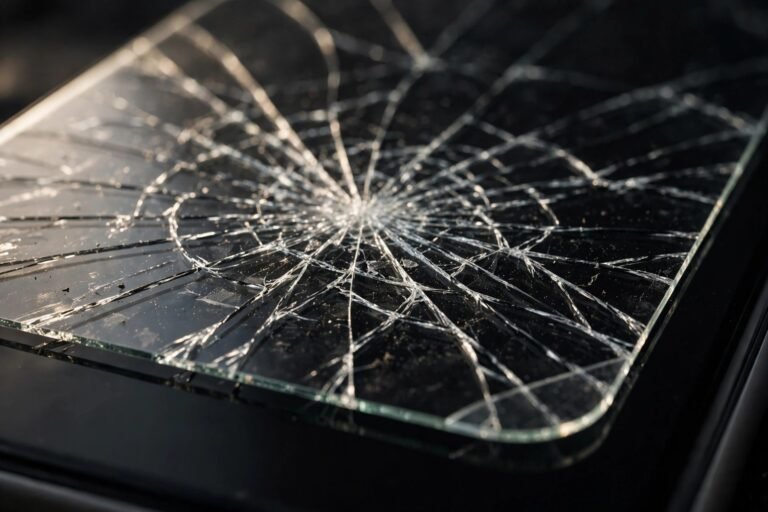
This is the critical gap. When a phone hits concrete face-down, survival depends on a sacrificial layer cracking to dissipate energy — and a nano-coating has no bulk to sacrifice. Independent testing and teardown analysis consistently show liquid protectors provide essentially zero additional drop protection over a bare display. If drop protection is your priority, this is the wrong product category entirely.
Worse, the invisibility that makes liquid coatings appealing removes a useful signal: with tempered glass, a cracked protector tells you to replace it. With a liquid coating, you have no idea when the protection has worn away — and it does wear away, steadily, from the day you apply it.
The Durability Problem
Friction is the enemy of nano-coatings. Every swipe, every pocket insertion, every cleaning cloth abrades the layer microscopically. Most coatings degrade noticeably within weeks to a few months of normal use — a far cry from the “years of protection” some packaging claims. Reapplication is possible but means buying the product repeatedly, which quickly erodes the cost advantage over a multi-pack of tempered glass.
There is also a warranty wrinkle worth knowing: some liquid protector brands bundle “screen repair warranties” with registration. Read the terms carefully — they typically cover a limited payout with deductibles and exclusions, and claiming can be a bureaucratic ordeal. Do not value the warranty at face value when comparing prices.
Where Liquid Protectors Make Sense
They are not useless — just narrow. Liquid coatings are a reasonable choice for curved displays where rigid glass cannot follow the edges and film protectors annoy you; for devices where any added thickness matters, like some smartwatches or underneath tight-fitting cases; and for people who simply hate the look and feel of a protector and want something rather than nothing. In those niches, the convenience is real.
- The best use of a liquid coating is as a supplement, not a replacement: some users apply it to a phone already wearing tempered glass for extra slickness. But on its own, on a flat-display phone, glass wins outright.
Frequently Asked Questions
Do liquid screen protectors really work?
For light scratch resistance, yes — modestly. For drop and shatter protection, no. They are a nano-coating, not a physical shield, so set expectations accordingly.
How long does a liquid screen protector last?
Typically weeks to a few months of normal use before friction wears the coating down. It degrades invisibly, so reapply on a schedule rather than waiting for a sign it has failed.
Is liquid or tempered glass better?
Tempered glass, for almost everyone. It offers real scratch and drop protection, lasts a year or more, visibly shows when it needs replacing, and costs less per year. Liquid coatings only win where glass physically cannot go — curved edges — or where zero bulk matters.
Liquid screen protectors are not a scam — but they are one of the most oversold products in phone accessories. A useful niche coating marketed as a glass replacement. Know which job you need done, and buy accordingly.