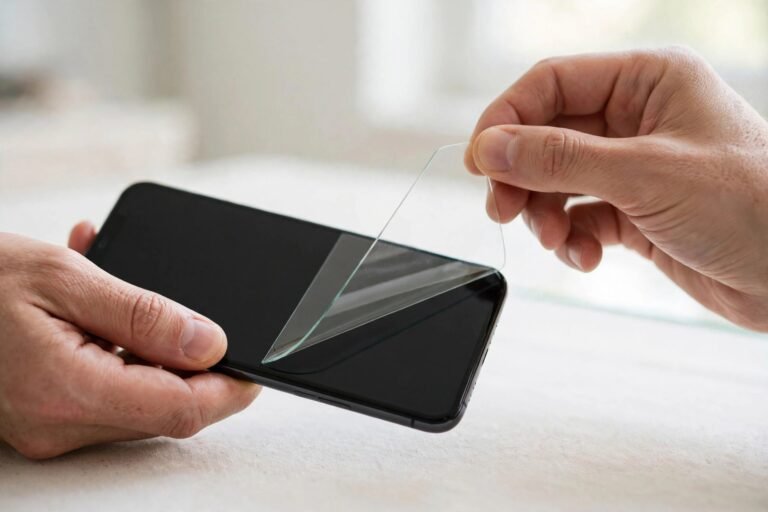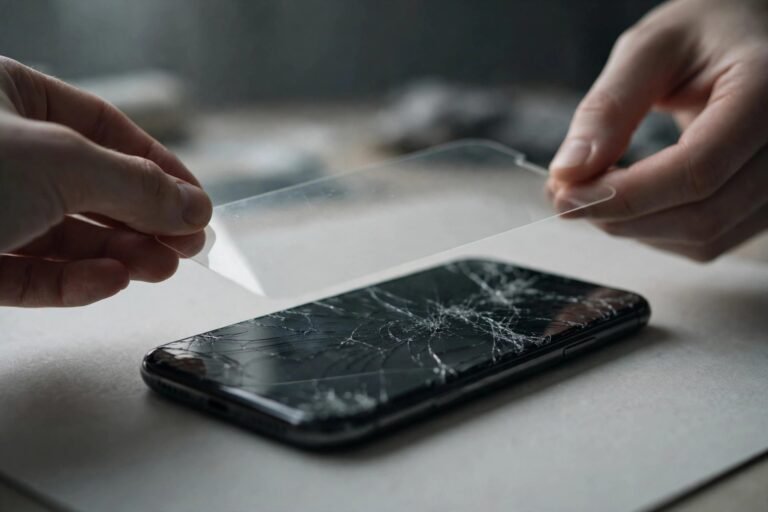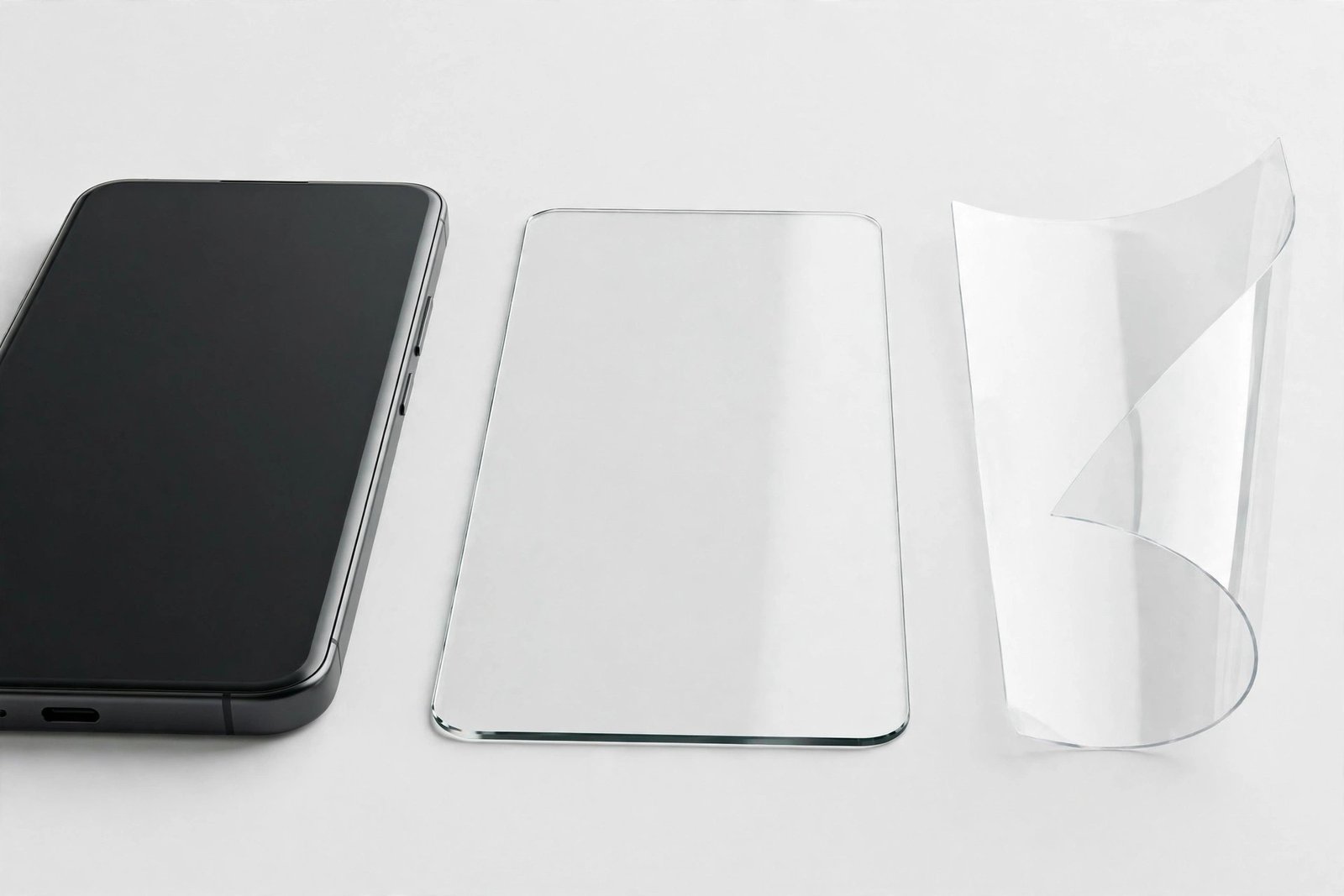
Pick up a screen protector in any shop and you will face the same fork in the road: a rigid sheet of tempered glass, or a thin, flexible plastic film made from PET or TPU. Both promise to protect your display, both cost less than a screen repair, and both have loyal fans who swear the other option is a waste of money. So which one is actually better?
The honest answer is that glass wins on most measures that matter — but not all of them, and not for every phone or every owner. This guide compares the two materials across protection, feel, clarity, price, and longevity, then matches each one to the people it suits best.
Key Takeaways
- Tempered glass offers far better impact protection — it is designed to crack so your display does not.
- Plastic film (PET or TPU) guards against scratches only; it does almost nothing in a drop.
- Glass feels like your real screen; film feels slightly soft and draggy, though TPU is better than PET.
- Glass costs more upfront but usually lasts longer; film is cheap but needs replacing more often.
- Film still has real niches: curved-edge displays, folding phones, and anyone who hates the weight and thickness of glass.
Protection: The Biggest Difference
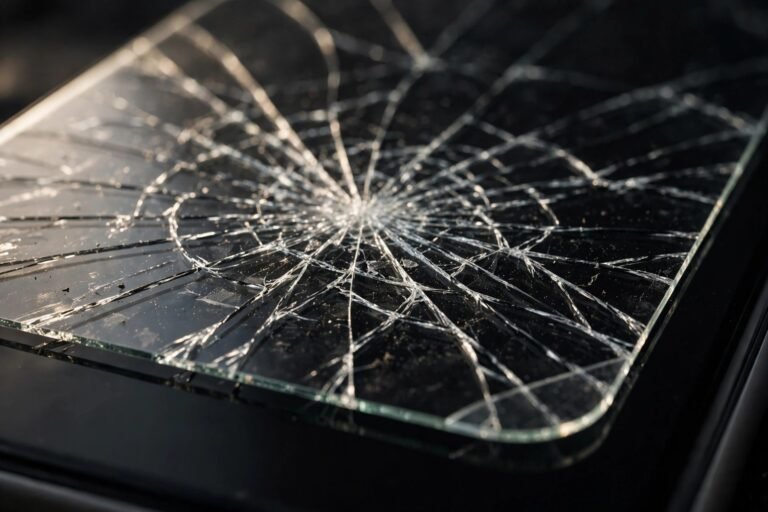
This is where the two materials stop being close. Tempered glass is a sacrificial layer in the truest sense: when your phone lands face-down, the glass protector absorbs and spreads the impact energy, fracturing itself to dissipate force that would otherwise reach the display. It does not guarantee your screen survives — nothing does — but it meaningfully improves the odds, and its stiffness also resists keys, coins, and grit.
Plastic film, whether PET or TPU, is only a fraction of a millimetre thick and has no meaningful impact absorption. What it does well is scratch defence: sharp objects slide across the film instead of engraving your display. If your main fear is pocket scratches rather than drops, film does that job perfectly well. If your main fear is a fall onto concrete, film is close to no protection at all.
Feel and Clarity
Glass feels like the screen itself, because it essentially is the same material: hard, smooth, with an oleophobic coating that lets your finger glide and sheds fingerprints much like bare display glass. Plastic film feels different under the thumb — PET has a faintly tacky drag, and TPU has a soft, almost rubbery give. Some people never notice; heavy typists and gamers often do within a day.
On clarity, good glass is nearly invisible, transmitting light with minimal distortion. Clear PET film is also very transparent when new, though it picks up fine scratches quickly that haze the view. TPU film can show a slight orange-peel texture under close inspection, and matte versions of any material deliberately trade clarity for glare reduction. For colour-critical work or simply enjoying a flagship display at its best, glass is the cleaner window.
- Judge a film protector after a week, not on day one. PET and TPU both feel acceptable fresh from the packet — the difference shows once micro-scratches and edge wear set in.
Price and Longevity
Plastic film is cheaper per pack, sometimes dramatically so, and multi-packs make each replacement feel almost free. Glass costs more per piece, though quality glass has become inexpensive enough that the gap is narrower than it used to be. The real comparison is cost over time: a single glass protector commonly lasts until it cracks in a drop — months or longer — while film tends to look tired, lift at the edges, or accumulate scratches within a few months of daily use.
There is also a hidden cost to film: installation effort. Film is flexible and unforgiving to fit, showing bubbles and dust specks far more readily than rigid glass. TPU “wet install” films self-heal tiny scratches and settle down over a day or two, but they demand patience. Glass, especially with an alignment frame, is the quicker, cleaner fit for most people.
Where Plastic Still Wins
Glass has one genuine weakness: it is rigid, and rigid layers struggle with sharply curved display edges. On phones whose screens wrap significantly, glass protectors either stop short of the curve or lift along it. Flexible film follows the curve and stays put, which is why film remains the default recommendation for some curved-screen models.
Folding phones are the other stronghold. Their delicate inner displays cannot take rigid glass at all, and they ship with factory-fitted film for a reason. Film is also the lighter, thinner choice for anyone who finds glass protectors add a perceptible step at the edge of the screen, and for in-display fingerprint sensors that occasionally struggle through thicker glass.
- Never peel the factory film off a folding phone’s inner display to “upgrade” it to glass. That film is part of the screen assembly’s design, and removing it can damage the display.
The Verdict by Use Case
For most phones and most people, tempered glass is the better protector: stronger in a drop, better feeling, clearer, and longer lasting. Choose film if your display is strongly curved or folding, if you only worry about scratches and never drop your phone, or if you strongly prefer the thinnest possible layer. The wrong choice is not film or glass — it is assuming the cheap option protects like the strong one.
Frequently Asked Questions
Does plastic film protect against drops at all?
Effectively no. Film is a scratch barrier; it cannot absorb or spread impact energy the way a rigid glass layer does. If drop protection matters to you, glass (plus a decent case) is the meaningful upgrade.
Why does my glass protector crack so easily?
Because that is its job. The glass is engineered to fracture under impacts that might otherwise crack the display beneath. A cracked protector with an intact screen underneath is a success, not a defect — replace it and carry on.
Can I use film if my phone has an in-display fingerprint sensor?
Yes — film is thin enough that it rarely interferes with under-display fingerprint readers, and TPU film in particular is a common choice for sensor-heavy phones. Most modern glass protectors also work fine, but if your sensor is fussy, film is the safer bet.
Glass is the shield; film is the raincoat. Both keep something off your screen — just be honest with yourself about which weather your phone actually faces.