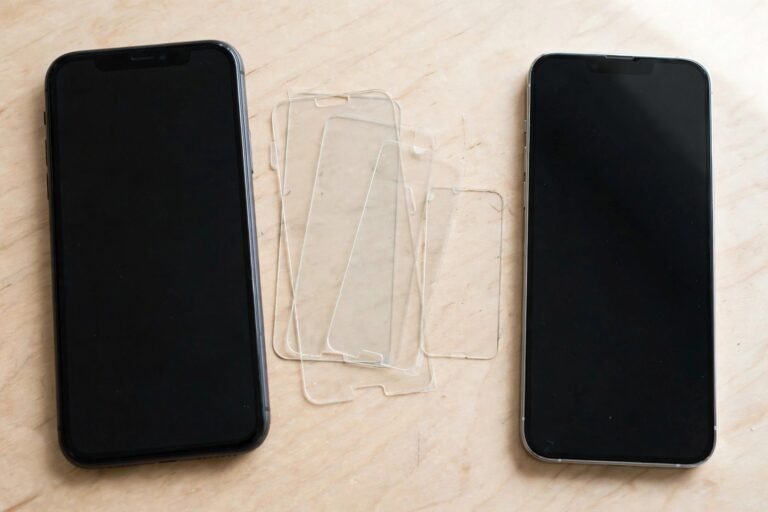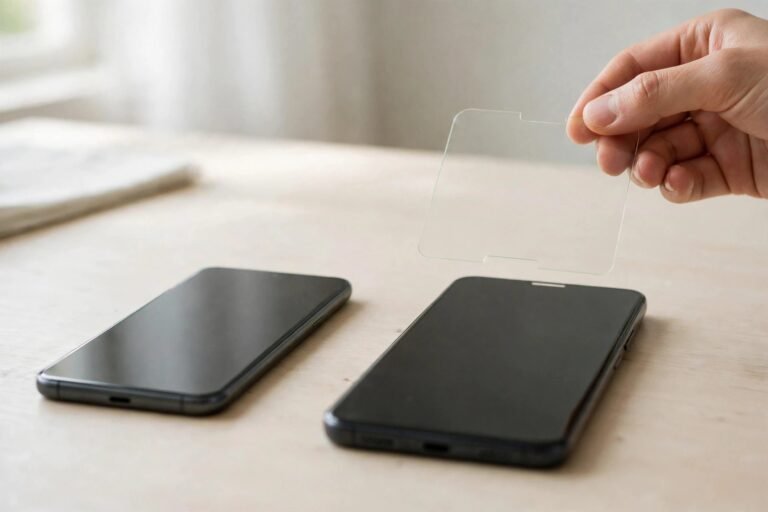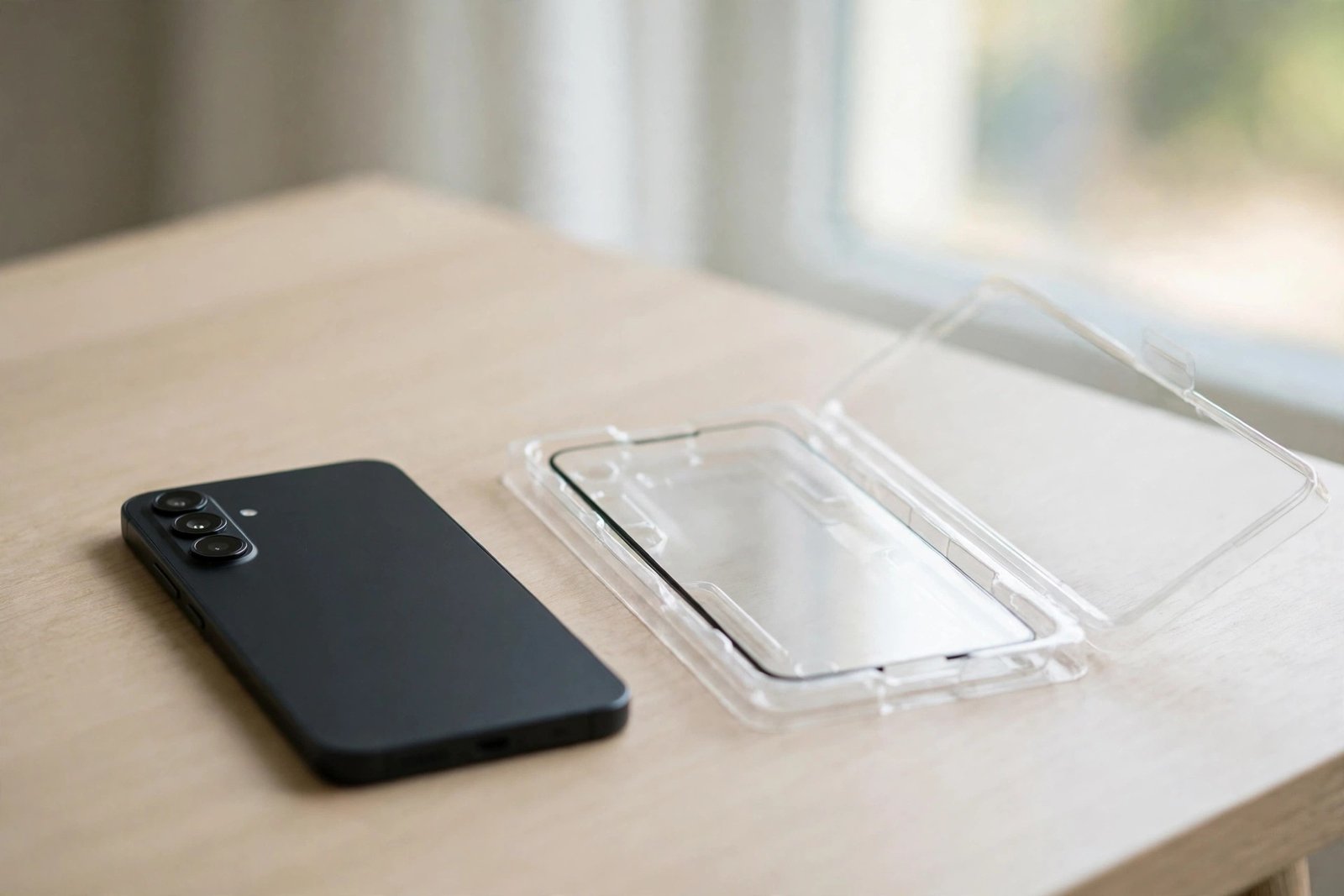
Every new phone prompts the same question: do you actually need a screen protector, or is it just an accessory shops push at the till? The honest answer is that it depends on how you use your phone, what it cost, and how much a cracked screen would bother you. Modern phone glass is tougher than it has ever been, but it is not indestructible — and it was never designed to be.
This guide walks through who genuinely benefits from a protector, who can reasonably skip one, and what today’s chemically strengthened glass can and cannot handle. By the end you should be able to decide for your own situation instead of relying on habit or a salesperson’s pitch.
Key Takeaways
- If you are drop-prone, work outdoors, or hand your phone to children, a protector is cheap insurance well worth having.
- Modern strengthened glass resists keys and coins well, but ordinary sand and grit in a pocket can still scratch it.
- A protector is sacrificial: it cracks so your screen doesn’t, and it costs a fraction of a screen repair to replace.
- Careful owners of budget phones who already use a good case can reasonably go without one.
- Planning to resell or trade in your phone? A protector keeps the screen mint, which protects its value.
- A protector helps with scratches and minor impacts, but no protector guarantees your screen survives a bad drop.
What Modern Phone Glass Actually Does
Most modern phones use chemically strengthened glass — Corning’s Gorilla Glass is the best-known example, though some brands use their own equivalents. Strengthening makes the surface harder and more resistant to the everyday abrasion of keys, coins and zips rattling around in a bag. On that front, the marketing is broadly fair: casual contact with smooth metal rarely leaves a mark.
The weakness is grit. Sand, gravel dust and the tiny mineral particles that collect in pockets and on work surfaces include materials harder than the glass itself, and those can cut fine scratches that catch the light. Strengthened glass is also engineered with a trade-off: hardness helps scratch resistance, but a hard, rigid surface can still shatter when a drop concentrates force on a corner or edge. Tougher does not mean unbreakable — it means the threshold moved, not that it vanished.
- The fastest reality check: look at your current phone’s screen under a bright light. If it is covered in fine scratches, your lifestyle scratches screens — a protector makes sense for you whatever the glass claims.
Who Genuinely Needs a Screen Protector
Some people get clear value from a protector. If you regularly drop your phone — and be honest with yourself — a tempered glass protector absorbs and spreads impact and often sacrifices itself instead of the screen beneath. The same goes for anyone working outdoors or in manual jobs, where phones live in tool belts, dusty pockets and site cabins, surrounded by exactly the grit that defeats modern glass.
Expensive flagship phones tip the maths further: screen repairs on premium devices can cost a significant share of the phone’s value, so a low-cost layer of protection is easy to justify. Parents who hand a phone to children, and anyone planning to resell or trade in the phone later, also benefit — a screen that has lived under a protector since day one comes out looking new, and cosmetic condition matters at trade-in time.
Who Can Reasonably Skip One
Skipping a protector is not reckless for everyone. If you are genuinely careful, rarely drop your phone, and already use a case with a raised lip that keeps the screen off flat surfaces, your real-world risk is modest. Owners of inexpensive phones may also do the sums differently: when a screen repair costs little — or the phone is nearing replacement anyway — the protector’s benefit shrinks.
Some people simply dislike how protectors feel: the extra edge your thumb catches, the slightly different glide, or an in-display fingerprint sensor that behaves less reliably through added glass. Those are legitimate preferences. The point of this guide is not that everyone must use one — it is that the decision should be based on your actual risk, not on the assumption that modern glass has made protectors obsolete.
- A middle path exists: use a case with a raised lip and no protector if drops worry you more than scratches, or a thin film protector if scratches worry you more than drops. Match the protection to the risk you actually have.
Frequently Asked Questions
Does a screen protector stop my screen cracking in a drop?
It improves your chances, but it is not a guarantee. A tempered glass protector can absorb and spread the force of many everyday drops and crack in the screen’s place — but a hard fall onto a corner or uneven ground can still break both. Think of it as shifting the odds, not eliminating the risk.
Is a case enough on its own?
A case with a raised lip does a lot: it guards corners and keeps the screen from touching tables face-down. What it cannot do is stop grit already inside the case or in your pocket from rubbing against the glass. If scratches are your main concern, a case alone leaves that gap.
Do protectors affect touch or the fingerprint sensor?
Most people notice little difference with a well-fitted protector, but some in-display fingerprint sensors are fussier through thicker glass, and cheap protectors can feel less slick. If you rely on the sensor constantly, that is a fair factor in your decision — and many phones have a touch-sensitivity setting designed for use with protectors.
Decide by your own risk, not by marketing in either direction: if your phone lives a rough life or would be expensive to repair, protect it; if you are careful and covered by a good case, going without is a perfectly defensible choice.