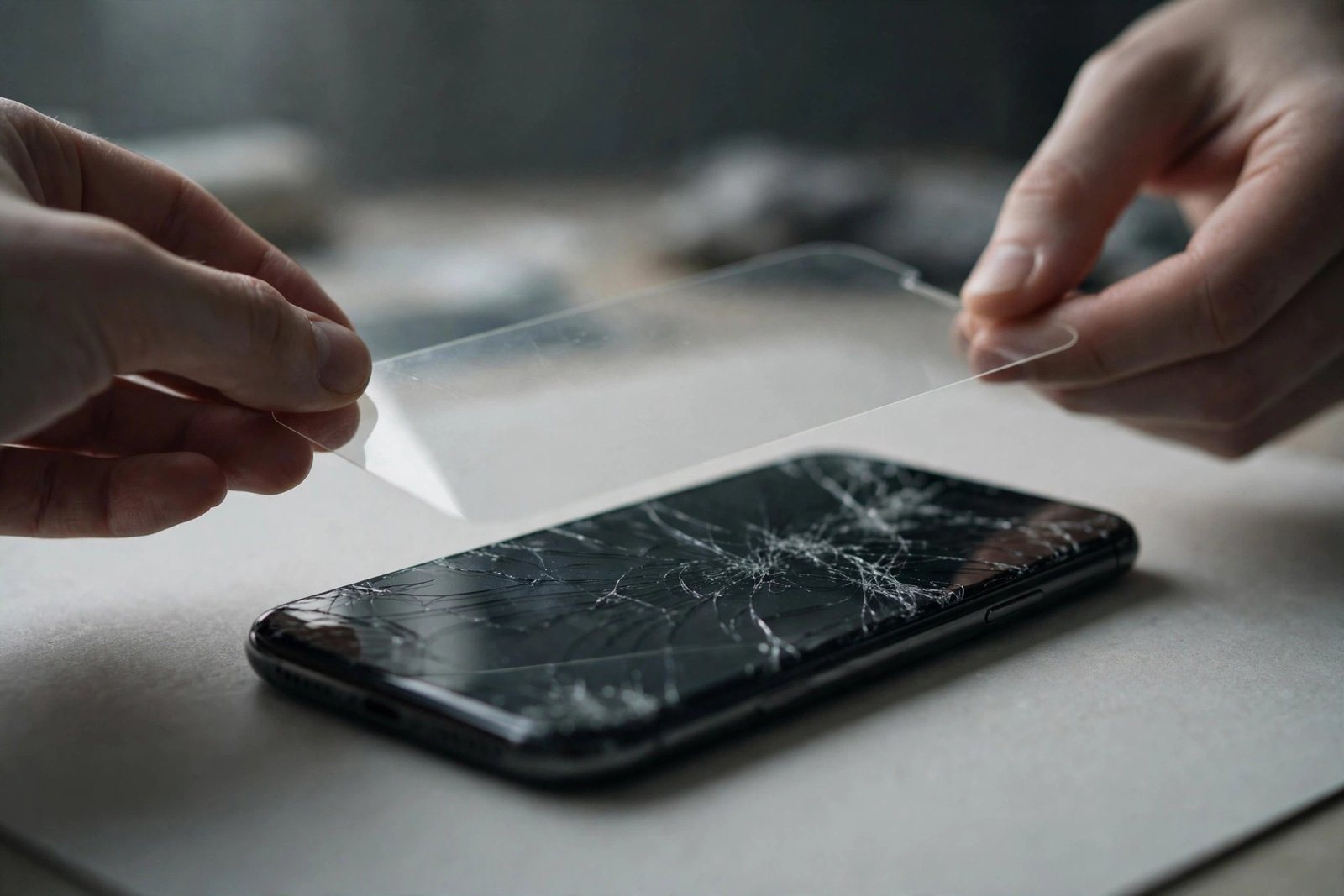
It is a question people usually ask in a moment of dread: the screen is already cracked, money or time for a repair is short, and a screen protector looks like a cheap way to hold things together. So — will a screen protector help a cracked screen? The honest answer is: a little, in specific ways, for a limited time. It is a stopgap, not a repair, and it helps to know exactly what it can and cannot do before you rely on it.
A protector fitted over cracked glass can hold loose fragments in place, smooth over sharp edges and slow moisture getting into the cracks. What it cannot do is restore any strength, stop the damage being damage, or substitute for a screen replacement. This guide explains the stopgap honestly — including the safety side people tend to skip.
Key Takeaways
- A protector over a cracked screen is a bandage, not a cure — it manages the damage, it does not repair any of it.
- It can hold loose glass fragments in place and keep small shards from working free into pockets, bags and fingers.
- It smooths over sharp crack edges, making the phone safer and more comfortable to swipe on while you arrange a repair.
- It slows moisture and dust ingress through the cracks, which can buy time before corrosion or further damage sets in.
- It adds no structural strength — a cracked screen under a protector is still a cracked screen and will fail like one.
- If cracks are spreading, the display is faulty, or glass is falling out, skip the stopgap and get the screen repaired.
What a Protector Over Cracks Actually Does
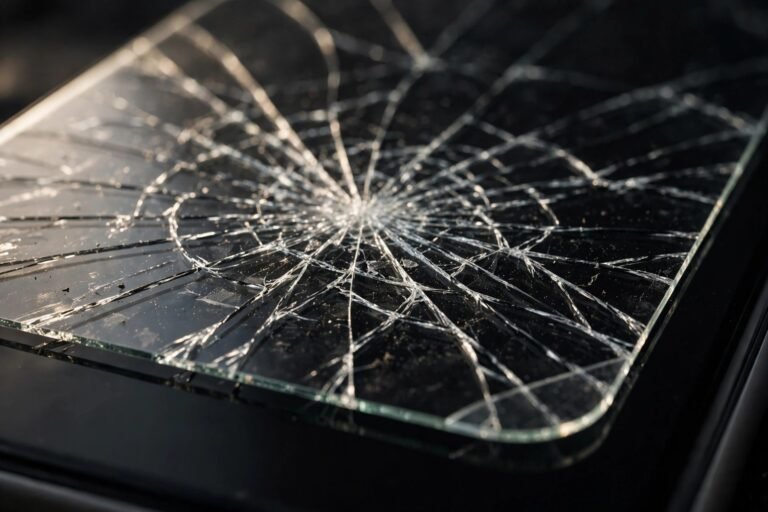
When glass cracks, the damage is not just the visible lines. The surface is interrupted by tiny loose fragments, microscopic shards along the crack edges, and gaps that open and close microscopically as the phone flexes in your hand. A protector fitted over the top acts like a sheet of cling film over a torn page: its adhesive bridges the cracks, holds the loose pieces in their places, and presents your thumb with one continuous, smooth surface again.
That bridging has three practical benefits. First, fragments stay put instead of gradually working loose. Second, the sharp ridges along cracks — the ones that catch your fingertip on every swipe — are covered, which makes the phone noticeably more pleasant and safer to use. Third, the sealed surface slows down water and dust reaching the display layers beneath the glass. A cracked screen that gets wet is far more likely to develop display faults, so keeping moisture out while you sort a repair is worth something real.
- Before fitting anything, lay a strip of clear packing tape over the cracked area and lift it away gently. This pulls off loose microscopic shards so they are not trapped under the protector, grinding against the display every time you press the screen.
What It Cannot Do — the Honest Limits
A protector cannot glue the glass back together. The screen’s structural integrity is gone the moment it cracks, and no adhesive layer on the surface restores it. The cracks will still be there, still visible (a protector can soften their appearance slightly, but it will not hide them), and still liable to spread from the next knock, a temperature change, or pressure in a tight pocket.
Nor does the protector protect the way it would on an intact screen. Impact protection works by a sacrificial layer absorbing and spreading force over sound glass. Over cracked glass, the weak points are already there; another drop on the same area can push cracks further or damage the display panel beneath. Treat a protected-but-cracked phone as fragile, because it is: no more back-pocket sitting, no more tossing it onto hard surfaces.
Touch can also suffer. Cracked glass sometimes creates dead spots or erratic touch, and a protector will not fix either — occasionally the extra layer makes marginal touch slightly worse. If the display itself is malfunctioning, the conversation is no longer about protectors at all.
Glass or Film for a Cracked Screen?
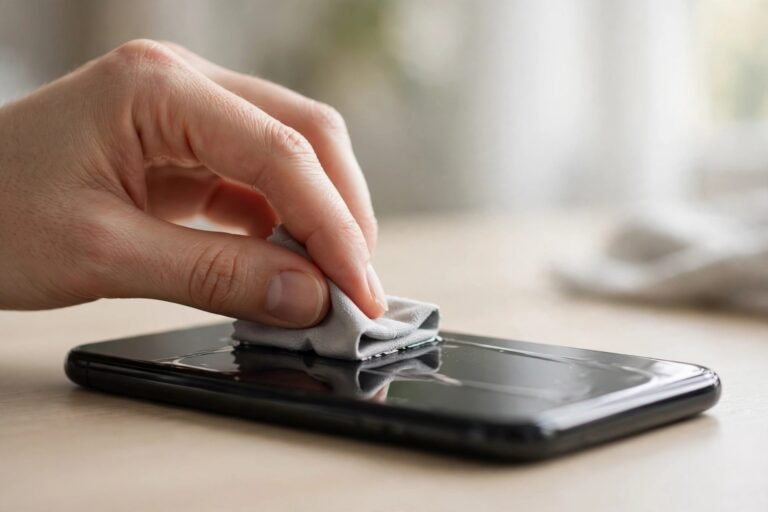
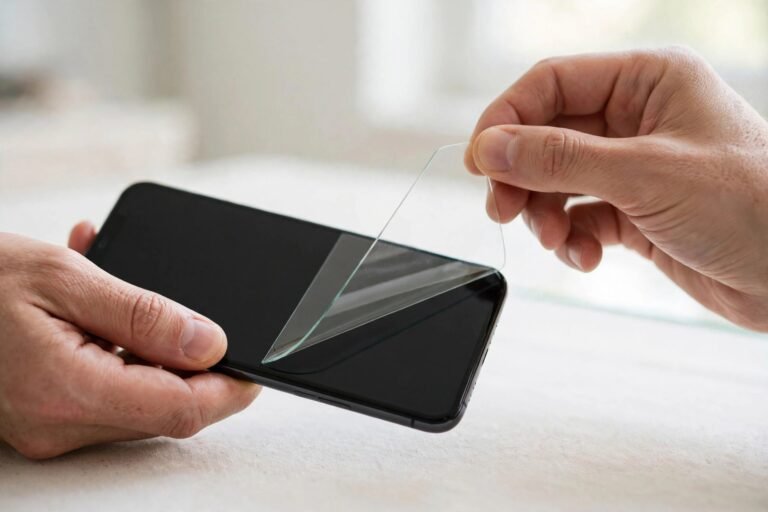
If you are fitting a stopgap, flexible film has one advantage: it follows the uneven, cracked surface closely and its adhesive contacts more of the irregular glass. Tempered glass is rigid, so over a badly cracked or slightly uneven screen it may bridge over low areas, leaving unbonded patches and edges that lift. For light, flat cracking, tempered glass still gives a more normal feel under the thumb. Either way, clean the screen only very gently beforehand — pressing hard on cracked glass while cleaning can extend the damage — and accept the fit may not be perfect.
- Back up your phone before you rely on the stopgap. A cracked screen can lose touch function suddenly and without warning — a backup taken today is the difference between an inconvenience and losing your photos and messages.
When the Stopgap Is Not Enough
Some cracks should go straight to repair. Book the screen replacement promptly if: the cracks are actively spreading day by day; pieces of glass are missing or falling out; the display shows lines, black patches, flickering or dead touch zones; or you are getting tiny glass splinters in your fingers. Using a phone that sheds glass is a genuine hazard, particularly around children, and a display that is failing electronically will not be saved by any surface layer.
Also check the paperwork before paying out of pocket. The phone may still be under the manufacturer’s warranty for other faults, covered by a protection plan, or insured through your bank or network — cover varies widely and terms change, so check your current policy and terms before assuming the repair is entirely on you.
Frequently Asked Questions
Will a protector stop my cracked screen from getting worse?
It can slow some kinds of worsening — it holds fragments in, keeps moisture out and reduces how much the crack edges catch and chip. But it cannot stop cracks spreading from flexing, pressure or another impact, because that is a structural problem inside the glass. Think of it as slowing the decline, not halting it.
Is it safe to use a cracked phone with a protector on?
Safer, yes — the protector covers the sharp edges and contains loose shards, which are the main everyday hazards. But keep checking it: if glass starts coming away with the protector, or you are still picking up splinters, stop using it and get the repair done. And never let a cracked screen, covered or not, get wet if you can help it.
Will fitting a protector affect my repair or warranty options?
A surface protector is removable and non-invasive, so it should not affect a screen replacement — the repairer will simply take it off. Warranty and insurance positions vary by provider and over time, so check your current terms if you are unsure. What genuinely can complicate things is attempting DIY glass repairs or adhesives; a simple protector does neither.
A protector over a cracked screen is first aid: it holds things together, keeps the surface safe to touch and buys you time. Use it for exactly that — and let a proper repair be the cure it can never be.