Yes — a tempered glass screen protector is designed to come off, and removing one is a two-minute job that needs no special tools and no trip to a repair shop. The protector is held by a layer of silicone adhesive, not permanent glue, so it releases cleanly when you lift it correctly. The only real skill involved is doing it safely, especially if the glass is cracked.
This guide covers the safe removal method step by step: how to prepare a cracked pane so shards stay put, how to start the lift without stressing the real screen, and how to handle and dispose of the removed glass properly.
Key Takeaways
- Glass protectors are made to be removed — the adhesive releases with steady, gentle pressure and leaves the screen unharmed.
- If the pane is cracked, tape over it first so the fragments lift away as one sheet instead of scattering.
- Start from the corner that lifts easiest, using a fingernail, tape tab, or a thin plastic card — never a metal tool.
- Peel slowly and at a low angle; speed and steep angles are what snap panes and fling shards.
- Work over a table or bin, keep children and pets away, and dispose of the glass wrapped — not loose in a pocket or bag.
Before You Start: Prepare Properly
Set up like you mean it. Work at a table with good light, lay down a sheet of paper or an open bin beneath the phone to catch anything that drops, and wash and dry your hands. Remove the phone case first — it overlaps the protector’s edges and will fight you otherwise. If your screen protector is intact, you can go straight to the lift. If it is cracked or chipped, preparation matters more.
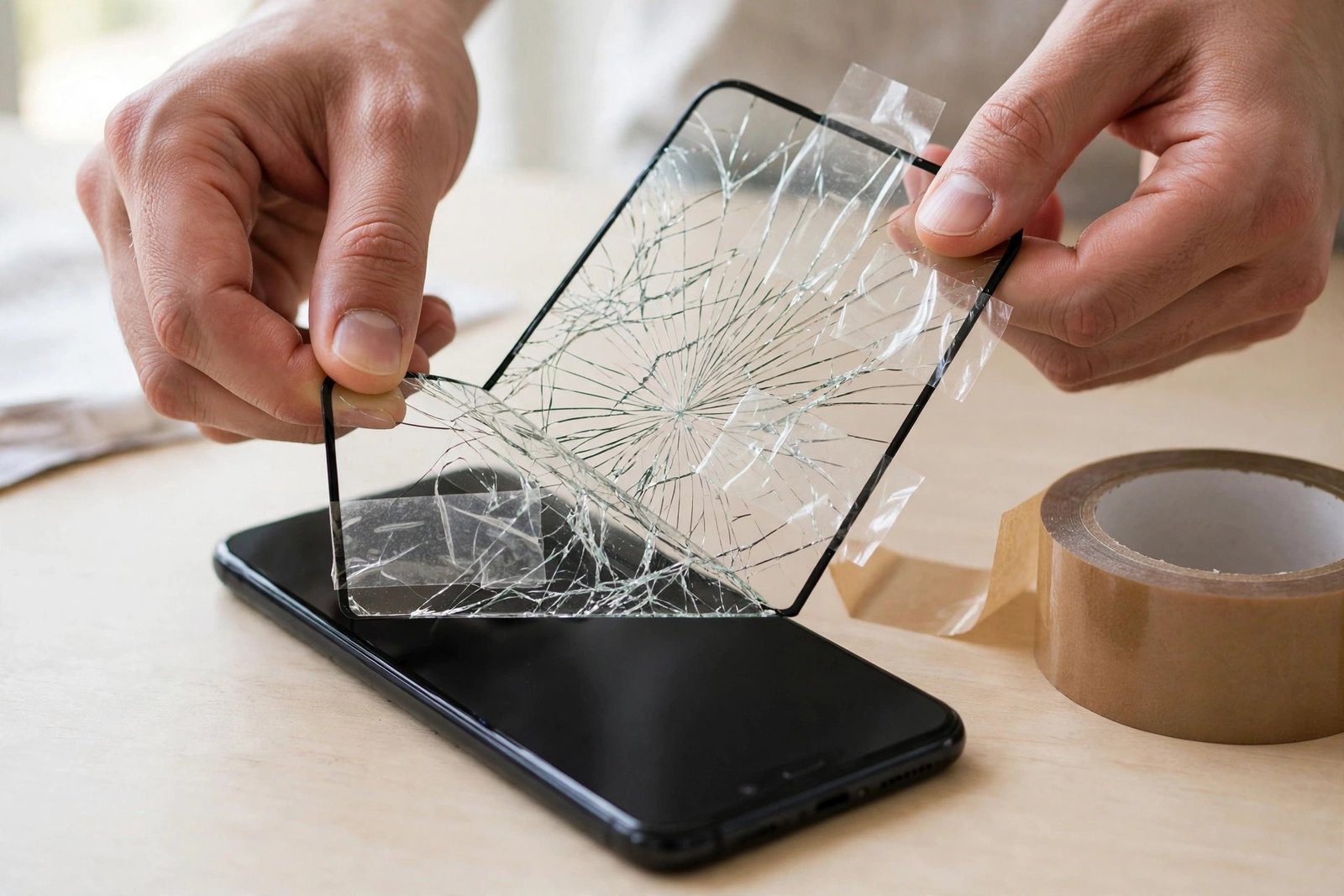
For a cracked pane, cover the entire damaged area with wide clear tape or packing tape, pressing it down gently so it contacts every fragment. The tape acts as a splint: instead of a dozen loose shards each held by weakening adhesive, you now have one taped sheet that will peel away together. Pay particular attention to corners and edges where cracks reach the border — those are the pieces most likely to stay behind or flick off. This thirty-second step is the difference between a tidy removal and picking slivers out of the tabletop.
The Removal, Step by Step
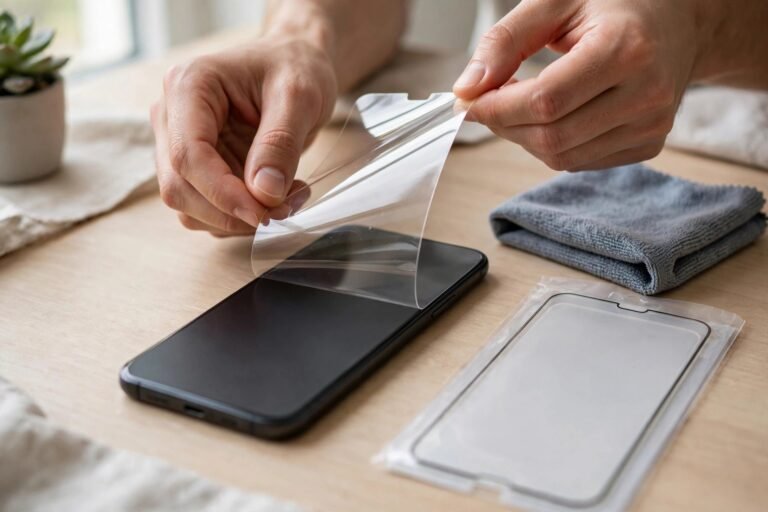
Step 1: Find your corner. Try each corner of the protector in turn, working a fingernail flat into the seam between protector and screen. One corner will almost always yield first — often the one nearest existing damage. If your nails are short, stick a piece of tape to the corner as a pull-tab, or slide the edge of a thin plastic card into the seam. Never use a knife, screwdriver, or anything metal: a slip can gouge the real screen, which is the very thing you have been protecting.
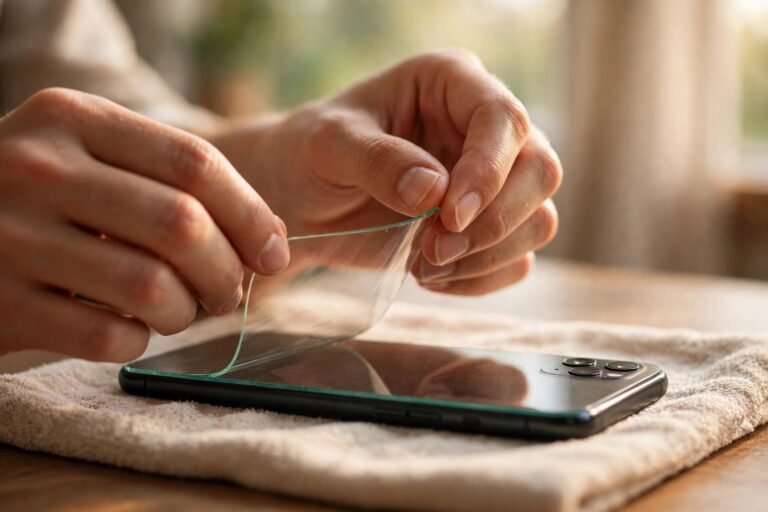
Step 2: Lift slowly and keep it low. Once the corner is up, ease the rest of the edge free and peel the pane back slowly, at a low angle, almost folding it back over itself. Steady, gentle tension lets the adhesive release progressively. Pulling fast or levering the pane upward at a steep angle concentrates stress in the glass — an intact pane can snap mid-peel, and a cracked one can shed the fragments you taped down. If you meet a stubborn patch, pause, work the adjacent edge a little more, and let the release spread rather than forcing it.
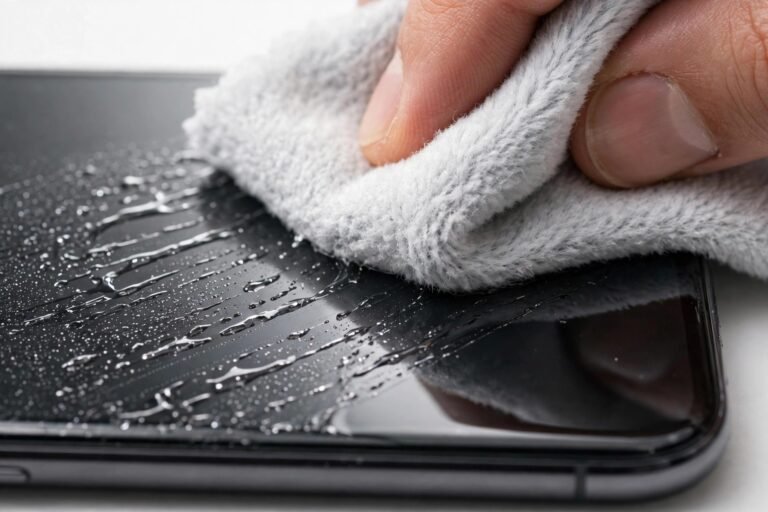
Step 3: Check the screen. With the pane off, inspect the screen under the light. Occasionally a small island of adhesive or a single taped fragment remains; a fingernail or a piece of tape dabbed on it will lift it. Then clean the screen with a microfibre cloth before doing anything else — grit left behind now becomes scratches under the next protector.
- A stuck protector usually just needs warmth: using the phone for a few minutes, or holding it near (not on) a warm radiator, softens the adhesive and makes the peel noticeably easier.
- Wear spectacles or sunglasses if you are removing a badly shattered pane — it sounds excessive until a fragment pings off the tape; eye protection costs you nothing.
Handling and Disposing of the Old Glass
Treat the removed pane as what it is: a thin sheet of broken glass. Keep it taped side together, fold it into the sheet of paper from your work area, and put it straight into household rubbish — wrapped, so no sharp edge protrudes from the bin. Do not carry it loose in a pocket, drop it in a handbag, or leave it on a sofa or bed where someone will sit on it. If any fragments did escape onto the table or floor, sweep them up with a damp piece of kitchen paper, which picks up slivers that a brush misses and that bare fingers would regret finding.
Finally, wash your hands after handling a cracked pane. Fine glass dust is invisible and irritating, and the habit takes five seconds. If you are fitting a replacement protector, this is also the moment to do the full cleaning routine — wet wipe, dry cloth, dust sticker — while the screen is bare and accessible.
- Peel a cracked protector directly over the open bin once it is taped — any fragment that does escape falls where it can do no harm.
- If a shard sticks to your fingertip, lift it off with tape rather than brushing — brushing drags the sharp edge across your skin.
Frequently Asked Questions
Will removing the protector damage my screen?
No — not if you peel slowly and never use metal tools. The adhesive is formulated to release from the screen’s glass without marking it, and millions of protectors are swapped this way. Damage stories almost always trace back to prising with a blade or tearing the pane off in one fast rip.
The corner won’t budge at all. What now?
Warm the phone gently through normal use, then try a tape pull-tab: press a strip of strong tape firmly onto the corner, leave a tail, and pull the tail slowly upward and outward. A thin plastic card worked flat into the seam is the other reliable option. Patience beats force — a corner that resists for a minute usually releases the moment the adhesive warms and you find the right angle.
Can I remove the glass and put the same one back on?
In practice, no. Once lifted, the adhesive is contaminated with dust and its bond is weakened, so a refitted pane shows specks, bubbles and lifting edges. Removal should be treated as the end of that protector’s service — have its replacement ready before you peel.
Removing a glass protector is quick, safe and residue-free when you tape the cracks, lift a corner patiently, and peel low and slow. Treat the old pane like broken glass, because that is exactly what it is.