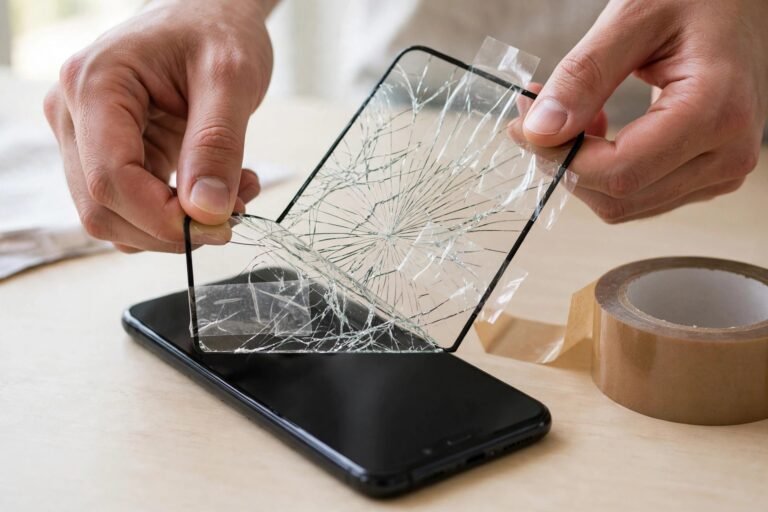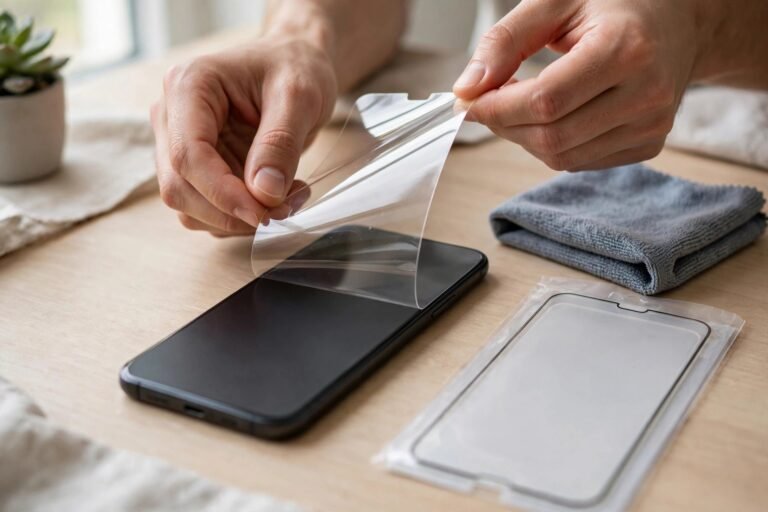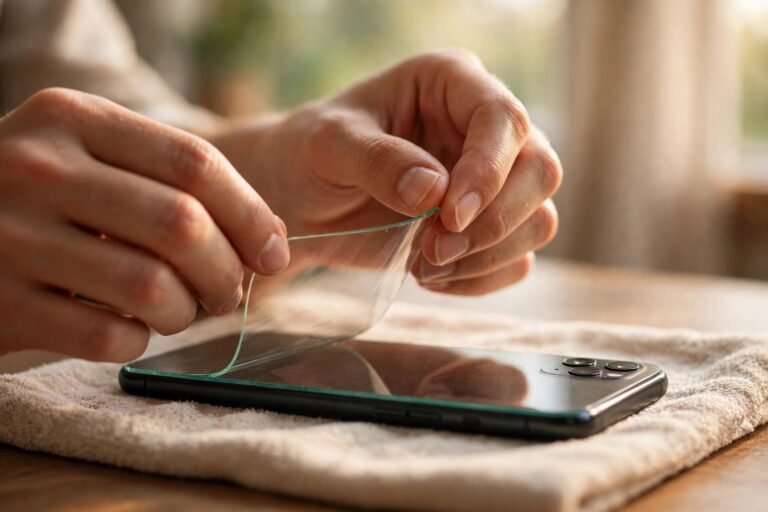
Here is the honest answer most liquid screen protector packaging avoids: you cannot peel a liquid screen protector off. There is no edge to lift, no corner to work loose, because there is no sheet of anything on your screen. Once a nano coating has cured, it has bonded to the glass at a near-molecular level — and that changes completely what “taking it off” actually means.
That doesn’t mean you’re stuck with it forever. This guide explains what a cured liquid coating really is, why peeling is impossible, how the coating comes off naturally over time, and what your options are if you genuinely want it gone sooner — including the limits of polishing and when a professional is the sensible route.
Key Takeaways
- A cured liquid protector is a bonded coating, not a film — there is nothing to grip, lift or peel.
- Left alone, it wears away gradually through everyday friction, typically over several months.
- Fine polishing compounds can accelerate removal, but they are abrasive by definition — technique matters.
- A repair professional with a polishing machine can strip a coating evenly, and it’s the safest fast option.
- The coating is only microns thin: removing it, naturally or by polishing, does not harm the glass underneath.
- Most screens are fine to use uncoated again the moment the layer has worn or been polished away.
What a Cured Liquid Protector Actually Is
Liquid protectors are typically based on silicon dioxide — the same chemistry as glass itself. You wipe the liquid on, it spreads into every microscopic valley in the screen’s surface, and over the following hours it cures into a hardened layer just a few microns thick. Because it flows before it sets, it fills the tiny pores and imperfections that a solid pane of glass can only bridge over. That is the source of both its appeal and its permanence: it has effectively become part of the surface, rather than a separate layer sitting on top of it.
Why You Can’t Peel It Off
Peeling works on tempered glass and film because those protectors are held by a distinct adhesive layer that can fail cleanly along one plane. A cured nano coating has no such plane. There is no boundary between “protector” and “screen” that a fingernail, card or tape could find and exploit. Any attempt to scrape at it is simply scraping at your screen’s surface with nothing to show for it. Accepting this early saves people a great deal of frustration — the removal question for liquid coatings is never how do I lift it, but how do I wear or polish it away.
- Never use blades, solvents or picking tools on a cured coating. You’ll mark the screen’s own surface long before you make a dent in the problem.
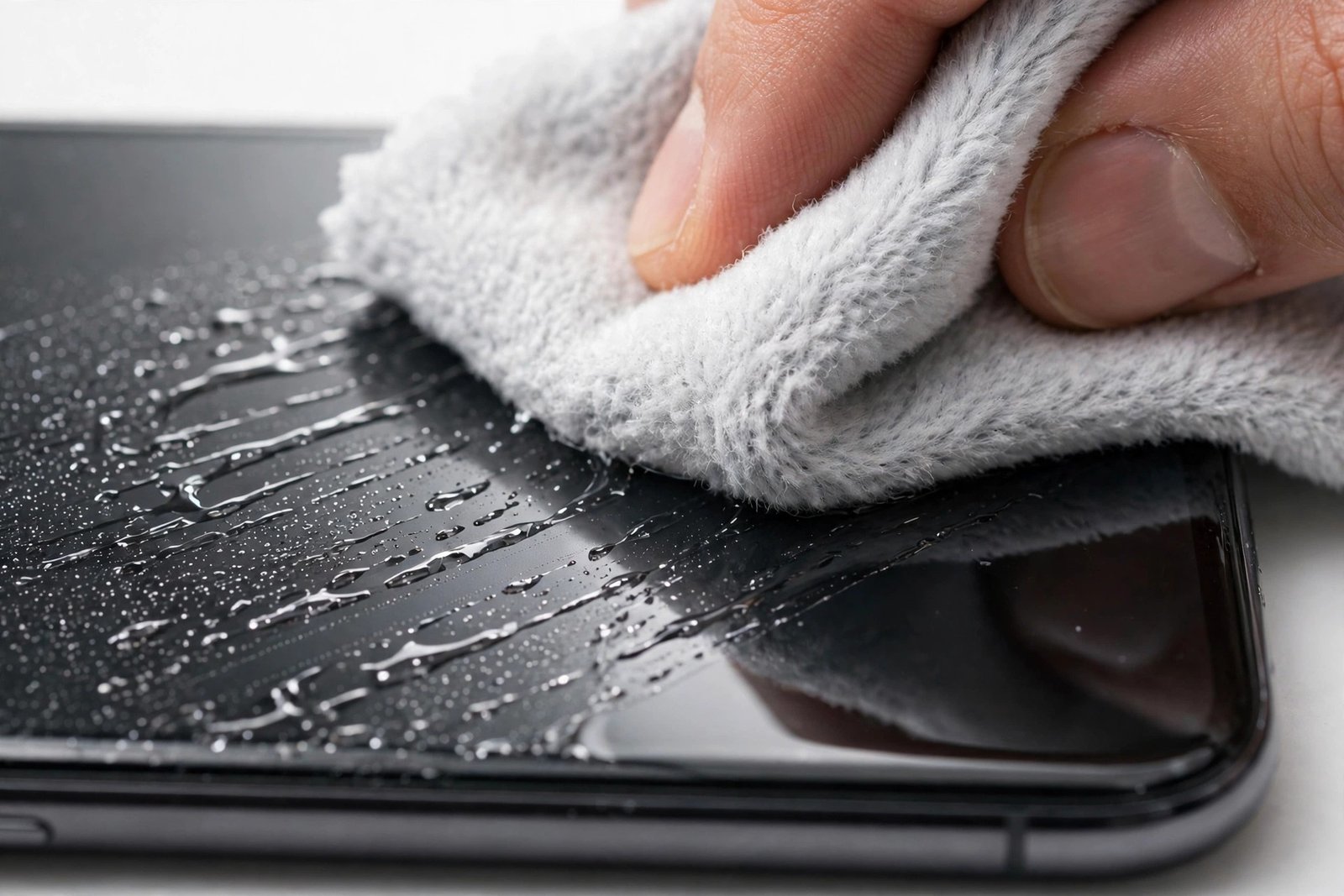
- Unsure whether a coating is still present? After cleaning, water behaviour gives it away — a fresh coating beads water tightly, while bare glass lets it sheet and spread.
The Natural Route: It Wears Off on Its Own
Every swipe, pocket trip and cleaning cloth removes an invisible fraction of the coating. Over time — commonly six to twelve months of ordinary use, depending on the product and how the phone is handled — the layer thins, becomes patchy, and eventually disappears altogether. Thumbs wear it fastest in the centre of the screen, while the corners, which fingers rarely touch, keep their coating longest. This is also why liquid protectors need periodic reapplication to keep working as protection: the coating is a consumable, and wearing off is its normal end of life. If your only goal is to be rid of it, simply using the phone is a complete, if slow, removal method.
Speeding Things Up: Polishing Compounds
If you want the coating gone this week rather than this year, the realistic DIY method is gentle abrasion. Very fine glass-polishing compounds — the kind used to buff out hairline marks on watch glass — can gradually cut through a nano coating. Work a tiny amount on a soft microfibre cloth, polish in small circles with light pressure, and check progress by the water-beading test. Be honest with yourself about the trade-off: anything abrasive enough to remove the coating is, in principle, abrasive enough to affect the screen’s own oil-repellent finish and — if overdone in one spot — to leave a visibly uneven patch. Work the whole screen evenly rather than chasing one corner, and stop if you feel you’re guessing. This is a patience method, not a shortcut.
When to Hand It to a Professional
Phone repair shops deal with cured coatings regularly, because customers arrive wanting glass fitted over the top, wanting a screen assessed, or wanting the coating gone before a trade-in. A professional setup uses a rotary polishing machine with controlled compounds, which removes the layer far more evenly than hand polishing and in a fraction of the time. It is worth the small fee if the phone is valuable, if the coating is patchy and unsightly, or if you’ve started polishing yourself and the result looks uneven. Ask the shop to confirm the screen’s finish and touch response afterwards — a reputable technician will check both as a matter of course.
- Planning to fit tempered glass afterwards? A half-worn, patchy coating can cause patchy adhesion — either let it wear fully or have it polished off completely first.
- Keep expectations realistic: polishing removes the coating, not scratches that were already in the glass before the coating went on.
The Limits Worth Knowing
Removal, by any route, only removes the coating. It cannot restore a screen’s factory oil-repellent layer if years of use had worn that away before the coating was applied — fingerprints may smear slightly more afterwards until your habits adjust. Nor can it undo scratches the coating was covering cosmetically. Finally, because the coating fills microscopic surface texture, a newly stripped screen can feel very slightly different under the thumb for a few days. None of these are damage. They are simply what your screen always was, minus a few microns of help.
Frequently Asked Questions
How long does a liquid protector take to wear off completely?
For most products and typical use, expect six to twelve months before the coating is effectively gone, with high-friction areas like the thumb zone wearing through sooner. Phones kept in cases with covers, or used lightly, can hold a coating noticeably longer.
Will polishing damage my screen?
Done gently with a fine compound and even pressure, polishing removes the microns-thin coating well before it can trouble the glass itself. The realistic risks are cosmetic — a duller oil-repellent finish or an uneven patch from concentrating on one spot. If either worry bothers you, that is exactly the case for the professional route.
Can I put a glass protector over a liquid coating instead of removing it?
Usually, yes — a fresh, intact liquid coating is smooth and clean, and tempered glass adheres to it well. The problem case is the half-worn coating, where adhesion becomes inconsistent. In that situation, either let the coating finish wearing off or have it polished away before fitting the glass.
A liquid protector isn’t taken off — it’s worn off, polished off, or waited out. Know which of those three you’re choosing, and its disappearance becomes a non-event.