An Apple Watch lives a harder life than almost any other screen you own. It sits raised on your wrist, catching door frames, desk edges, seatbelt buckles and gym equipment — all while being far too small and curved for a protector to fit the way it does on a phone. So does it actually need one? The answer depends less on the watch itself and more on which size you wear, how the glass is shaped, and how you spend your days.
This guide focuses on the practical side of the decision: fit and coverage across the different case sizes, who can reasonably skip a protector, and how sport wear and dress wear change the answer.
Key Takeaways
- Apple Watch screens are small and deeply curved, so flat protectors leave the vulnerable edges exposed.
- Case sizes range from compact to the large Ultra, and every size needs its own exact-fit protector — close enough is not good enough.
- Owners of sapphire-fronted models who live gently can often skip a protector; aluminium Ion-X models scratch far more readily.
- Sport, swimming and manual work push the answer firmly towards yes; desk and dress wear is a closer call.
- A case with a raised bezel is a legitimate alternative that protects edges without covering the glass at all.
One Watch, Several Sizes — and No Flat Screen
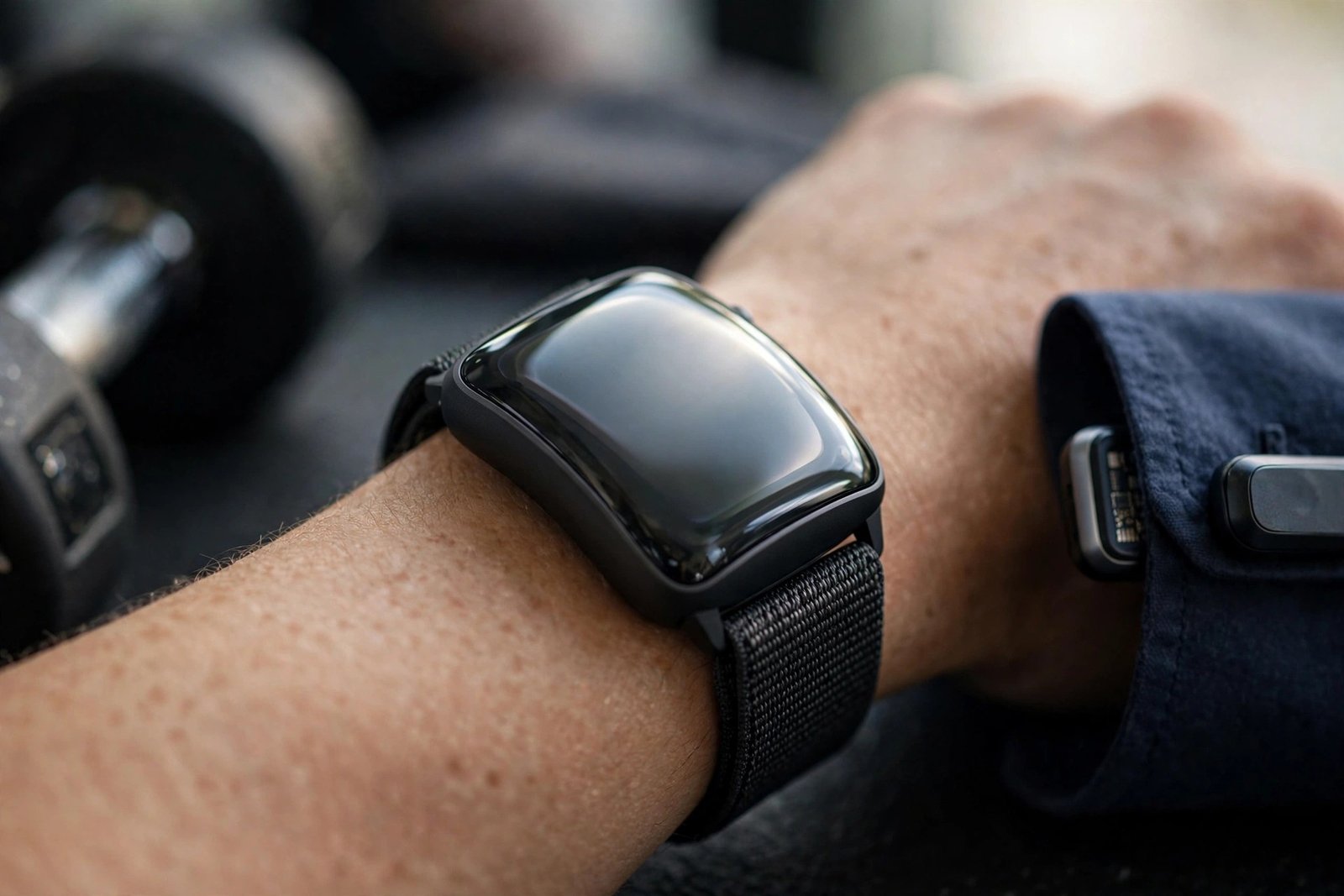
Unlike a phone, which is essentially a flat slab, the Apple Watch display curves away on all four sides to meet the case. Depending on the generation and model, case sizes run from the smaller 38–42mm options up through 44–46mm, with the Ultra sitting at 49mm. Each size has slightly different curvature and screen dimensions, which is why protectors are sold by exact case size — a protector made for one size will not sit properly on another, even if it looks close in the packet.
The curve matters because damage on a watch rarely lands in the middle of the screen. It lands on the edges and corners, the parts that strike door frames and counter tops first. A basic flat film or glass protector covers only the flat central area, stopping short precisely where the risk is highest. That does not make it useless — the centre is where you read the time and notifications — but it does mean coverage, not just material, should drive your decision.
Coverage Is the Real Decision
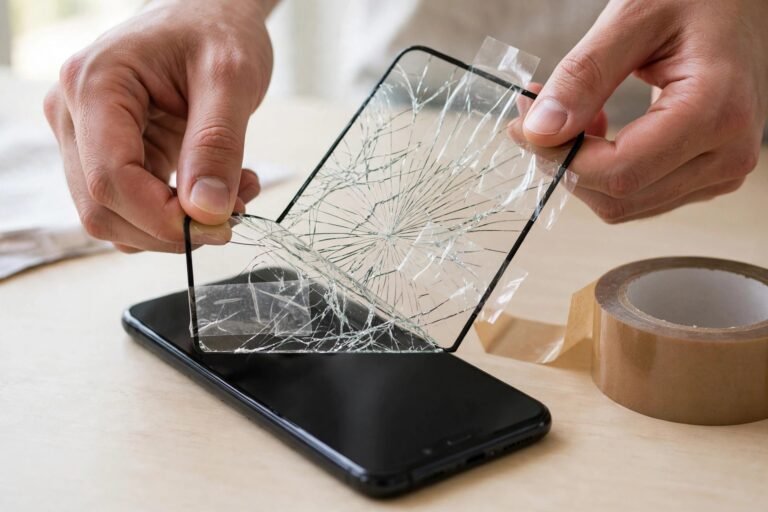
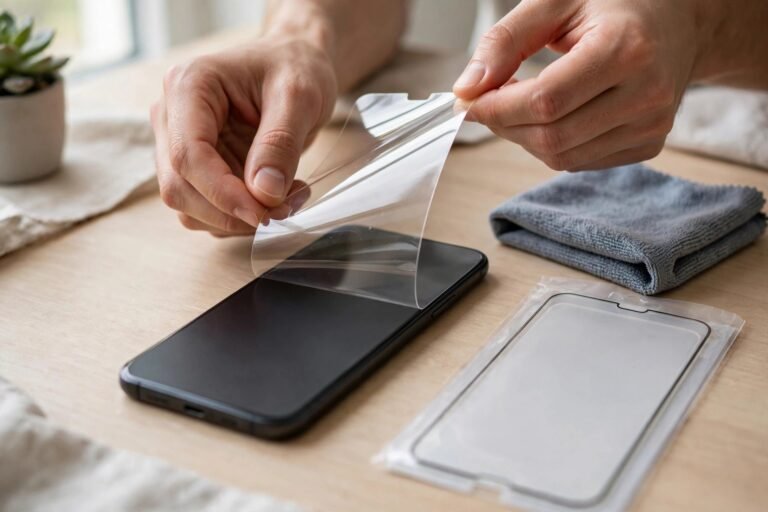
There are three broad approaches. Flat film protectors are cheap, nearly invisible and easy to replace, but protect only against light scratches in the middle of the display. Full-coverage protectors curve with the glass and wrap towards the edges; the good ones use a wet-install or adhesive-edge design to stay put on the curve. Then there is the case or bumper with a raised bezel, which leaves the screen bare but holds a lip of material proud of the glass, so flat surfaces and door frames strike the case instead.
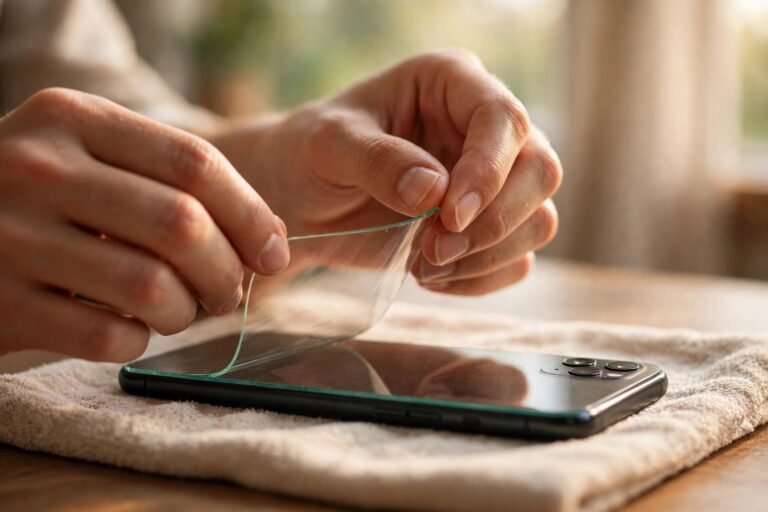
For most wearers, the honest trade-off is this: full-coverage glass gives the most complete protection but is the fiddliest to fit on a small curved screen, and a poor fit shows as lifting corners or a halo of trapped air. A bumper case is bulkier but forgiving, and it protects the case itself as well. If you have struggled to fit a phone protector in the past, expect a watch protector to demand more patience in a smaller area.
- Check your exact case size before ordering — it is engraved on the back of the watch and shown in the Watch app under Settings → About.
- Fit a curved protector in a steamy bathroom and give edge-adhesive designs a few hours to settle before judging the edges.
Who Can Sensibly Skip One
Some owners genuinely can. The stainless steel, titanium and Ultra models use a sapphire crystal front, which resists everyday scratching extremely well; the aluminium models use Ion-X glass, which is tougher against knocks but marks far more easily. If your watch has a sapphire front and your days are spent at a desk, driving and indoors, a protector adds little beyond peace of mind. If your watch is an aluminium model, the same lifestyle will still slowly collect fine scratches — visible in bright light within a year or two for most people.
There is also a middle position many owners take: no protector day to day, but a bumper case for specific activities — the gym, DIY weekends, moving house. Because cases snap on and off in seconds, this suits people who like the watch’s clean look but know exactly when it is at risk.
Sport Strap Life vs Dress Watch Life
Think about what your wrist actually does. Swimmers strike pool edges and lane ropes. Weightlifters catch racks, bars and dumbbells. Climbers, gardeners, mechanics and parents of toddlers all present the watch to hard surfaces daily. In that life, the question answers itself — protect it, preferably with full coverage or a bumper, because bare glass will not stay presentable for long, whatever it is made of.
Dress wear is different. If the watch pairs with a shirt cuff, lives under a sleeve and is worn for evenings and office days, impacts are rare and usually glancing. Here the main risk is cosmetic micro-scratching, and many owners accept it in exchange for the completely bare, original feel of the glass. Neither answer is wrong — they are answers to different daily lives.
- If you swim with your watch, choose a protector rated to stay sealed — lifting edges let water sit against the adhesive and shorten its life.
- Rotate protection with activity: bare for the office, bumper case for training days. It takes seconds to swap.
Frequently Asked Questions
Does a screen protector affect touch or the health sensors?
A properly fitted protector does not meaningfully affect touch sensitivity — the display is designed to work through thin glass or film. The health sensors sit on the back of the watch against your skin, so a front protector has no effect on heart-rate or other measurements at all.
Will a protector still fit if I use a bumper case?
Usually, yes — but choose a case-friendly protector that stops slightly short of the edges. Full-wrap protectors that curve right to the rim can be pushed up by a snug bumper. Fitting the protector first and letting it settle for a few hours before adding the case gives the best result.
Why do watch protectors peel at the edges?
Because of the curve. The edges are where adhesive is under the most constant tension, and straps, cuffs and water all work at them. Wet-install films and protectors with adhesive around the full border resist peeling best. If an edge lifts, it rarely reseals well — most owners treat watch protectors as a consumable and replace them when the edges go.
Match the protection to the life your wrist actually leads: full coverage or a bumper for sport and manual days, bare sapphire for gentle ones — and always buy for your exact case size.