You already have a screen protector fitted — and now you want privacy too. The obvious shortcut presents itself: just stick the privacy screen on top of the existing protector and get both. No peeling, no waste, double the protection. It is tempting, it is quick, and it is — unfortunately — one of the worse ideas in phone accessories.
Layering protectors creates a stack of problems that range from mildly annoying to genuinely harmful to your display experience. This guide explains what actually happens when you double up, the rare situations where it might be tolerable, and the right way to get both protection and privacy.
Key Takeaways
- Do not layer a privacy screen over an existing protector — the downsides outweigh the convenience in almost every case.
- Double thickness degrades touch sensitivity, especially on under-display fingerprint sensors.
- Two adhesive layers trap more dust and air, and the stack is prone to edge lifting and peeling.
- The combined layers dim the display further than a privacy protector alone, hurting readability and battery life.
- The right approach: remove the old protector and fit a single privacy tempered-glass protector that does both jobs.
What Happens When You Stack Them
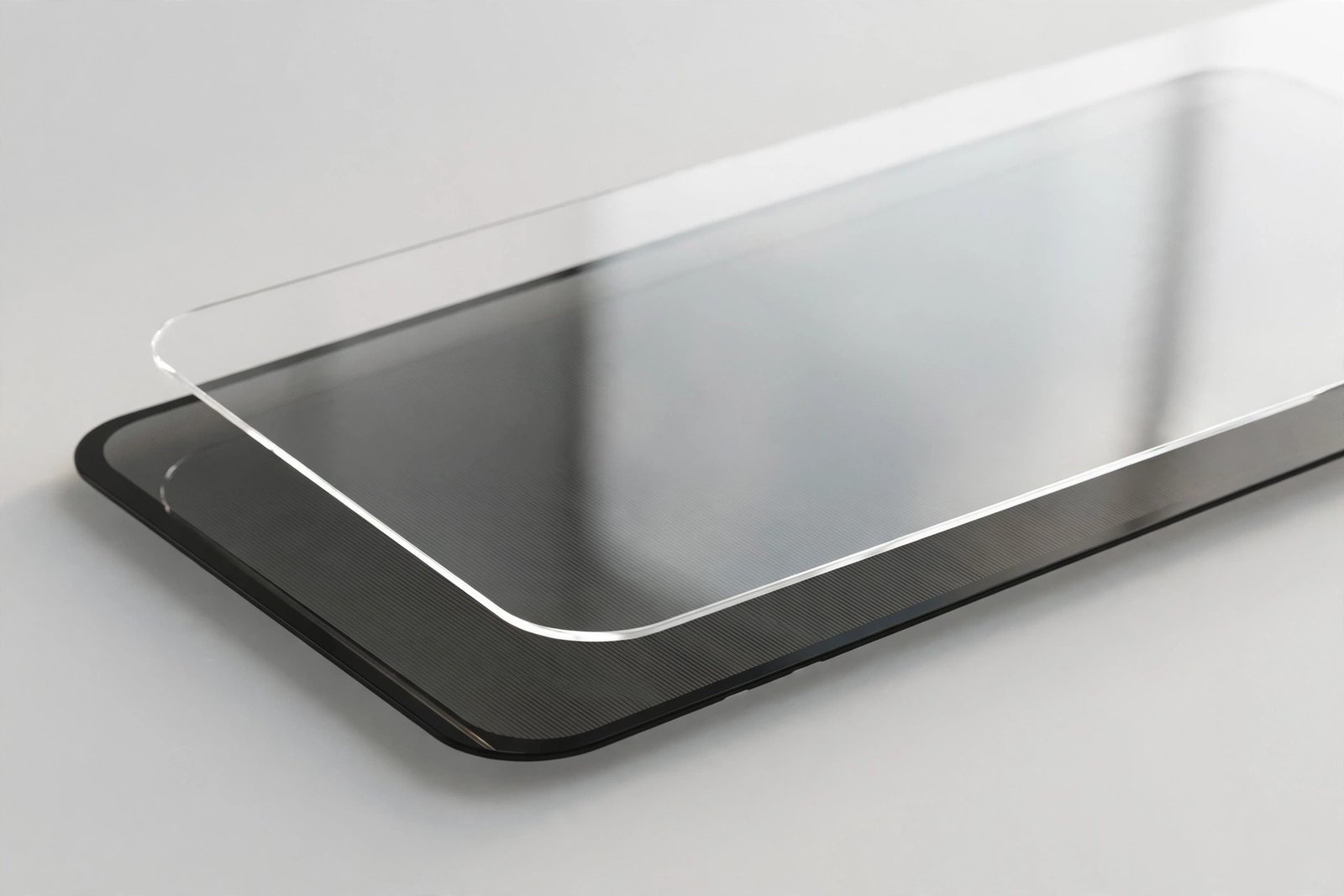
A modern screen protector is a precisely engineered optical sandwich: glass, adhesive, coatings — each layer tuned to be as invisible as possible. Adding a second complete protector on top doubles everything, including the imperfections. The most immediate casualty is clarity: two layers of glass, two adhesive films, and two sets of coatings scatter more light than one, leaving the display visibly dimmer and slightly hazier than with either protector alone.
Then there is the air-gap problem. Each protector’s adhesive is designed to bond to perfectly smooth display glass — not to another protector’s oleophobic coating. The bond between the two protectors is weaker and less uniform than either would achieve on bare glass, which means more trapped micro-bubbles, a higher chance of dust inclusion, and edges that lift far more readily, especially once a case starts pressing on them.
- If you are tempted to stack because removing the old protector feels wasteful, remember the economics: a single quality privacy glass protector costs little more than the frustration of a doubled-up screen you will end up replacing anyway within weeks.
Touch Sensitivity Takes the Hit
Capacitive touchscreens detect the tiny electrical field of your finger through the display stack. Every additional layer of glass and adhesive attenuates that signal. One quality protector is thin enough that the effect is negligible; two stacked protectors cross the threshold where the difference becomes noticeable — lighter taps register inconsistently, edge swipes need more pressure, and typing feels subtly less responsive.
The real dealbreaker is under-display fingerprint sensors. These optical or ultrasonic sensors are calibrated for a specific total stack thickness — typically one protector at most. Two protectors can push the sensor beyond its tolerance, causing slow, unreliable, or completely failed fingerprint recognition. If your phone unlocks with an in-display sensor, stacking is not just inadvisable; it may break a core feature of your phone.
The Privacy Layer Suffers Too
Ironically, stacking can make the privacy feature itself less effective. Privacy protectors work with a micro-louvre layer engineered to sit at a precise distance from the display pixels — that geometry is what creates the sharp viewing-angle cutoff. Adding an extra glass layer beneath it changes the optical distance, which can soften the cutoff: the screen may stay slightly visible from side angles where a properly fitted single privacy protector would have gone fully dark.
You also compound the brightness penalty. A privacy protector already dims the display noticeably — that is the price of the louvre layer. Adding a second protector’s worth of glass and adhesive on top dims it further, pushing you toward maximum brightness for normal readability. The battery cost is real, and in sunlight the stacked display can become genuinely hard to read.
- On Samsung phones, check Settings > Display > Touch sensitivity after fitting any protector — and know that no software toggle can fully compensate for two stacked layers on an under-display fingerprint sensor.
The One Situation Where It (Barely) Works
Total honesty requires one concession: a thin PET privacy film over an existing thin glass protector is the least-bad combination. Film is far thinner than glass, so the total stack stays closer to single-protector thickness, and the touch penalty is smaller. Some travellers do this as a temporary measure — film privacy for a flight, peeled off afterwards.
Even then, treat it as strictly temporary. The film will still trap dust at its edges, the bond will still be weaker than a proper single fitting, and you are still dimming the display more than necessary. It is a hack for a week, not a setup for a year.
The Right Way: One Protector That Does Both
The correct answer is simple: peel off the old protector and fit a single privacy tempered-glass protector. Modern privacy glass protectors are full protectors in their own right — tempered glass with impact protection, oleophobic coating, and proper adhesive — with the micro-louvre privacy layer built in. You lose nothing: one layer, one adhesive bond, one engineered optical stack, doing both jobs at the thickness the phone was designed for.
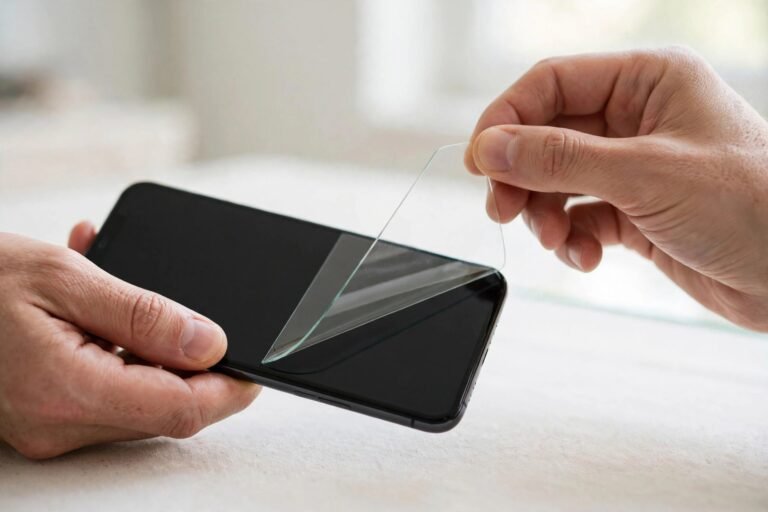
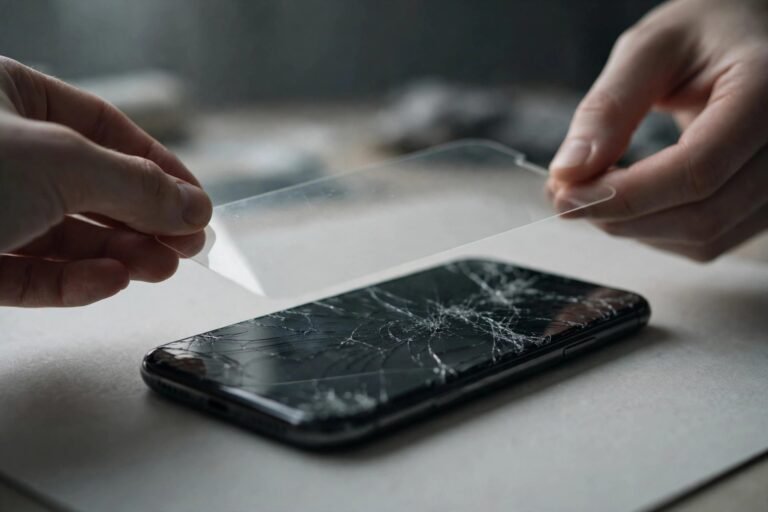
Removal is easy and safe: lift a corner with tape and peel slowly, then clean the display properly before fitting the new protector. The old protector has served its time — let it go. Your screen, your fingerprint sensor, and your battery will all thank you for the single, correct layer.
Frequently Asked Questions
Will two screen protectors damage my display?
Not the display itself — the risk is to your experience, not the panel. The display underneath is unaffected by stacking. But the degraded touch response, dimmed image, and peeling edges make it a poor trade in almost every case.
Can I stack two regular (non-privacy) protectors?
The same problems apply minus the privacy-geometry issue: weaker inter-layer bond, more trapped dust, dimmer display, and worse touch response. One protector is always the right number. If the first one is damaged, replace it — do not bury it.
What about a privacy film over a camera lens protector?
Do not stack anything over a camera lens protector — even a thin film can introduce flare, haze, or focus issues in photos. Camera protectors and display protectors are separate zones; keep them that way.
Two protectors is not twice the protection — it is half the experience, twice. Peel the old one, fit one good privacy glass, and enjoy a screen that works the way the engineers intended.