Phone glass gets tougher every year, the marketing says so, and yet the shop still nudges a screen protector towards you with every handset. So who’s right? Is the protector essential protection or a profitable habit we’ve never questioned? This guide takes the sceptic’s seat and gives you the honest version — including the parts that don’t flatter either side.
We’ll look at how strong modern phone glass genuinely is, what a protector actually does (and pointedly doesn’t do) in a drop, why a case might be the smarter spend, and finish with a verdict that separates the people who can skip a protector from those who’d be daft to.
Key Takeaways
- Modern phone glass is far more scratch-resistant than it was a decade ago — casual keys and coins rarely mark it.
- Its weakness was never scratching alone: glass that resists scratches is still glass, and it still shatters on hard impacts.
- A protector’s real job is being a cheap sacrificial layer — it takes the scratches and scuffs so your screen doesn’t.
- For drop survival, a good case usually matters more than a protector, because cracks start at corners and edges.
- The honest verdict: many careful users can skip a protector — clumsy ones, outdoor workers, and resellers shouldn’t.
How Tough Is Modern Phone Glass, Honestly?
The sceptics have a point. Chemically strengthened glass has improved enormously: current generations shrug off the keys-and-coins test that scarred older screens, and hardness testing shows most everyday metal objects simply can’t bite into it. If your fear is a pocketful of change engraving your display, that fear is largely out of date. Drop performance has improved too, with manufacturers demonstrating survival from head height onto rough surfaces that would have killed a phone outright ten years ago.
But two honest caveats follow. First, there’s an engineering trade-off: making glass harder to scratch tends to make it less forgiving in a fall, and vice versa — “tougher” in the adverts usually means better at one, not both. Second, one everyday material still beats every phone glass ever made: sand. The quartz in grit and beach sand is harder than the glass, so a single grain dragged across the screen under pressure leaves a fine line. Scratch tests with keys flatter modern glass; a day at the beach tells a less comfortable truth.
What a Protector Actually Does (and Doesn’t)
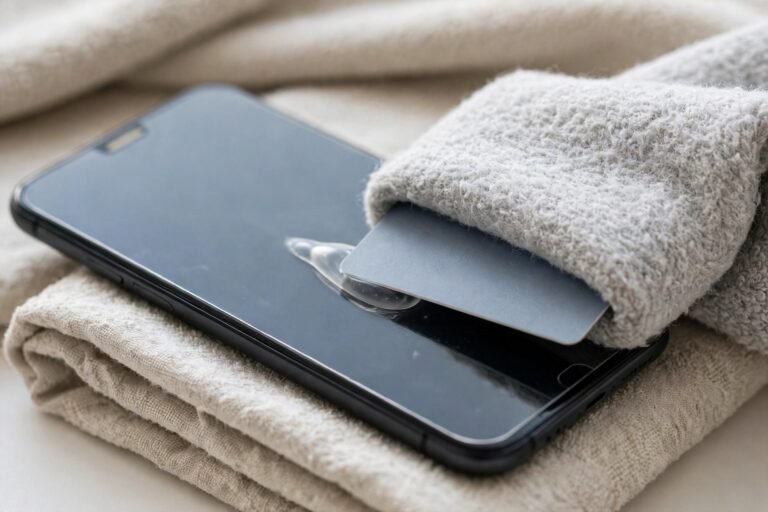
Strip away the marketing and a tempered glass protector has one core talent: it’s a sacrificial layer. Every micro-scratch, scuff, and grit line lands in a cheap, replaceable sheet instead of your screen, and when it’s looking tired you peel it off to reveal a flawless display underneath. That is a real, valuable function — particularly for the phone’s resale value — and it’s achieved without any magic.
The drop claims deserve more suspicion. A protector can absorb the energy of a flat, face-down landing on a smooth surface and crack in the screen’s place — that genuinely happens. But most fatal drops land on a corner or edge, where the impact travels through the frame, and a sheet of glass on the front does little about forces arriving from the side. A protector that cracks is often assumed to have “saved” the screen, when in many drops the screen would have survived anyway. Useful, yes. Body armour, no.
- Judge protectors as scratch insurance, not drop insurance — if drops are your fear, spend on the case first and the protector second.
- A cracked protector proves it absorbed something — but check the screen beneath before crediting it with a save.
The Case-First Alternative
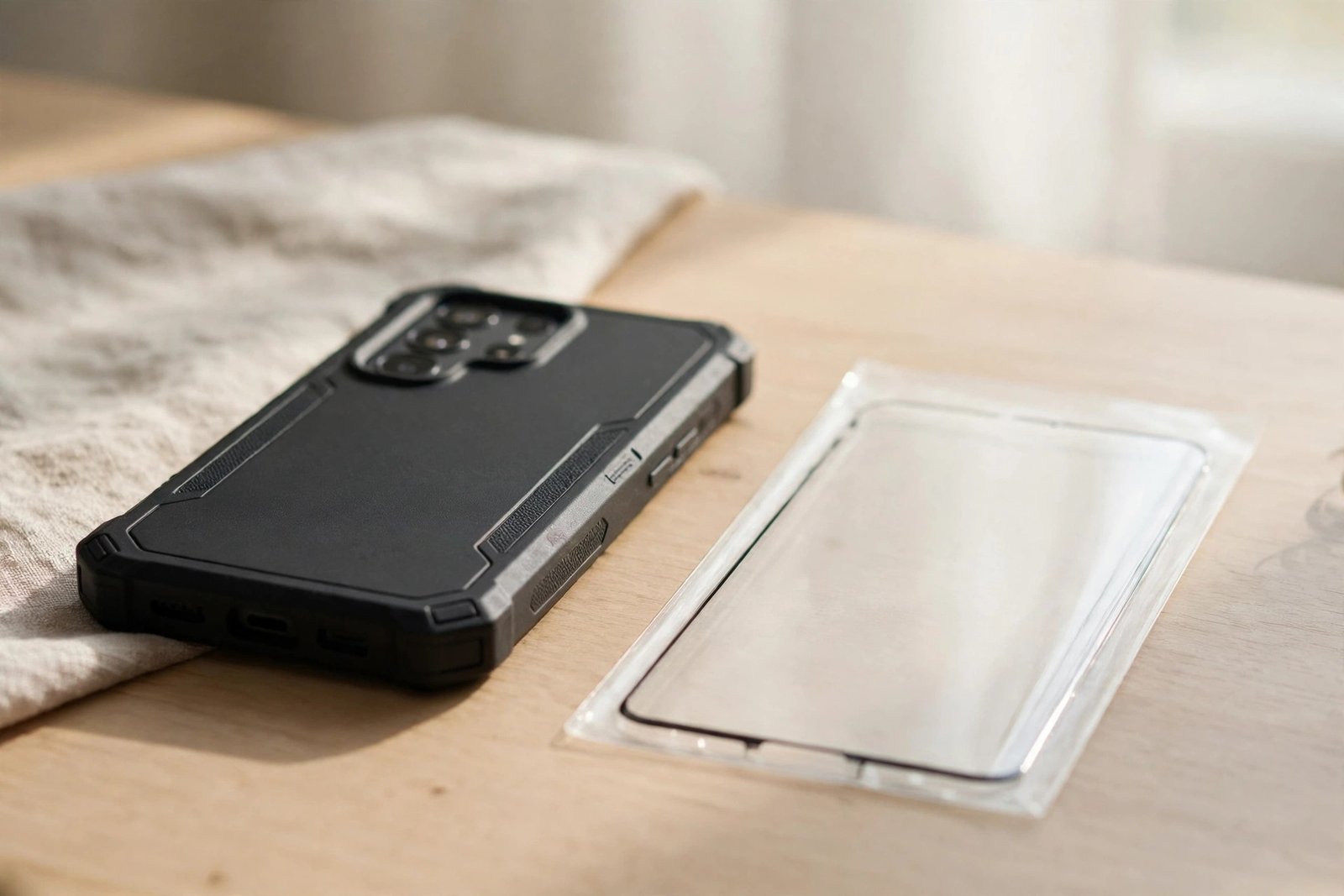
If you can only buy one layer of protection, the sceptic’s money goes on the case. A well-designed case with raised lips and reinforced corners defends the phone’s genuine weak points: it keeps the screen from ever touching a flat surface face-down, absorbs the corner impacts that start cracks, and covers the frame and back glass that a screen protector ignores entirely. For drop-prone users, that coverage map matches real-world accidents far better than a front sheet does.
The case-first approach also preserves the thing protector-sceptics care about: the feel of the actual screen — its slick coating, clarity, and touch response, exactly as the manufacturer made it. And it sidesteps the protector’s quiet frustrations entirely: no bubbles, no lifting edges, no dust specks sealed in like fossils, no slightly duller display.
The Honest Verdict
So, do you really need one? If you’re a careful, mostly indoor user who keeps a phone in a decent case, empties grit from their pockets, and isn’t bothered about top-band resale grading — honestly, no. Modern glass was built for you, and the protector is an optional extra, not a necessity. If, on the other hand, your phone works outdoors, shares pockets with tools, gets borrowed by children, or will be sold on in two years, the protector earns its keep as the cheapest sacrificial layer in technology. The product isn’t a scam and it isn’t compulsory — it’s insurance, and like all insurance, whether it’s worth it depends on the risk you actually run.
- The middle path is real: case only, protector later. If fine scratches start appearing, fit a protector then — it covers existing lines surprisingly well.
- Whatever you choose, decide deliberately. The worst outcome is an expensive phone protected by neither, out of pure indecision.
Frequently Asked Questions
If modern glass is so tough, why do screens still scratch?
Because “tough” has limits and one common enemy is tougher still: quartz grit and sand, which are harder than any phone glass and turn up in pockets, bags, and on beaches. Most fine scratches trace back to a single dragged grain, not to keys or coins — which is why even careful owners occasionally find a mystery line.
Do protectors dull the screen or blunt touch response?
A good glass protector is nearly invisible in use, but “nearly” is doing some work: it adds a layer, its coating wears faster than the screen’s own, and cheap protectors can feel draggy and look slightly milky. Under-display fingerprint sensors also read a touch slower through some panes. None of it is dramatic — all of it is real.
Are shops just upselling when they push protectors?
The margins on accessories are healthy, so the push at the till isn’t purely for your benefit — treat the pitch with the scepticism it invites. But a profitable product isn’t automatically a useless one. The honest approach is to decide using your own risk, as this guide sets out, rather than the salesperson’s script or your own reflexes.
Modern glass is genuinely tough, protectors are genuinely useful, and neither fact cancels the other — the right answer is the one that matches the life your phone actually lives.