You’ve just bought a new phone, and before the box is even closed the question arrives: “Shall I add a screen protector to that?” It’s a small purchase, but it’s oddly hard to judge on the spot — is it essential protection or an unnecessary extra? The honest answer depends on you, not on the phone.
This guide turns the decision into a sixty-second checklist. Answer the questions below honestly at the moment of buying, and you’ll know — before you reach the till — whether a protector earns its place on your phone or whether you can skip it with a clear conscience.
Key Takeaways
- Run the checklist before you buy — five honest answers settle the question faster than any sales pitch.
- If your phone shares a pocket or bag with keys, coins or tools, a protector is close to essential.
- Outdoor, manual or dusty jobs push the answer firmly towards yes.
- Careful indoor users with a good case and a repair fund can safely skip one.
- A protector guards against scratches and scuffs — it is not insurance against a hard drop onto concrete.
- You can change your mind later: a protector can be fitted at any point in the phone’s life.
The Sixty-Second Checklist
Work through these five questions. Each “yes” is a point in favour of fitting a protector; the more yeses you collect, the clearer the decision becomes.
- Does your phone ride in a pocket or bag alongside keys, coins, or anything metal?
- Do you work outdoors, on site, at a bench, or anywhere with dust, grit or sand?
- Do children, pets, or sport regularly get hold of your phone — or knock it off tables?
- Are you planning to sell or trade in this phone later, where screen condition affects its value?
- Would a scratched screen annoy you every single day, even if the phone still worked perfectly?
What Your Answers Mean
Two or more yeses, and a protector is a sensible buy. The pocket question matters most: modern phone glass resists a lot, but it is not harder than the grit, sand and metal edges it rubs against daily, and fine scratches accumulate quietly long before any single dramatic accident. If you work around dust or gravel, multiply that effect — abrasive particles are the one enemy no display glass has beaten yet.
The resale question is the purely financial one. A screen covered in hairline scratches can knock a noticeable amount off a trade-in valuation, while a protector fitted from day one keeps the original glass effectively brand new underneath. If you said yes to selling later, the protector is less an accessory and more a deposit on your phone’s future value.
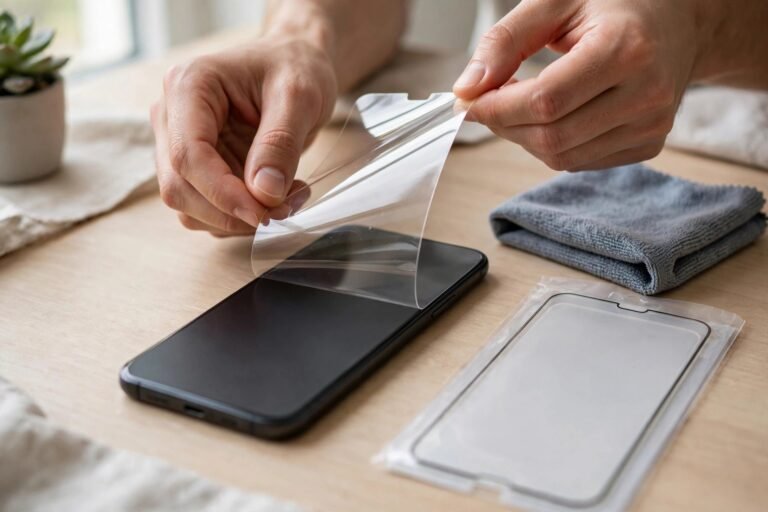
- Decide at the till, but fit it at home — shop counters are dusty, hurried places, and a calm install on a clean table gives a far better result.
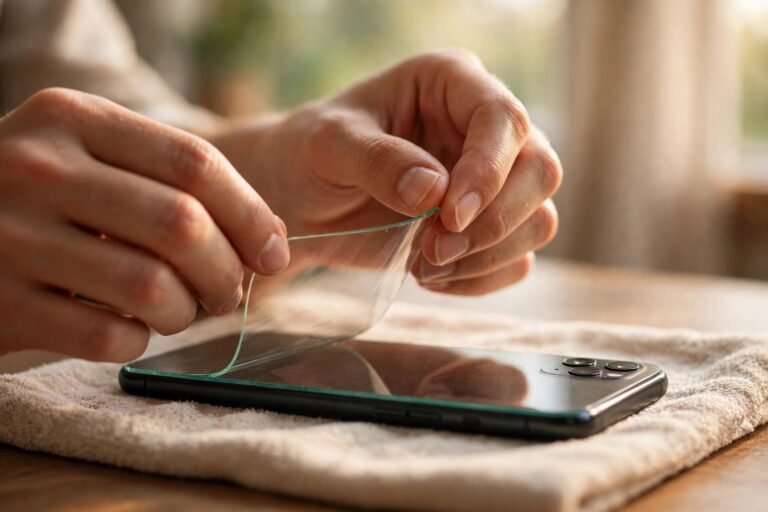
- If you’re undecided, fit a protector anyway for the first month. New-phone habits settle quickly, and you can peel it off the day you realise you don’t need it.
Who Can Safely Skip One Entirely
Plenty of people can, and do. If your phone lives in a separate pocket or a lined compartment, you work indoors at a desk, you use a case with a raised lip that keeps the screen off flat surfaces, and you keep phones for years rather than selling them — your scratch risk is genuinely low. Add the fact that you’d rather put the money towards repairs if the worst happens, and skipping is a rational choice, not a reckless one.
There’s also a feel argument that deserves respect. Some people simply prefer the bare glass under their fingertips — the smoothness, the way light sits on an uncoated display. If that’s you and your checklist came back mostly “no”, enjoy your phone as it was designed to be used. Protection you resent is protection you’ll peel off by Friday anyway.
The Middle Ground Most People Choose
If your answers were mixed, you don’t have to choose between full armour and nothing. A case with a raised edge alone handles face-down drops onto flat surfaces. A thin film protector adds scratch cover while staying almost invisible. Tempered glass sits at the top of the scale, taking the scratches and minor knocks itself so the real screen doesn’t have to. Match the level to your checklist score rather than buying the maximum by default.
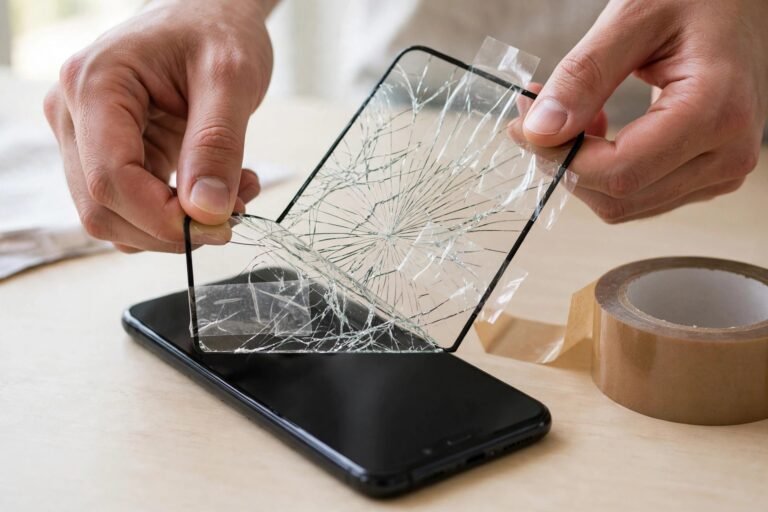
- Whatever you decide, decide before the first scratch — a protector fitted over existing damage traps it on display and can highlight every mark.
- Check whether your phone already has a thin factory film fitted. Many do, and it’s enough scratch protection for the careful users described above.
Frequently Asked Questions
Is a screen protector worth it if I already use a case?
Often, yes. A case protects the corners and back, and a raised lip guards against flat drops — but it does nothing about the keys and grit inside your pocket. The protector covers exactly the risk the case leaves open, which is why the two are usually paired.
Can I add a protector weeks after buying the phone?
Absolutely. There’s no deadline. Clean the screen thoroughly first — weeks of pocket life leave micro-debris that must come off — and the protector will bond just as well as it would have on day one, provided the glass is still unscratched and perfectly clean.
Does skipping a protector affect my warranty?
No — using a phone without a protector doesn’t void its warranty. Just remember that warranties cover manufacturing faults, not accidental damage, so a cracked or scratched screen is your cost either way. That repair bill is the real figure to weigh against the price of protection.
Five honest answers at the till beat an hour of deliberation: if your life is rough on glass, protect it — and if it isn’t, enjoy the phone bare and spend the money elsewhere.