Both phones have a 6.7-inch display. Both are big, flat slabs of glass made by Apple a year apart. So it’s a fair question: if you have a spare iPhone 13 Pro Max protector in a drawer, will it fit your iPhone 14 Pro Max?
The short answer is no — not properly. The outline is close enough that the glass will physically go on, but the top of the screen changed completely between these two models, and that’s exactly where a protector has to be precise. This guide explains what changed, what goes wrong if you fit the wrong one, and why the correct protector is worth buying.
Key Takeaways
- Both phones have 6.7-inch screens, so a 13 Pro Max protector roughly matches the 14 Pro Max in outline.
- The 13 Pro Max has a notch; the 14 Pro Max replaced it with the Dynamic Island pill cut-out — the top cut-outs simply don’t align.
- Front camera and sensor positions differ between the two models, so cut-outs can cover or crowd things they shouldn’t.
- A mismatched protector can leave parts of the screen exposed and look visibly wrong around the top edge.
- It works as a desperate stopgap only — the model-specific protector is the proper answer.
What Changed at the Top of the Screen
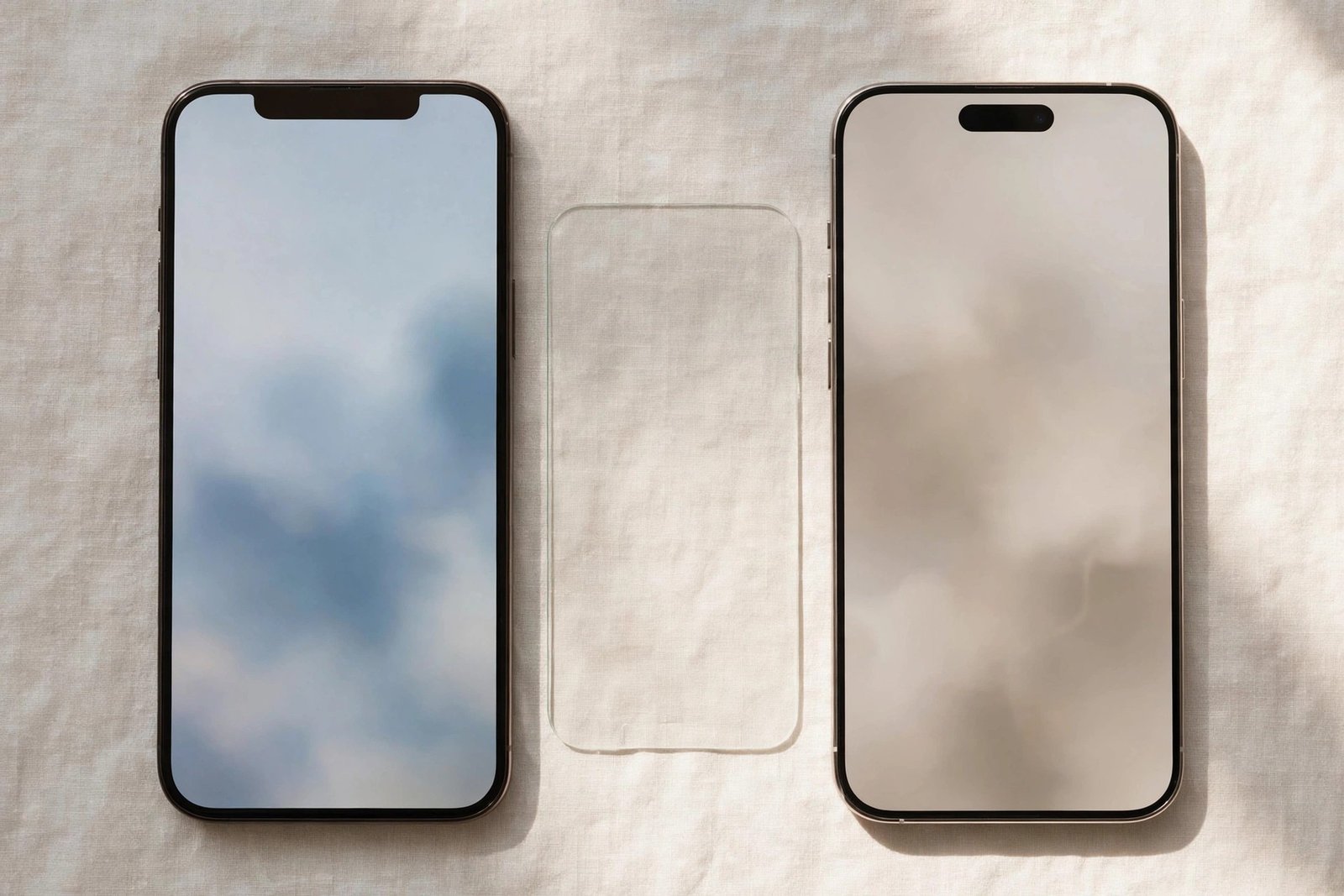
The iPhone 13 Pro Max carries the familiar Apple notch: a wide black cut-in at the top centre of the display housing the front camera, speaker, and Face ID sensors. Protectors for it are cut around that notch — either stopping below it in an open design, or wrapping it with a matching wide opening.
The iPhone 14 Pro Max abolished the notch entirely. In its place sits the Dynamic Island: a pill-shaped cut-out that floats below the top edge of the screen, surrounded on all sides by live display. The front camera and Face ID components live inside and around that pill, at different positions and spacings than the notch arrangement they replaced.
What Happens If You Fit the 13 Pro Max Protector Anyway
Because the overall dimensions are so close, the glass will adhere and cover the bulk of the display — which is what makes the mismatch easy to miss at a glance. Look at the top, though, and the problems show. A notch-shaped opening doesn’t correspond to anything on the 14 Pro Max: the protector’s cut-out and any printed border sit in the wrong places relative to the Dynamic Island, leaving odd exposed strips of screen and framing the island incorrectly.
Worse, depending on the design, solid glass or a printed border can pass over or crowd the camera and sensor areas around the island. Protectors that cover the lens area with glass are sometimes designed to do so harmlessly — but only when the geometry matches the phone. On a cross-fitted protector, openings land where they weren’t planned to, and you also lose the precise edge alignment the fitting frames and cut-outs were designed around.
- Before fitting any spare protector, hover it over the phone without peeling anything and compare the top cut-outs against the camera and Dynamic Island. Thirty seconds of dry checking tells you everything — once it’s stuck down, you’ve committed.
Does the Reverse Work — 14 Pro Max Protector on a 13 Pro Max?
No — the incompatibility runs both ways. A 14 Pro Max protector is cut for a floating pill-shaped island, so on a 13 Pro Max its cut-outs float meaninglessly in the middle of the notch area, while its solid sections can overlap parts of the notch assembly that were meant to stay clear. The outline fits; the details don’t.
This is a general pattern worth remembering with iPhones: consecutive models that look identical from a distance often differ exactly where protectors are cut most precisely. Same screen size does not mean same protector — the cut-out map has to match, and between these two generations it fundamentally changed.
When a Stopgap Is Acceptable
If your screen is completely bare, you’ve just cracked your proper protector, and the only thing in the house is a 13 Pro Max spare — fitting it for a day or two is better than carrying an unprotected phone while a correct replacement ships. The flat majority of the display still gets genuine scratch and impact protection in the meantime.
Just treat it honestly as a stopgap: check that nothing solid covers the front camera, accept that the top will look odd and small areas will be exposed, and order the right protector promptly. As a permanent arrangement, a cross-fitted protector gives you the worst of both worlds — money spent, protection compromised in exactly the zone you look at most.
- Upgrading from a 13 Pro Max and holding unopened multipacks? Don’t assume they’re spares for the new phone — check the packet names the exact model, and pass the leftovers on to someone with the older phone instead.
Frequently Asked Questions
The screens are both 6.7 inches — why doesn’t that settle it?
Because a protector is not just an outline. It’s a precise map of cut-outs for the camera, sensors, and — on these models — either a notch or the Dynamic Island. The diagonal size matches; the map at the top of the screen is completely different, and that’s where the fit fails.
Will the wrong protector damage my 14 Pro Max?
No — a glass protector can’t damage the phone beneath it. The costs are cosmetic and functional: exposed areas near the top, cut-outs or borders in the wrong places, and a fit that never looks or feels quite right. The screen itself comes to no harm.
Do cases swap between the 13 Pro Max and 14 Pro Max?
Generally not reliably, either. The camera modules differ in size and the button positions shifted slightly between generations, so most cases are model-specific too. Assume nothing transfers between these two phones until you’ve physically checked it.
Same size, different face. The 13 Pro Max protector and the 14 Pro Max were separated by one design change — the notch became an island — and that’s quite enough to make them strangers. Buy the one with your phone’s name on it.