Peeling off a screen protector should be the easiest part of replacing one — yet it is the step where people cut fingers, snap glass into shards, and occasionally mark the screen they were trying to protect. The difference between a clean removal and a messy one is almost entirely technique: where you start, what you use to lift the edge, and the angle at which you pull. This guide covers the method that works for both tempered glass and film protectors, including how to deal safely with one that is already cracked.
You do not need special tools. A fingernail, an old plastic card, and a strip of tape will handle nearly every removal, and the whole job should take under a minute once you know the approach. Slow really is fast here — most snapped protectors and scattered shards come from one impatient yank.
Key Takeaways
- Start at a corner — corners are the easiest place to break the adhesive seal without bending the glass.
- Lift the edge with a fingernail or a thin plastic card; never use a metal knife or screwdriver, which can gouge the real screen.
- Peel slowly at a low angle, pulling the protector back over itself. Fast, upright pulls are what snap tempered glass.
- If the protector is cracked, cover it with packing tape first so the shards lift away in one sheet.
- Gentle warmth loosens stubborn adhesive — a few minutes of normal use or warm air makes old protectors release far more easily.
- Support the protector as it comes away so it doesn’t flex and crack mid-peel.
Step 1: Prepare and Pick Your Corner
Remove the phone case first — its lip overlaps the protector’s edges and will fight you the whole way. Wash and dry your hands, and lay the phone on a clean, flat surface rather than holding it in the air; a phone that slips mid-peel tends to land screen-first. If you are removing the protector because it is cracked, this is the moment to cover the entire surface with strips of packing tape, pressing them down gently so every fragment is held.
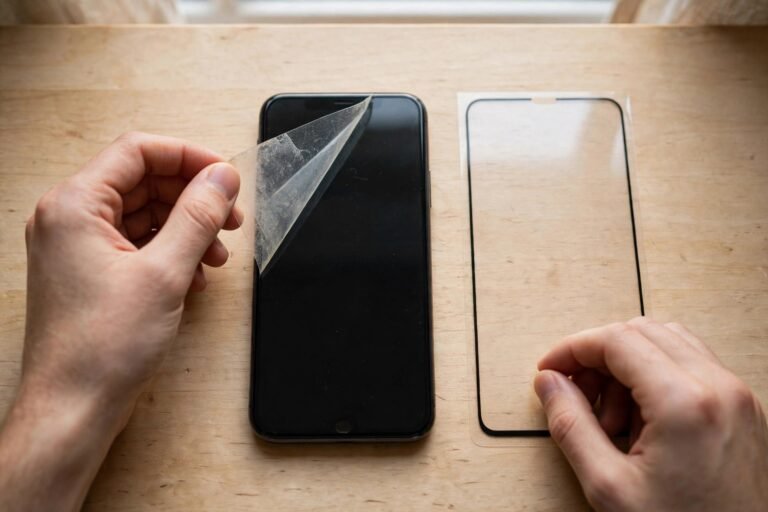
Now choose your starting corner. Look for the corner where the protector is already lifting slightly or has a small chip — that edge has the weakest seal and will start most easily. If all four corners are firmly down, pick any corner except the one nearest the front camera cutout, where the glass is narrower and more fragile. Avoid starting along a long edge: the glass flexes more there and is likelier to crack as you work.
Step 2: Lift the Edge Without Damaging the Screen
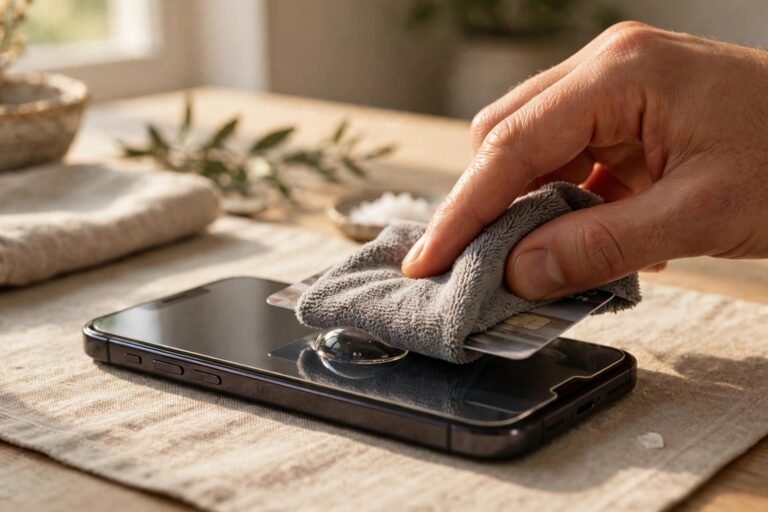
Slide a fingernail under the chosen corner, working it gently side to side rather than digging downwards. You only need to raise the edge by a millimetre or two — just enough to break the seal and get something underneath it. If your nails are short or the protector is sitting very flush, use the corner of a thin plastic card, such as an old loyalty card, with the same rocking motion. Plastic is softer than the phone’s display glass, so it cannot scratch it.
What you must not do is reach for anything metal. A knife tip or flat-head screwdriver will lift the protector, certainly — but one slip drives it across the actual screen, and you will have traded a worn protector for a permanently scratched display. If neither nail nor card will start the edge, do not force it; skip ahead to the warmth trick below, which loosens the adhesive and makes the lift easy.
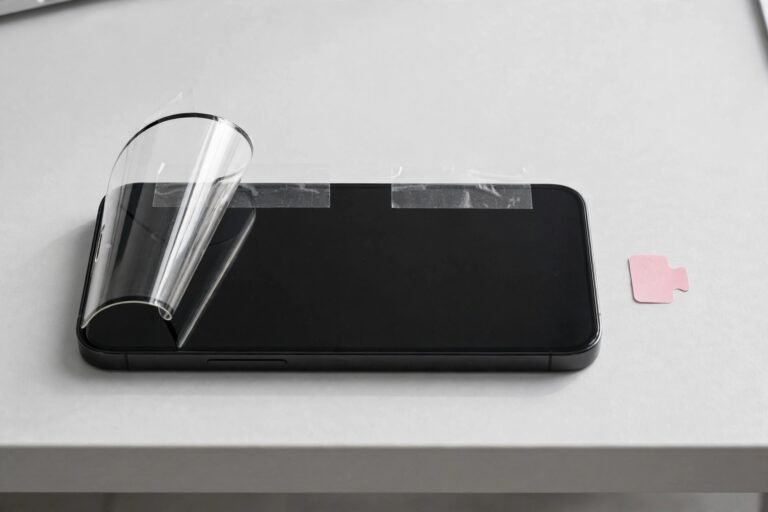
- A piece of tape stuck to the protector’s corner gives you a pull-tab: lift the edge a fraction, press the tape down firmly over it, and pull the tape to raise the corner further without prising.
- If a corner simply will not start, try the other three corners before applying more force. Adhesion is rarely even, and one corner is almost always weaker than the rest.
Step 3: Peel Slowly, Low and Supported
With the corner lifted, slide the plastic card a little further underneath and begin peeling the protector back over itself at a low angle, close to the screen’s surface. Move slowly — a centimetre at a time — and let the adhesive release progressively rather than tearing free. Keep your other hand ready to support the freed part of the protector so it does not bend under its own weight; unsupported tempered glass flexes, and flexed tempered glass snaps.
If resistance suddenly increases, stop pulling and work the card a little deeper instead — you have reached a well-bonded patch, and yanking through it is how protectors split into two pieces, leaving the second half still glued down with a razor edge. For film protectors, the same low-and-slow peel applies; film will not snap, but a fast pull stretches it and can leave adhesive residue streaked across the screen.
Stubborn Protectors: The Warmth Trick and Residue
An old protector that has been on for a year or more can feel welded on. Adhesive softens with warmth, so use the phone normally for a few minutes — or hold it in warm hands — before trying again. For a really stubborn one, a hairdryer on its lowest setting, held well back and kept moving for 20–30 seconds, warms the glass enough to release the bond. Never use high heat, and stop if the phone feels hot rather than warm.
Once the protector is off, you may find patches of adhesive residue on the screen. Dab them with the sticky side of a piece of tape to lift them, or wipe with a microfibre cloth barely dampened with water. Avoid solvents. If the protector was taped for a cracked removal, gather the sheet straight into the bin — shards can work loose from the tape — and brush the table surface down before you put anything else on it.
- Peel towards yourself over a table, never over your lap or the floor. If the glass does crack mid-peel, every fragment lands somewhere you can see and collect it.
- Going straight to a new protector? Do the removal last, just before fitting, so the bare screen spends the least possible time exposed to dust.
Frequently Asked Questions
Can peeling off a protector damage my phone’s screen?
Not if you use the method above. Damage happens when people prise with metal tools or lever hard against the display. Fingernails, plastic cards, and tape cannot scratch the screen glass, and a slow peel puts no meaningful stress on the display itself.
What should I do if the protector breaks into pieces while peeling?
Stop, and press packing tape over the remaining section before continuing — it holds the fragments together so they lift as one piece. Pick up any loose shards with tape rather than your fingers, and check the screen carefully once everything is off.
Why won’t my screen protector come off at all?
Long-fitted protectors bond more firmly over time, and full-coverage adhesive glass is stronger still. Warmth is the answer: warm the phone gently, then work a plastic card under a corner and peel very slowly. Patience shifts protectors that brute force would only shatter.
Peeling off a screen protector rewards patience: start at a corner, lift with plastic or a fingernail, pull low and slow — and even cracked glass comes away in one clean sheet.