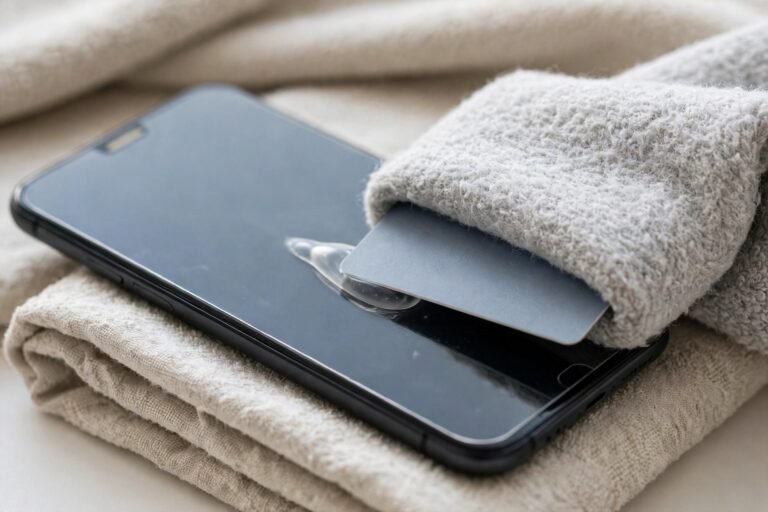
Your new protector is already on the desk, the old glass one is cracked or scratched, and you don’t need to preserve it — you just need it gone, quickly, without turning the job into an archaeology project. When the pane is headed for the bin anyway, removal becomes a two-minute routine: tape, lift, peel, wrap, done.
“Quick” still isn’t a licence to be careless — a rushed removal is how shards end up scattered across the table. This guide gives you the fast routine that keeps the glass contained while you work at full speed.
Key Takeaways
- Since the pane is being discarded, speed is fine — scatter is not. Tape the face first and the rest can be brisk.
- One strip of tape across the middle is enough for an intact pane; a cracked one still gets the full-face treatment.
- Start from the most damaged corner — it’s usually the one that lifts easiest.
- Peel low and steady in one continuous motion; don’t stop halfway to admire your work.
- Fold the removed pane’s tape over its sticky, sharp underside the moment it’s off, and bin it wrapped.
- Two minutes includes the sliver check — a fast job that skips it isn’t finished.
The Two-Minute Routine
Minute one: Case off. Press a wide strip of sticky tape firmly across the face of the protector — if it’s cracked, cover the whole face with overlapping strips; if it’s intact but scratched, one or two strips across the middle will do. Leave a tail of tape hanging past the most chipped corner. Warmth is optional at this speed: if the phone has been in use, the adhesive is already cooperative.
Minute two: Pull the tape tail low and back so the corner lifts, then keep peeling in one smooth motion, folding the pane back over itself while your free hand supports the freed section. Because the pane is taped, even if it cracks mid-peel the fragments travel together. The moment it’s free, fold the tape over the underside, or drop the whole thing onto a sheet of paper and fold that around it. Bin it wrapped.
When Quick Needs One Extra Step
Two situations slow the routine slightly. A very old pane with fully cured adhesive may refuse the first pull — give the edges 30 seconds of a hairdryer on its lowest setting, moving constantly, rather than yanking harder; brute force on a cured bond is what snaps glass into the scatter you’re avoiding. And a pane that has shattered into small pieces needs the full-face tape job done thoroughly, pressing tape into every fragment, before anything moves.
If a section stays stuck after the main sheet lifts, don’t scrape at it. Press fresh tape onto it, wait five seconds, and lift it away; stubborn corners yield to a thin plastic card slid flat underneath.
One habit separates a clean two-minute removal from a messy one: keep the phone still. Work on a table with the handset resting flat, not cradled in one hand while the other pulls — a phone that shifts mid-peel changes the angle of the glass, and changing angles is what makes a controlled peel suddenly crack sideways. If you need a better grip, brace the phone against a book or the edge of a laptop. Steady phone, moving hands: that’s the whole trick.
- Work directly over the open bin or a lined tray — anything that does escape lands contained, not on the floor.
- Keep the new protector still sealed until the old one is binned and the screen is wiped; an open pane on the desk collects the very dust you’re clearing.
The Sliver Check and Screen Wipe
Fast removal earns its keep only if the screen is genuinely clear afterwards. Tilt the phone under a bright light and scan the edges and cutouts, where slivers hide. Dab the whole surface with a fresh piece of tape, then wipe with a microfibre cloth — a quick buff with a barely damp corner lifts any adhesive outline the old pane left behind. Thirty seconds of checking protects the new protector you’re about to fit: press fresh glass down over a hidden shard and you’ll scratch the display and ruin both panes at once.
- Wipe the table surface down too, with a damp paper towel — it captures the invisible glass dust the fast peel shook loose.
- Wash your hands before fitting the new protector; it keeps glass dust off the fresh adhesive and oils off the clean screen.
Frequently Asked Questions
Can I just rip the protector off in one pull?
You can pull briskly, but not recklessly. Taped and peeled low in one motion, yes. Grabbed bare-handed and yanked upward, the pane flexes, snaps, and showers fragments — the twenty seconds you saved costs ten minutes of shard hunting.
Does it matter if the glass cracks while I’m taking it off?
Not for the pane — it’s being discarded. It matters for containment, which is exactly why the tape goes on first: a taped pane can crack all it likes and still lift away as one manageable sheet.
Should I remove the old protector before or after the new one arrives?
After, in the same sitting. A bare screen picks up scratches and dust surprisingly fast, so the ideal sequence is old one off, screen wiped and checked, new one straight on — the whole swap inside ten minutes.
Tape it, lift the worst corner, peel it in one motion, wrap it, check for slivers — two minutes, no scatter, screen ready for its replacement.