Your screen is already cracked, the repair shop cannot see you until next week, and the phone still has to live in your pocket, your bag, and your hand until then. It is natural to wonder whether slapping a screen protector over the damage is a sensible stopgap — or a waste of money and glass.
The honest answer is that a protector over a cracked screen is a first-aid measure, not a repair — and as first aid, it can genuinely be worth doing. It will not fix anything, restore strength, or make the cracks disappear. What it can do is hold loose shards in place, stop hairline cracks from shedding splinters into your thumb, and keep moisture and pocket grit out of the fractures while you wait for a proper screen replacement. This guide explains when that stopgap makes sense, how to fit one safely, and when you should skip it and go straight to repair.
Key Takeaways
- A protector over a cracked screen is a temporary safety measure — it contains shards and protects your fingers, not the phone.
- It adds no structural strength and does not stop existing cracks from spreading underneath it.
- Tempered glass is the better stopgap: it is rigid, smooth, and peels off cleanly later. Film works but wrinkles over uneven cracks.
- Never press hard during fitting — pressure on cracked glass can push cracks further or drive splinters loose.
- If the display beneath is bleeding, flickering, black in patches, or unresponsive, skip the protector — that screen needs repair, not covering.
- Back up your phone before anything else. A cracked screen can fail completely with no warning.
What a Protector Over Cracks Actually Does
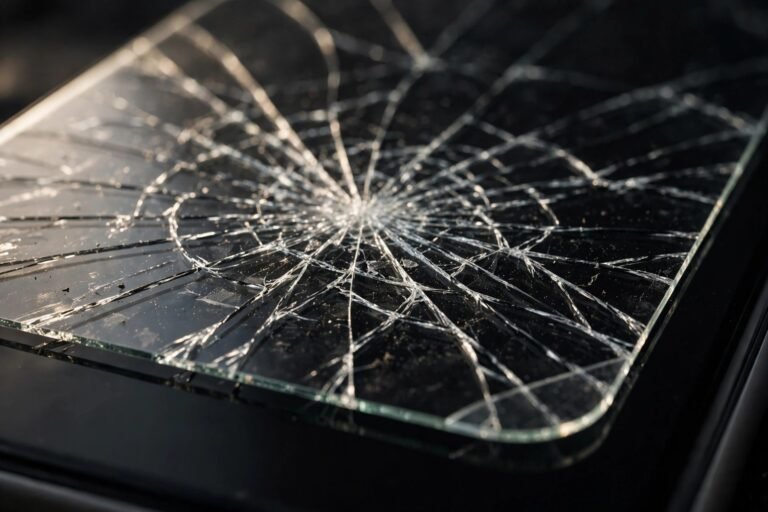
A cracked screen is unpleasant and slightly hazardous for mundane reasons. The fractures leave tiny raised edges and loose micro-shards that catch on skin — most people have felt that faint scratching drag under a swiping thumb. Cracks also act as channels: moisture from rain or a steamy bathroom, and grit from pockets, work their way in and migrate toward the display layers underneath.
A protector fitted over the top seals that mess under a smooth, intact surface. Your thumb glides normally again, loose fragments stay where they are instead of on your fingers, and the cracks are shielded from further contamination. Touch usually works fine through it, and the phone becomes comfortable — and safer — to use for the days or weeks until repair. That is the entire case for doing it, and for a phone you rely on daily, it is a reasonable one.
What It Cannot Do
Be clear-eyed about the limits. A cracked screen has already lost its structural integrity; a thin layer of adhesive-backed glass on top does not restore any of it. The cracks can — and often do — keep spreading underneath the protector with further knocks or even temperature changes. The protector also cannot improve a failing display: dead pixels, spreading black blotches, green lines, and ghost touches are the display dying, and covering them up changes nothing except hiding the symptoms.
One more expectation to set: the protector will not look good. Air gets trapped along every crack line, producing a silvery, webbed appearance that follows the fracture pattern exactly. Adhesion will be patchy where the surface is uneven. This is normal for a stopgap — the goal is containment and usability, not cosmetics.
- No protector to hand? A layer or two of wide, clear packing tape over the cracked area does the same first-aid job for a day or two — it holds shards in place and gives your thumb a smooth surface. It is ugly, but it is genuinely effective until a proper protector or repair.
How to Fit One Safely
First, back up the phone if the screen still responds — do this before handling the damage any further. Then clean the cracked surface extremely gently: a dry microfibre cloth, light strokes in one direction, no liquid cleaners (fluid can run straight into the cracks). If loose fragments are sitting proud of the surface, cover the area with tape and lift them away rather than picking at them.
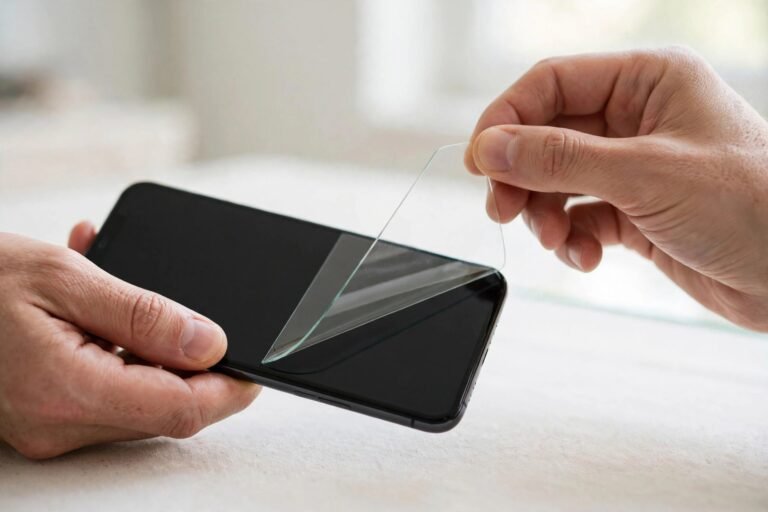
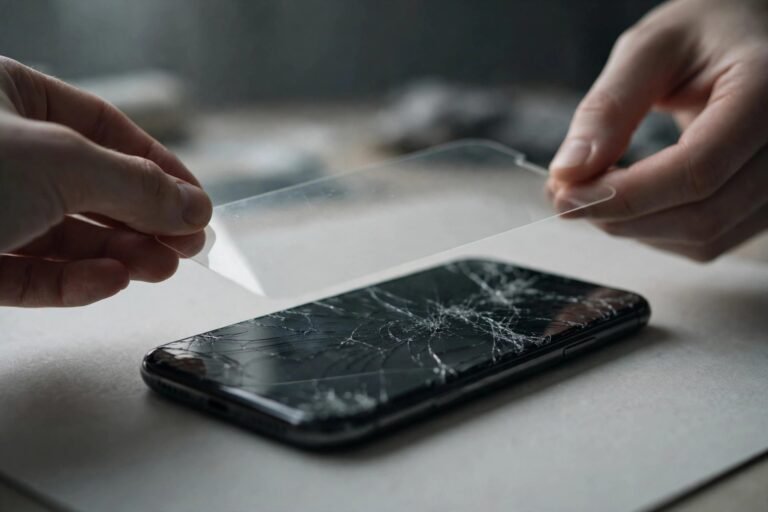
Fit the protector with a lighter touch than usual. Align it, lower it, and let tempered glass settle under its own weight as far as possible. Where you would normally press firmly from the centre outward, use feather-light pressure only — pushing hard on fractured glass can extend cracks or shift shards beneath the surface. Accept the bubbles along the crack lines; chasing them with pressure does more harm than the bubbles ever will. Work slowly, keep your hands flat rather than fingertip-heavy, and wash your hands afterwards.
When to Skip It and Go Straight to Repair
Some damage should not be covered and carried on with. Go directly to a repairer if you see ink-like black or purple blotches spreading, vertical coloured lines, flickering, a display that lights only in patches, or areas that no longer respond to touch — these mean the display panel itself, not just the glass, is broken. The same applies if glass is actively shedding fragments, if the cracks reach the front camera or sensors and distort them, or if the phone is still under a warranty or insurance claim whose terms require the damage to be presented as-is.
Also think twice if the repair is genuinely imminent. If the shop can replace the screen tomorrow, a protector bought today is a day of protection for its full price — the tape trick above covers that gap for free. The protector-as-stopgap earns its keep when the wait is measured in weeks, not hours.
- When the screen is eventually repaired, tell the technician a protector (or tape) is fitted over the cracks. Knowing the surface is sealed helps them remove the old display safely — and loose shards under a protector can surprise someone expecting bare glass.
Frequently Asked Questions
Will a protector stop my cracked screen from getting worse?
Only superficially. It stops the surface from shedding shards and keeps dirt and moisture out of the cracks, which prevents a certain kind of secondary damage. But the glass underneath remains structurally broken, and cracks can continue to spread beneath the protector from further impacts or flexing.
Glass or film — which is better over a cracked screen?
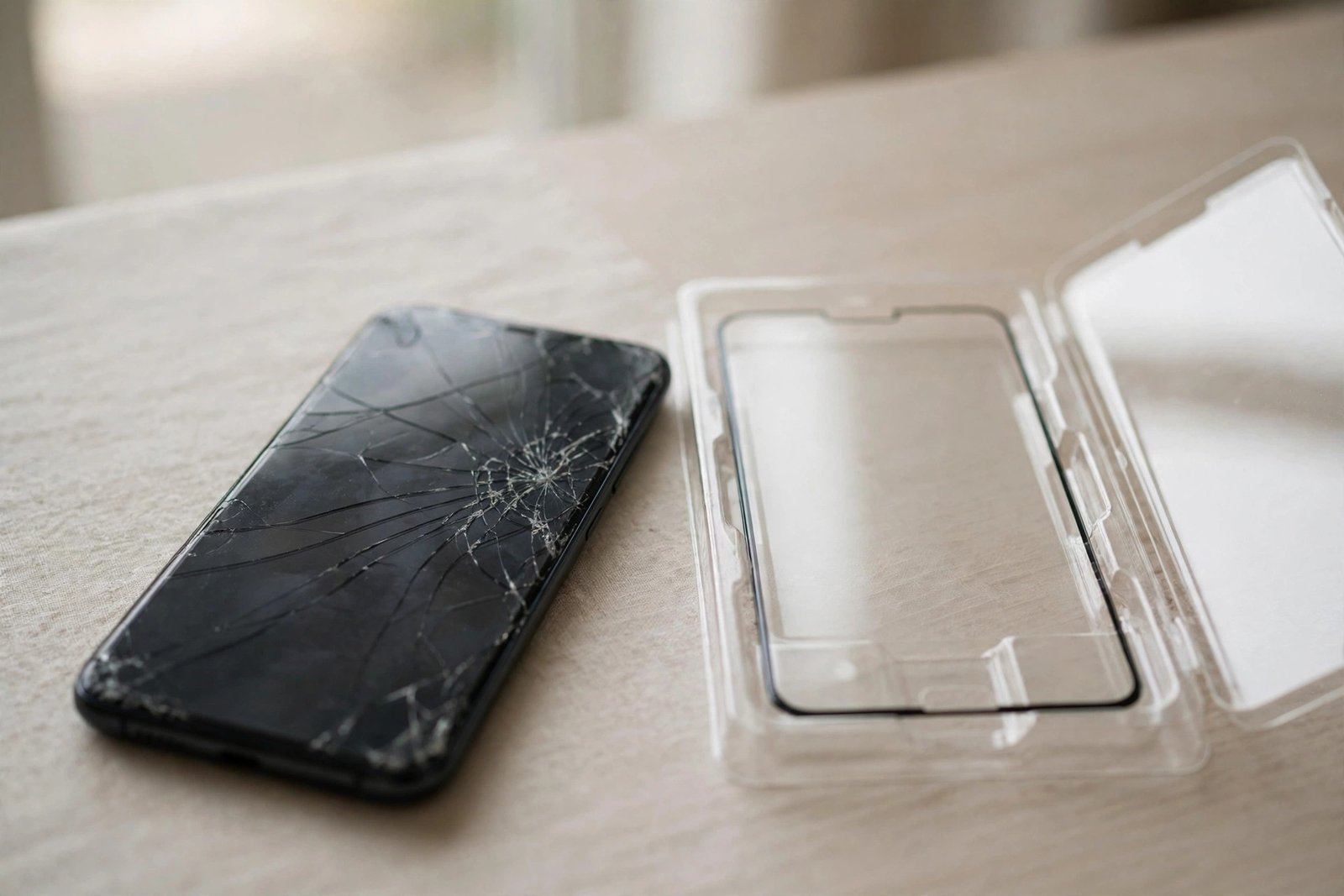
Tempered glass, in most cases. Its rigidity bridges the uneven surface, gives your fingers a properly smooth feel, contains shards more effectively, and — importantly — peels off in one piece when repair day comes. Film conforms to every ridge of the cracks, wrinkles, and can be messier to remove.
Is it dangerous to keep using a cracked screen without any cover?
The risk is modest but real: tiny glass splinters can embed in skin, sharp crack edges can nick a thumb, and every day of use drives more moisture and grit into the fractures. Plenty of people use cracked phones uncovered, but a stopgap cover meaningfully reduces the irritation and the mess — especially if children also handle the phone.
A protector over a cracked screen is a plaster, not a cure — and there is no shame in a plaster. Just fit it gently, keep your expectations honest, and let it buy you comfortable time until the real repair.