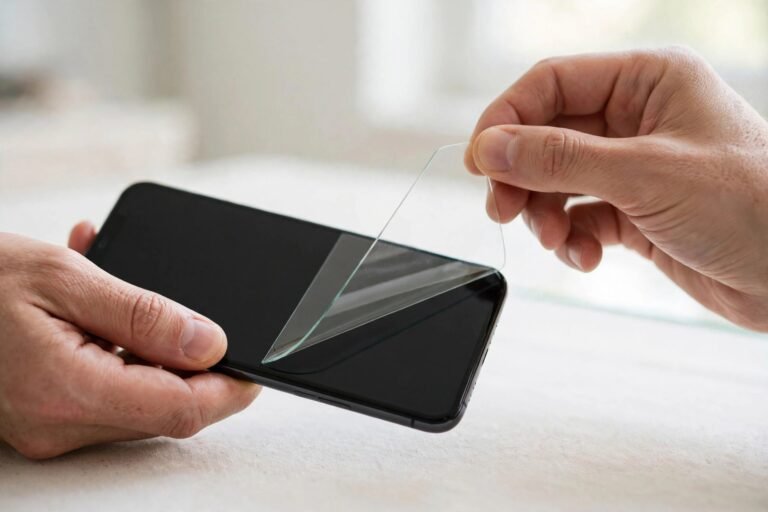
Your phone screen is one of the most-touched surfaces you own — studies routinely find handsets carrying more bacteria than a toilet seat. An antimicrobial screen protector is a tempered glass or film protector with a special treatment designed to stop bacteria and other microbes from multiplying on the surface of your screen.
It looks, feels and installs exactly like an ordinary protector. The difference is invisible: a germ-fighting agent built into the coating that works quietly in the background between cleans. This guide explains how it works, what it can and cannot do, and whether it is worth choosing over a standard protector.
Key Takeaways
- An antimicrobial protector has an agent — often silver ions — in its coating that inhibits the growth of bacteria on the screen’s surface.
- Reputable protectors are lab-tested to standards such as ISO 22196 and typically claim up to a 99.9% reduction in common bacteria like E. coli and staph.
- It slows germs building up between cleans — it does not sterilise your phone, and it is not a substitute for cleaning.
- “Antimicrobial” is broader than “antibacterial”: it covers bacteria and other micro-organisms, but claims about viruses vary — check the testing behind any specific claim.
- The treatment sits in the surface coating, so it wears down gradually with friction and cleaning over the protector’s life.
- Touch, clarity and fingerprint unlocking work as normal — the coating is transparent and adds no noticeable thickness.
How an Antimicrobial Screen Protector Works
Most antimicrobial protectors use silver-ion technology. Silver has been known for centuries to disrupt microbes, and in a modern coating the silver ions are embedded in the top layer of the glass or film. When bacteria land on the surface and moisture is present, the ions interfere with the microbes’ ability to feed, grow and reproduce. The colony stalls instead of multiplying, so the surface stays measurably cleaner between wipes.
Because the agent is built into the coating rather than sprayed on, it works continuously and doesn’t wash off the first time you clean the screen. Manufacturers typically validate the effect in a laboratory using test methods such as ISO 22196 or JIS Z 2801, which measure how much a bacterial population falls on a treated surface over 24 hours compared with an untreated one. That is where the familiar “up to 99.9% reduction” figure comes from.
What It Can and Cannot Do
It helps to be precise about the limits. An antimicrobial protector inhibits growth — it does not instantly kill every germ that touches your phone, and it does nothing about the bacteria already on your hands, your case, or the back of the handset. Think of it as keeping the screen from becoming a breeding ground between cleans, not as a disinfectant. You should still wipe your phone down regularly, especially after travel, illness or sharing the device.
The terminology matters too. Antibacterial means the treatment targets bacteria specifically. Antimicrobial is the wider term, covering bacteria, mould and mildew as well. Viruses are a separate category again, and most antimicrobial coatings are not tested or certified against them — if a protector claims antiviral performance, look for the specific test standard behind the claim before relying on it.
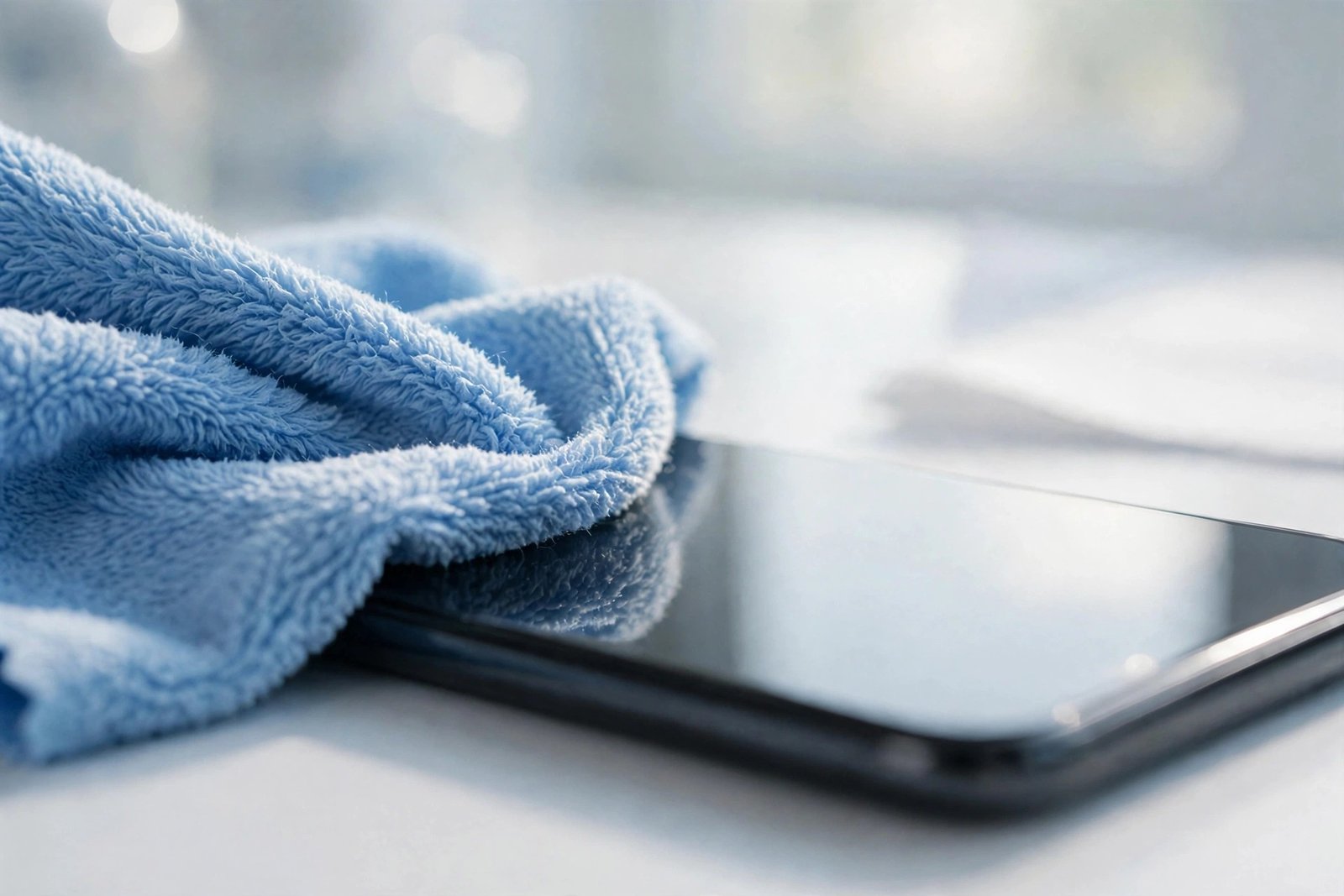
- Pair an antimicrobial protector with a simple habit: a quick wipe with a microfibre cloth once a day. The coating handles regrowth between cleans; the wipe removes the dirt and oils the coating can’t.
Does the Coating Wear Off?
Gradually, yes. The antimicrobial layer is part of the surface coating — the same layer that carries the fingerprint-resistant (oleophobic) finish — so the friction your screen endures every day slowly thins it. Swipes, pocket abrasion and frequent cleaning with alcohol-based products all speed the process up. The protector itself will keep protecting against scratches and impacts long after the antimicrobial effect has faded.
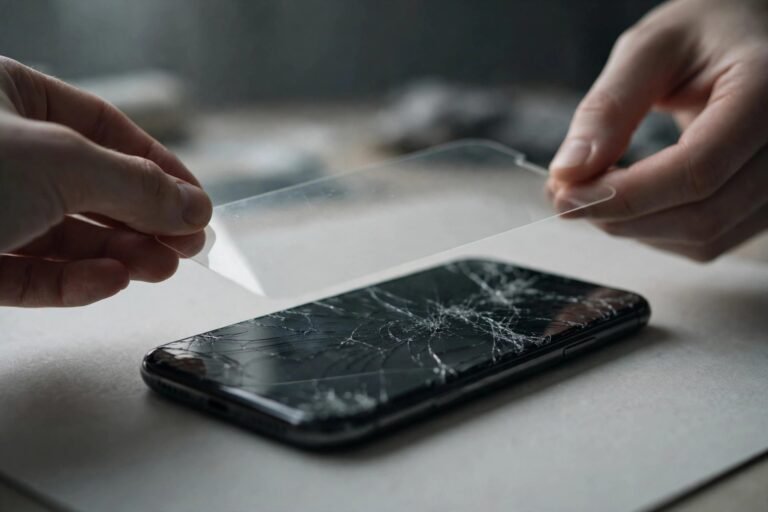
In practice, most people replace a protector when it cracks, chips at the edges or looks tired — typically somewhere between several months and a couple of years. That replacement cycle roughly matches the useful life of the coating anyway, so treating the antimicrobial benefit as a bonus that is strongest while the protector is fresh is the realistic way to look at it. Gentle cleaning with a plain microfibre cloth, rather than harsh solvents, helps both coatings last longer.
Who Benefits Most from One?
An antimicrobial protector makes the most sense where a phone passes through many hands or grubby environments: parents whose toddlers grab the handset, people who share devices at work, healthcare and hospitality staff, gym-goers, and anyone who uses their phone while cooking or commuting. In those situations, slowing bacterial build-up on the most-touched surface is a genuine, if modest, hygiene gain.
For everyone else it is a nice-to-have rather than a necessity. The protective qualities — scratch resistance, impact absorption, clarity — are the same as a standard protector of equivalent quality, and antimicrobial versions typically cost a little more. If the price difference is small, it is a reasonable upgrade; if it is large, a standard protector plus regular cleaning achieves most of the same result. Either way, choose the model made for your exact phone so the fit, cut-outs and fingerprint sensor compatibility are right.
- Check the packaging for a named test standard (such as ISO 22196) and the organisms tested. A protector that cites its lab method is making a verifiable claim; vague “germ-free” wording with no standard behind it is marketing.
Frequently Asked Questions
Does an antimicrobial screen protector kill viruses?
Not usually, no. Most antimicrobial coatings are tested against bacteria (and sometimes mould), not viruses. A few protectors make specific antiviral claims backed by their own lab testing, but unless the manufacturer states the standard and the virus tested, assume the protection is antibacterial only.
Do I still need to clean my phone if I use one?
Yes. The coating slows bacteria multiplying on the surface, but it doesn’t remove dirt, oils or germs that arrive on the screen, and it doesn’t treat the rest of the phone. A regular wipe-down with a microfibre cloth — and following your phone maker’s guidance on disinfecting — remains part of basic phone hygiene.
Will it affect touch sensitivity or fingerprint unlocking?
It shouldn’t. The antimicrobial treatment lives in a transparent surface coating and adds no meaningful thickness, so touch response and display clarity are the same as a standard protector. As with any protector, under-display fingerprint sensors work best with a model designed for your phone — enable your phone’s touch sensitivity setting if responses feel sluggish.
An antimicrobial screen protector won’t make your phone sterile — but it does stop the screen you touch hundreds of times a day from quietly farming bacteria between cleans. Fitted well and cleaned regularly, it’s ordinary protection with a genuinely useful extra.