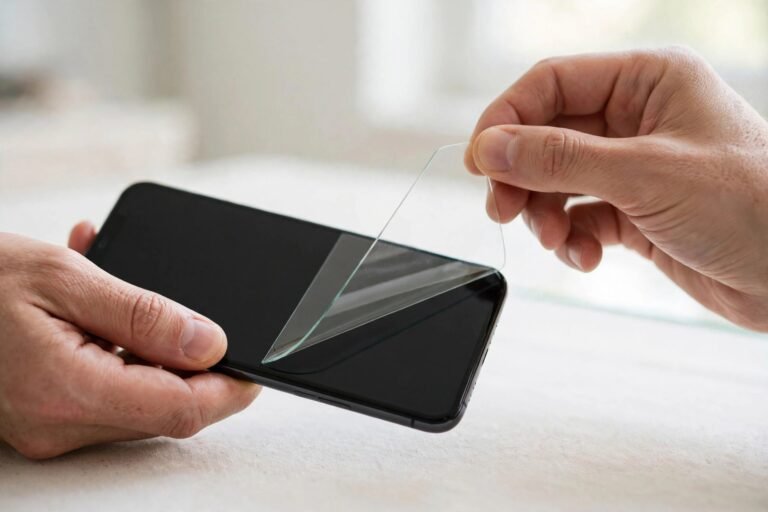
Gadget Guard’s liquid screen protector confuses people for a simple reason: there is no glass. Unlike the brand’s tray-aligned tempered glass kits, the liquid version is a wipe-on nano-coating — a liquid you spread across a bare screen, which then cures into an invisible, bonded layer. Nothing to align, nothing to peel, and nothing visible once it is on.
Because kit contents and exact steps vary between versions and regions, one rule comes before all others: the instructions in your packaging are the authority, and anything warranty-related depends on the current terms that come with your specific product. This guide explains the general method those kits follow — clean, apply, wait, buff, cure — so you understand what you are doing and why, and can follow the packaging steps with confidence.
Key Takeaways
- This is a liquid coating, not a glass sheet — it bonds invisibly to the screen and cannot be seen or felt once cured.
- Read the packaging instructions first and follow them over any general guide — kit contents, timings and registration steps vary by version.
- The method is always the same shape: clean thoroughly, apply the liquid evenly, wait, buff, then let it cure undisturbed.
- Preparation decides the result — the screen must be completely clean and dry before the liquid touches it, or the coating bonds to the dirt instead.
- A liquid coating helps against fine scratches and scuffs; it is not a substitute for tempered glass against drops and hard impacts.
- If the packaging mentions registering the product or a coverage scheme, do it within the stated window and keep your receipt — check the current terms, as these change.
What the Product Is (and Typically What’s in the Kit)
Liquid protectors of this type are based on a silicon-dioxide solution — the same basic ingredient as glass, suspended in liquid. Wiped across the screen, it settles into the microscopic texture of the glass and cures into an extremely thin, hardened layer that makes the surface smoother and more resistant to the fine scratches of daily life: keys, grit, coins, pocket wear. Kits of this kind typically include the coating liquid or a pre-soaked applicator, cleaning wipes and a microfibre cloth — but “typically” is doing real work in that sentence. Check what is actually in your box before you start, and if a step in the packaging refers to something you cannot find, pause and check the brand’s current support material rather than improvising.
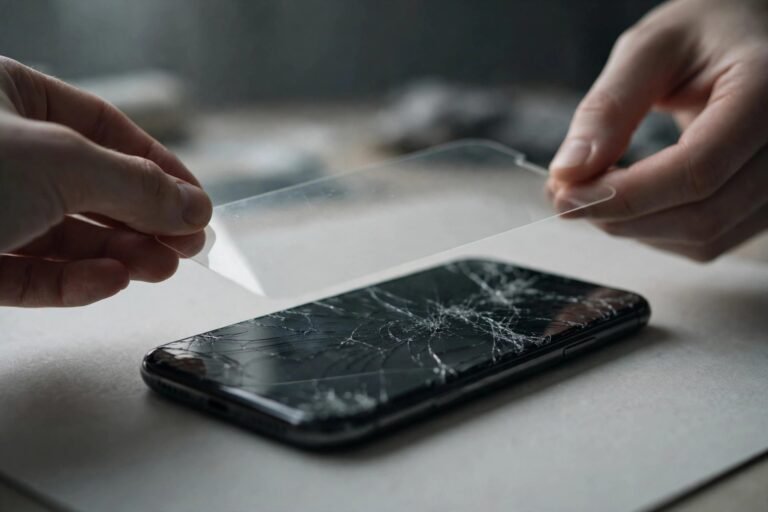
Set expectations honestly. The cured layer is measured in nanometres, so it adds no cushion and no meaningful impact protection — a drop that would crack a bare screen will usually crack a coated one. What you are buying is invisible scratch resistance that works with any case and does not interfere with the look or feel of the phone.
The General Application Method
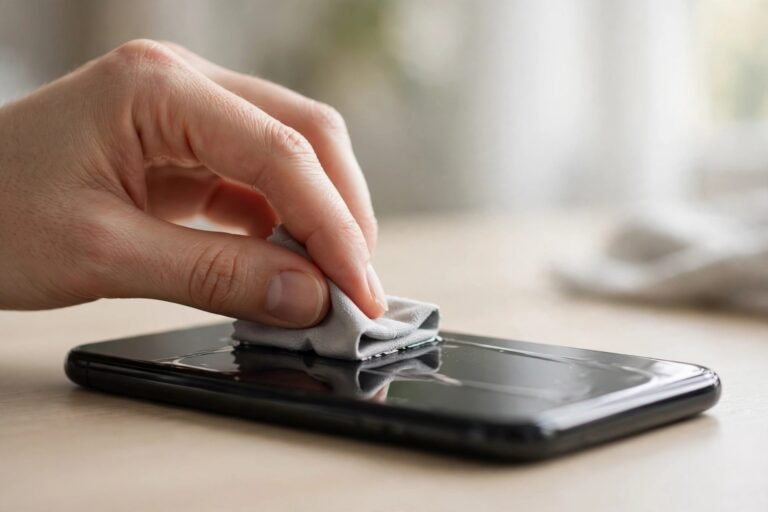
Step one is cleaning, and it is the step that decides everything. Remove any case and any old protector. Clean the screen using the wipes supplied or as the packaging directs, working over the whole surface including the edges, then dry and polish it with a clean microfibre cloth. Inspect the screen at an angle under a bright light: any grease, smear or speck you can see will be sealed under the coating, and the liquid will not bond properly over oil or dust. Wash and dry your hands, and avoid touching the screen with your fingers from this point on.
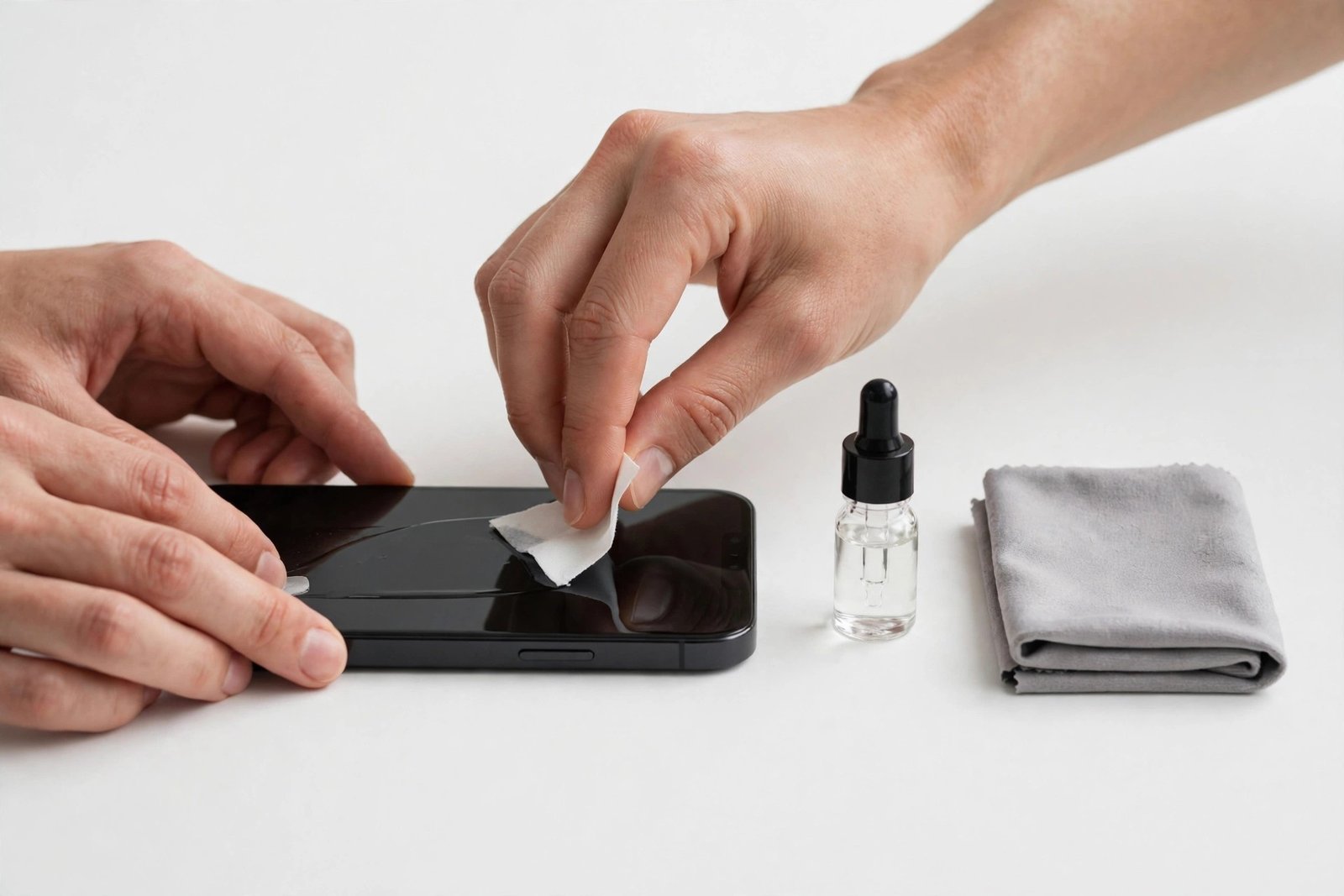
Step two is applying the liquid. Following the packaging — which may involve a vial, a saturated cloth or a wipe — spread the coating over the entire screen in smooth, even strokes, corners and edges included. Aim for a thin, uniform film: excess liquid does not cure into extra protection, it simply gets buffed away. If the instructions specify a waiting period before buffing so the coating can begin to bond, observe it. Step three is the buff: with a clean microfibre cloth, polish the screen in light circular motions until it looks exactly as it did before — clear, smooth and invisible. That invisibility is the point.
- Apply the coating in the evening and leave the phone untouched on a clean surface overnight. Whatever curing time the packaging states, an undisturbed night covers it comfortably — no pockets, no grit, no impatient swiping while the layer hardens.
Curing, Aftercare and the Warranty Question
Curing is the final step and the easiest to rush. Liquid coatings continue hardening after the buff, and the packaging will state how long yours needs — it can be several hours or longer. During that window, keep the phone away from water and heavy use as far as you can; reaching for it constantly will not necessarily ruin the application, but it can shorten the coating’s effective life. Once cured, use the phone normally: the coating is case-compatible precisely because it has no thickness, and in-display fingerprint sensors are generally unaffected by a layer this thin — but if your phone behaves oddly, the product’s current guidance is the place to check.
Finally, the paperwork. Liquid protectors are often sold alongside some form of screen-coverage or replacement promise, and these schemes almost always come with conditions — registration within a set period is the classic one, and a missed registration window is the classic reason claims disappoint. Gadget Guard’s terms, like every brand’s, are set by the specific product and can change, so read the current terms that came with your kit, register if it asks you to, and keep the receipt. And keep the promise in perspective: coverage is a financial safety net if the screen breaks, not a claim that the coating makes breakage impossible.
- Photograph the packaging, batch details and your receipt before you throw anything away. If you ever need the warranty or coverage, having the exact product version and purchase date to hand is what makes the claim straightforward.
Frequently Asked Questions
How long does a liquid coating like this last?
It wears away gradually rather than failing all at once — friction, cleaning and everyday chemicals all thin it over time. How long that takes depends on the product version and how hard the phone is used, so the honest answer is to follow the lifespan and reapplication guidance in your packaging. Expect heavy use to shorten it, and treat any precise figure as the brand’s current claim rather than a guarantee.
Can I apply it over an existing glass protector?
Liquid coatings are designed to bond to your phone’s actual screen glass. Applying one over a tempered glass protector would coat the protector, not the phone — pointless if the protector is later removed, and not what the product is for. If you want the liquid coating, remove the old protector first and clean the bare screen thoroughly. If your kit’s instructions say otherwise for a specific version, follow them.
Does it work with any case and with fingerprint sensors?
Generally, yes — that is one of the genuine advantages of a coating over glass. Because it adds no thickness, it cannot clash with case edges or lift at the corners, and a layer measured in nanometres does not normally interfere with in-display fingerprint readers or touch sensitivity. If you experience anything unusual after applying, check the product’s current support guidance before assuming a fault with the phone.
Clean meticulously, spread it thinly, buff it clear, and give it the night to cure — and whatever your packaging says that differs from this, the packaging wins.