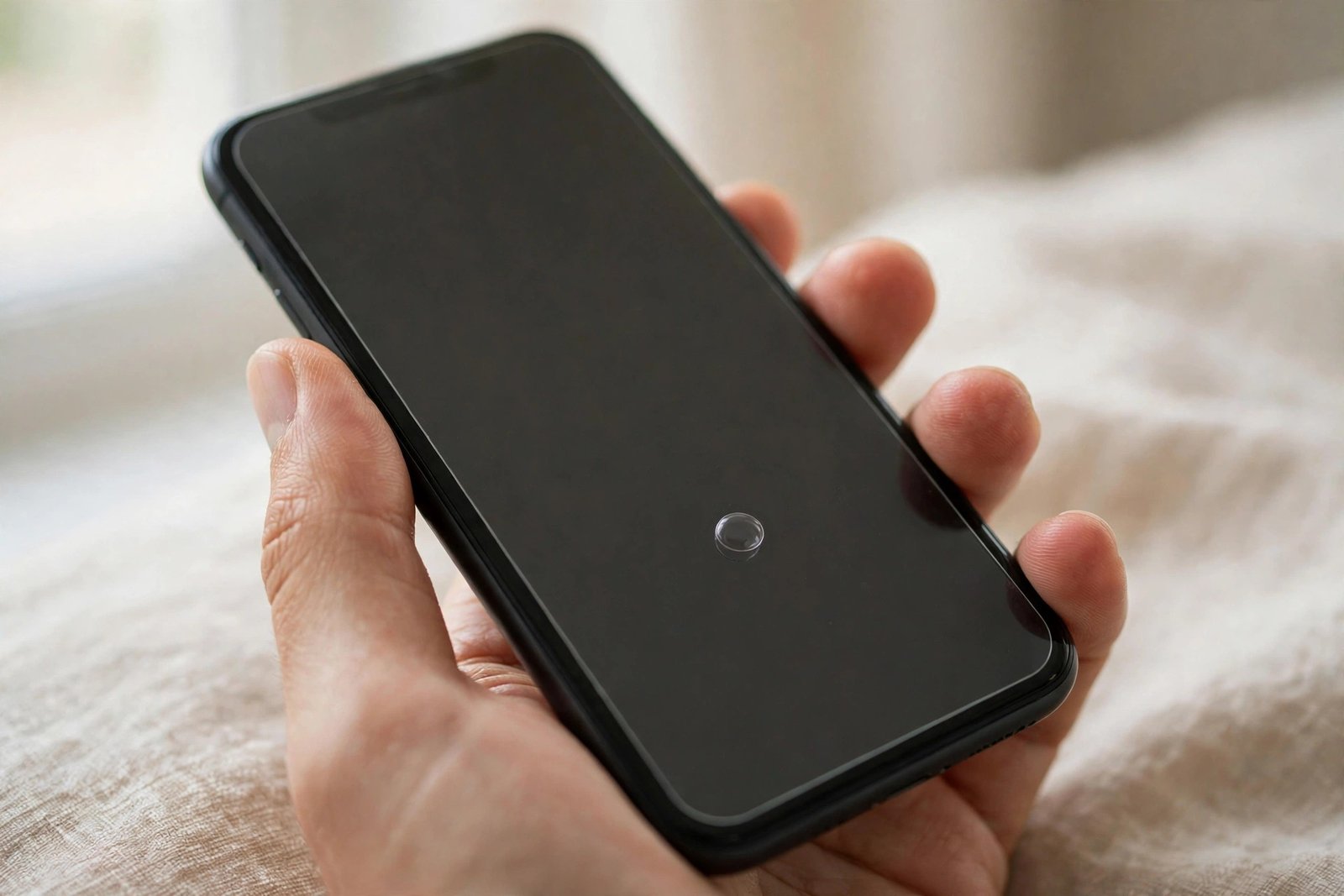
There it is, right in the middle of the display: one bubble, catching the light every time you tilt the phone, sitting exactly where your eyes land a hundred times a day. Before you reach for a card and start shoving, it is worth asking a question most guides skip — does this bubble actually need fixing? Some bubbles are faults. Some are cosmetic freckles. And some fixes do more damage than the bubble ever would.
This guide helps you judge first and act second: how to tell whether a bubble is cosmetic or genuinely functional, the single-bubble cures ranked from gentlest to most invasive, and the situations where the wisest move is to leave the thing exactly where it is.
Key Takeaways
- A bubble only matters functionally if it deadens touch, distorts a camera’s view, or keeps growing. Everything else is cosmetic.
- Wait 48 hours after fitting before judging any bubble — a large share of them are still curing.
- Cures rank from patience, to a thumb press, to a corner vent, to a dust lift. Always start at the gentle end.
- Every intervention carries a small risk of making things worse — fresh dust, lifted edges, fatigued adhesive.
- A bubble over the front camera or fingerprint sensor is functional, not cosmetic, and is worth fixing properly.
Cosmetic or Functional? The Judgement That Matters
Function first. Test the screen directly over the bubble with a few deliberate taps and a swipe. If touches register crisply, the bubble is not interfering with the digitiser — on modern phones, a shallow air gap rarely does. Next, check what lives under the bubble. One that overlaps the front camera lens will haze your selfies; one over an in-display fingerprint sensor can make unlocking unreliable. Those are functional faults, and fixing them is legitimate maintenance, not vanity.
Then growth. A bubble that is the same size it was three days ago is a finished event — the fitting’s history, frozen. A bubble that creeps, or one trailed by lifting edges, signals a seal that is failing, and it will keep travelling until the protector’s bond gives up entirely. Stable means optional; growing means act. Everything else — the bubble you simply dislike looking at — is cosmetic, and cosmetic problems deserve the least invasive cure that works, because the protector is otherwise doing its job perfectly.
The Cures, Ranked Gentlest First
- 1. Patience. Under 48 hours old? Do nothing. Adhesive flow removes a surprising number of bubbles while you sleep.
- 2. The thumb press. For a soft, movable bubble: wrap your thumb in microfibre, start behind the bubble, and walk it to the nearest edge in one slow push. One pass, then check.
- 3. The corner vent. Bubble reaches the edge but won’t leave? Lift the nearest corner a few millimetres with tape, let the air escape, reseat, and smooth outward.
- 4. The dust lift. Only if a speck is visible at the bubble’s centre. Lift in a steamy room, dab the speck away with a dust sticker, relay once.
- 5. Acceptance or replacement. A cloudy, immovable bubble is contaminated adhesive. Live with it if it’s peripheral — or fit the spare and get a flawless screen in five minutes.
Move down the list only when the step above has genuinely failed, and give each step a fair chance to work — a thumb-pressed bubble sometimes settles flat over the following hour rather than instantly.
- Judge a bubble in the light you actually live in. Under a harsh desk lamp every screen looks flawed; if you can’t see it in normal daylight, it isn’t a problem worth risking dust for.
- Screenshot test for cameras: take a selfie. If the bubble over the lens doesn’t show in the photo, it’s cosmetic even there.
When Leaving It Alone Is the Right Answer
There is a real cost ledger to intervening. Every lift of a corner admits a little air at a new spot and invites dust; every hard press risks cracking a glass edge; every refit weakens the adhesive slightly. Professionals replace protectors constantly, so the stakes are low for them. For you, the sensible rule is this: if the bubble is stable, small, away from sensors, and only visible when you hunt for it, the expected value of fixing it is negative. You are trading a certain tiny blemish for a lottery that includes bigger ones.
Leaving it alone is also the right call in the last weeks of a protector’s life. If the glass is already scratched or chipped elsewhere, don’t perform surgery on a bubble — replace the whole protector at your convenience and solve every flaw at once. Surgery is for young, otherwise-perfect installs.
- Set a review date: photograph the bubble, then look again in a week. Stable in both photos means you can forget it with a clear conscience.
- If the bubble appeared weeks after a perfect install, suspect the case, not the fitting — check whether a case lip touches that edge before attempting any cure.
Frequently Asked Questions
Does a bubble mean my protector was fitted badly?
Not necessarily. Even careful installs trap the occasional bubble — a single airborne fibre landing in the last second is enough. One bubble in an otherwise clean, straight install is ordinary bad luck, not incompetence. A screen full of bubbles is a technique problem; a single bubble is just probability having its say.
Can a bubble get bigger over time?
A bubble caused by trapped air or dust is stable — it has no mechanism for growth. A bubble that grows is really an edge failure spreading inward: the perimeter seal is letting go, often pushed by a case or by heat. That is why growth changes the advice from “optional” to “act soon” — the protector is on its way off.
Will a bubble affect my screen’s resale inspection?
Only if a buyer mistakes it for screen damage — which is easily resolved, because a bubble belongs to the protector, not the phone. Peel the protector off before selling and the screen underneath is exactly as protected as the day you fitted it. If anything, a long-serving protector with one honest bubble is evidence the real screen has been shielded its whole life.
Diagnose before you treat: functional, growing, or over a sensor — fix it, gently and in order. Stable, small, and merely visible — the bravest and best move is often to put the card down and walk away.