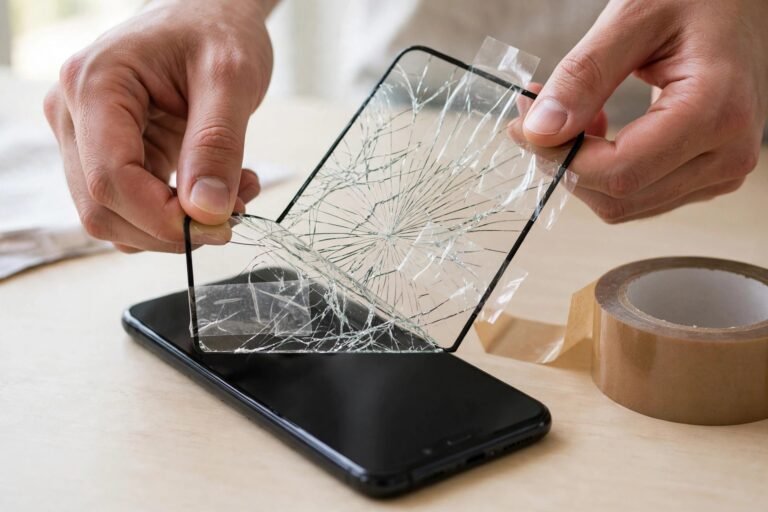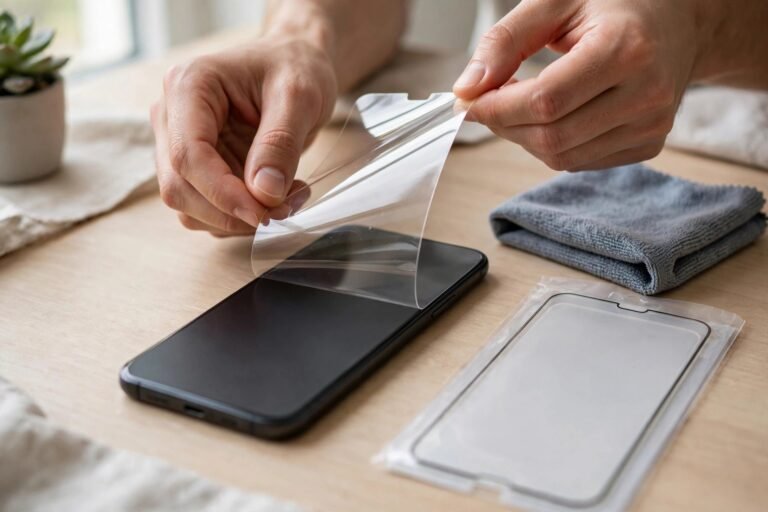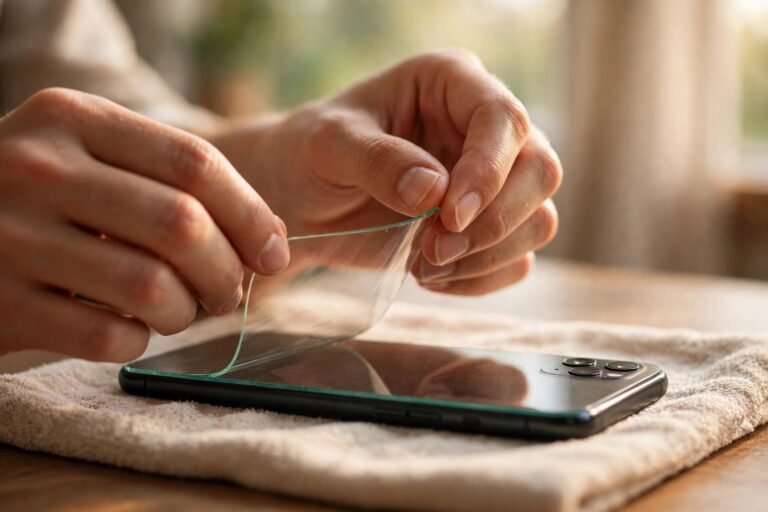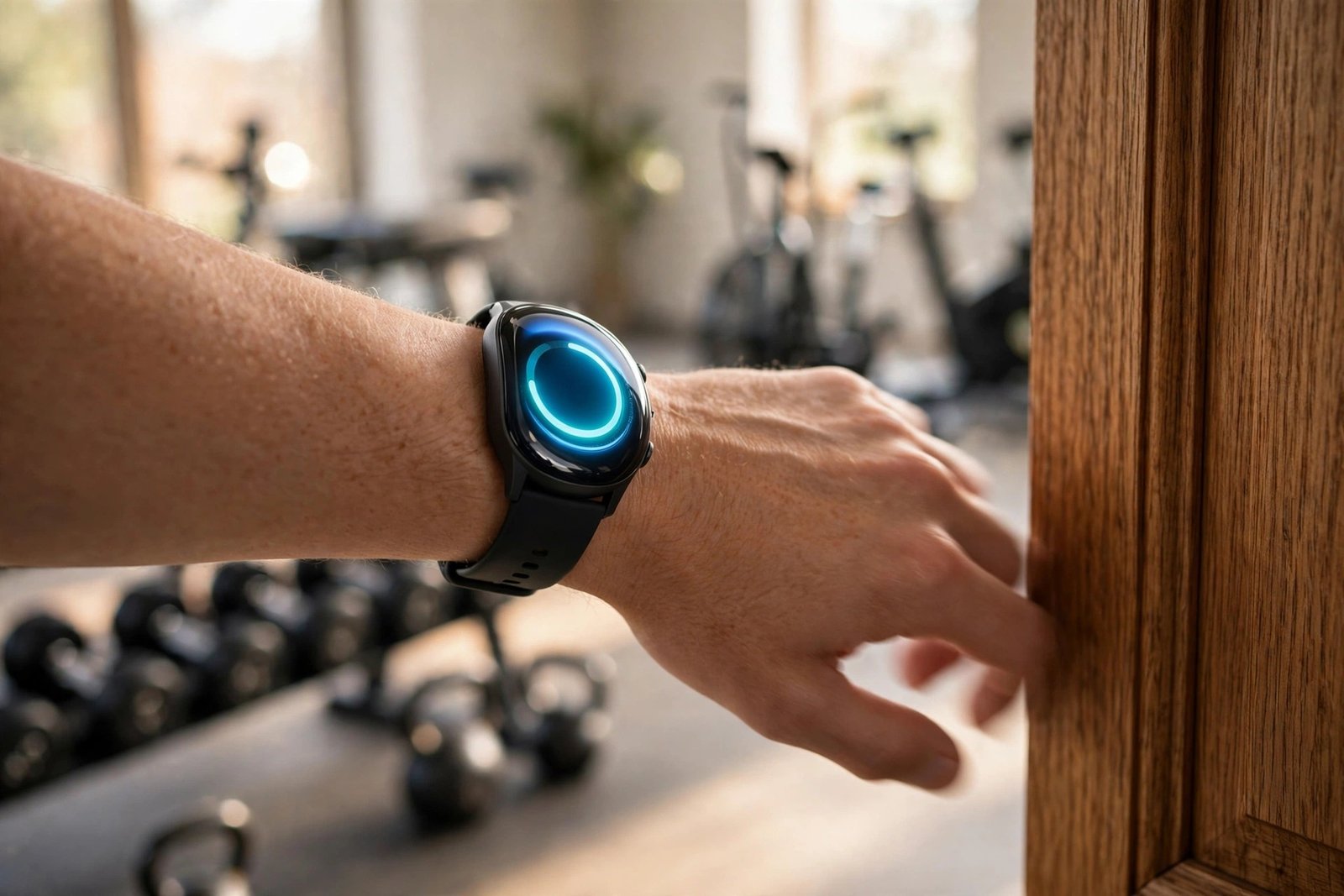
A phone spends most of its life protected — in a pocket, in a bag, face-up on a desk. A watch gets no such shelter. Your Apple Watch rides on the outside of your wrist, at exactly the height of doorframes, desk edges, gym equipment and car doors, and it meets them all, sooner or later. So do you need a screen protector for an Apple Watch? More often than with a phone, the answer leans towards yes — but it depends heavily on which model you own and how you live in it.
This guide works through the factors that actually decide it: the difference between the glass on aluminium models and the sapphire on premium ones, the awkward reality of that small, deeply curved screen, and the cases and bumpers that offer an alternative kind of protection.
Key Takeaways
- Your watch face sits proud on your wrist and knocks against hard edges daily — it is the most exposed screen you own.
- Aluminium Apple Watch models use Ion-X glass, which scratches noticeably more easily than sapphire.
- Sapphire crystal models resist scratches superbly, but sapphire can still chip or crack on a sharp impact.
- The small, strongly curved display makes full-coverage protectors harder to fit neatly than phone protectors.
- Slim cases and bumpers protect the edges and body as well as the glass — worth considering as an alternative.
- Physical jobs, gym training and outdoor work push the answer firmly towards yes.
Why a Wrist Is a Dangerous Place for Glass
Think about how a watch gets damaged. It is rarely dropped — it is strapped on. Instead it is swung into things: the edge of a doorframe as you pass through carrying shopping, a brick wall as you steady yourself, a metal rack at the gym, the corner of a desk as you reach for something. Each knock is small, but the watch face leads every one of them, and the damage arrives as nicks, hairline scratches and occasionally a crack starting from the edge.
Unlike a phone, you cannot put a watch somewhere safer when the work gets rough — or rather, you can, but a fitness and notification device left in a locker is not doing its job. The exposure is constant, which is precisely why a sacrificial layer earns its place here.
Ion-X Glass vs Sapphire: Your Model Decides Half the Answer
The aluminium Apple Watch models use Ion-X glass, a strengthened glass similar in spirit to phone glass. It handles everyday life reasonably, but owners consistently find it picks up fine scratches — from walls, zips, and even gritty sleeves — within months. On these models, a protector is close to essential if you care about keeping the screen clean-looking.
The stainless steel, titanium and Ultra models use a sapphire crystal front. Sapphire is dramatically harder — very few everyday materials can scratch it at all — so for pure scratch resistance, these watches need a protector far less. The catch is that hardness is not toughness: sapphire can still chip at the edge or crack if it takes a hard, sharp knock. So on a sapphire model the question shifts from “will it scratch?” (almost certainly not) to “how rough is my life with impacts?”
- Not sure which front your watch has? Aluminium case = Ion-X glass; stainless steel, titanium and Ultra = sapphire. Check the wording engraved on the back of the case.
- On Ion-X models, fit the protector from day one — the first fine scratches often arrive within the first few weeks of wear.
The Small, Curved Screen Problem
Fitting protection to an Apple Watch is fiddlier than fitting it to a phone. The display is small and its glass curves down at every edge, so a flat protector can only cover the middle, leaving the vulnerable rim exposed — and the rim is exactly where knocks land. Full-coverage protectors solve this by curving with the glass or wrapping slightly over the edges, but they demand careful alignment, and cheaper ones can lift at the corners or dull touch response.
Film protectors follow the curve most faithfully and are nearly invisible, though they offer scratch protection rather than impact absorption. Tempered glass versions that cover the full face exist and protect better against knocks, but check that the one you choose follows the curve of your exact watch size.
Cases and Bumpers: The Other Route
Because the watch’s edges take so many hits, many owners skip a screen layer and choose a slim case or bumper instead. These snap over the watch body and stand slightly proud of the glass, so doorframes meet the bumper first. Some include a built-in front cover, combining both approaches in one piece.
The trade-offs are bulk and feel: a case makes an elegant watch look sportier and chunkier, and covers can trap moisture after swimming or training. A protector film, by contrast, adds almost nothing you can see or feel. Plenty of active owners use both — a film for the glass, a bumper that goes on only for the gym, the pitch or the workshop.
- If you train with weights, the highest-risk moment is racking and unracking — metal meeting wrist. A bumper for workouts only is a cheap compromise.
- After swimming or a sweaty session, dry under any case or cover — trapped moisture against the sensors and crown causes its own problems.
So, Do You Need One?
On an aluminium (Ion-X) model, worn daily by anyone with an active job or training routine: yes, fit one — the glass will thank you within the first month. On a sapphire model with a desk-based life, you can reasonably go without and accept the small impact risk. And if your watch regularly shares space with tools, weights or masonry, protect it regardless of model — either a full-coverage protector, a bumper, or both.
Frequently Asked Questions
Will a protector spoil the look or touch response of my Apple Watch?
A well-fitted film or full-coverage glass protector is barely visible and touch response stays normal, because the watch’s screen is designed to work through thin layers. Problems come from poor fit — a protector that lifts at the edges can feel spongy. Fit quality matters more on a watch than on a phone, so take your time or have it fitted carefully.
Does the Apple Watch Ultra need a screen protector?
Its sapphire front shrugs off scratches from almost anything you will meet, so for scratching alone, no. But the Ultra is bought for outdoor and endurance use — rock, metal and concrete impacts are realistic in that life, and sapphire can chip. Many Ultra owners fit a protector or use a case for adventures only, which is a sensible middle path.
Can I still swim and shower with a protector fitted?
Yes — a properly sealed protector does not change the watch’s water resistance, and the watch remains fine for swimming and showering. Just be aware that water can work under a poorly fitted or lifting edge over time, so replace a protector whose edges have started to peel rather than pressing it back down.
A watch lives in harm’s way in a way no phone ever does. On Ion-X glass a protector is close to essential; on sapphire it is a judgment call about impacts — but on a wrist that works for a living, protection of some kind is rarely wasted.