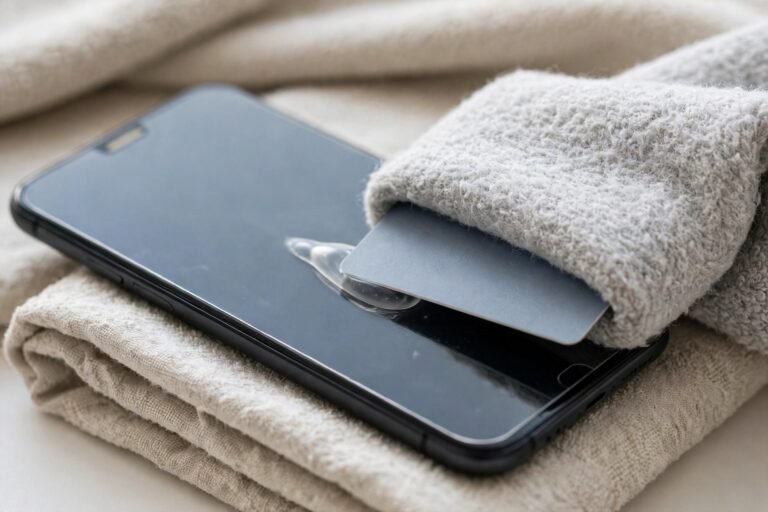
Fitting a screen protector to an iPad changes more than the screen — it changes the tool you draw and write with. Anyone who uses an Apple Pencil quickly notices the difference, and the effect depends entirely on which type of protector you choose. Smooth glass and matte, paper-like protectors sit at opposite ends of the scale, and neither is simply “better”.
The short answer: a well-fitted protector of any kind leaves the Pencil’s pressure sensitivity, tilt detection and palm rejection working as they should, because those systems live in the Pencil and the iPad’s digitiser, not the surface. What changes — sometimes dramatically — is the feel: glide, control, and how quickly your Pencil tip wears down.
Key Takeaways
- Sensitivity is unaffected by a properly fitted protector — pressure, tilt and palm rejection all keep working.
- Glass feels slick: the Pencil glides fast with little friction, which some find slippery for fine work, and adds a whisper of distance between tip and pixels.
- Matte and paper-like protectors add “tooth” — friction that improves stroke control and makes writing feel like paper.
- That friction has a price: textured protectors wear Pencil tips noticeably faster than smooth glass does.
- Artists generally gain from matte texture; note-takers should weigh feel against tip wear and screen clarity.
What Doesn’t Change: Sensitivity and Accuracy
It helps to know what a protector physically can and cannot influence. The iPad detects the Pencil through the display stack itself, sensing pressure and tilt from the Pencil’s own electronics. A protector adds a fraction of a millimetre of material above that system — well within the range it is designed to work through. In practice, a correctly fitted glass or matte protector does not reduce pressure sensitivity, break tilt shading, or confuse palm rejection.
Problems, when they do appear, are almost always fitting problems rather than protector problems. A cheap sheet with an air gap in the middle, a protector lifting at the edges, or one so thick and poorly made that the tip floats oddly can all introduce a spongy, imprecise feeling. The remedy is a decent protector fitted flat — not abandoning protectors altogether.
Glass: Glide, Clarity and a Hint of Parallax
A tempered glass protector preserves the iPad’s screen clarity almost perfectly and gives the Pencil a surface much like the bare screen: smooth, fast and quiet. For tapping, annotating and quick notes, that glide is pleasant. For drawing, some artists find it too slippery — long strokes are harder to brake, and fine hatching can feel skittish, because there is almost no friction telling your hand where the tip is.
Glass also adds a small amount of physical distance between the Pencil tip and the pixels beneath, which can create a slight parallax effect — the line appearing a hair away from where the tip touches, most noticeable at shallow viewing angles or when drawing slowly and precisely. Modern iPads and thin protectors keep this minimal, and many users never notice it, but illustrators working at high zoom are the most likely to.
The compensating virtue is kindness to hardware: a smooth glass surface is gentle on Pencil tips, which last a long time on it, and the protector keeps the screen’s colours and sharpness exactly as Apple intended.
Matte and Paper-Like: Control at a Cost
Matte protectors — and the more heavily textured “paper-like” kind — replace glide with grip. The micro-texture drags lightly on the tip, much like pencil on paper, and that friction transforms control: strokes start and stop where you intend, handwriting tightens up, and shading feels deliberate rather than slippery. Many artists describe it as the difference between drawing on ice and drawing in a sketchbook. There is also subtle audible feedback, a faint scratch of tip on grain, that some people love and others find distracting in a quiet room.
The trade-offs are real. That same friction is abrasive: Pencil tips wear down markedly faster on textured protectors, rounding and roughening until lines feel scratchy, so regular artists should expect to replace tips more often and check them frequently — a worn, sharp-edged tip can in turn damage the protector. Matte surfaces also scatter light, which slightly dulls the display: colours look a touch less vivid, fine text a touch less crisp, and in bright light a faint sparkle or grain can appear over the image. Because the texture sits closer to the tip than thick glass does, parallax is generally no worse — often the greater sense of control more than compensates.
- If you choose a paper-like protector, inspect your Pencil tip weekly — run a fingertip over it, and replace it the moment it feels rough or looks lopsided, before it can score the protector.
- Keep a spare tip in your pencil case if you draw daily on a textured surface; tip wear is a running cost of the paper feel, not a defect.
Choosing as an Artist or a Note-Taker
Artists who draw for hours usually benefit most from texture. The control gain is largest exactly where they work — slow, deliberate strokes — and most accept faster tip wear and a slight softening of the display as a fair exchange. If your work is colour-critical, though, view the matte effect on your own images before committing, or consider drawing on the protector and checking colour on a clean external display.
Note-takers have a closer call. Texture genuinely makes handwriting neater and less tiring, because your hand isn’t constantly correcting for slip. But if your notes are mostly typed with occasional annotation, or you mainly read and mark up documents, glass keeps the screen at its sharpest and your tips lasting longest — and the slippery feel matters far less for underlining and margin scribbles than for drawing. Students who handwrite all day tend to land on the paper-like side; occasional annotators tend to be happier with glass.
- Undecided? Fit a removable magnetic matte protector if your iPad supports one — it snaps on for drawing sessions and comes off for films and reading, giving you both surfaces.
- Whichever you choose, test with your actual apps and brushes for a day before judging; pressure curves in drawing apps can also be softened to tame a slick glass surface.
Frequently Asked Questions
Will a screen protector make my Apple Pencil lag or skip?
A well-fitted protector should not. Lag and skipping usually point to a fitting fault — an air gap, a lifting edge, or a very thick, poor-quality sheet — rather than the mere presence of a protector. If strokes misbehave in one area of the screen only, suspect the fit in that spot.
Does a paper-like protector damage the Pencil?
It doesn’t damage the Pencil itself, but it does wear the replaceable tip considerably faster than glass or a bare screen — that is the known cost of the friction. Check the tip often and replace it when it roughens; a worn tip is cheap, and letting a sharp one drag on can damage the protector.
Does palm rejection still work with a protector fitted?
Yes. Palm rejection is handled by the iPad and Pencil system, which distinguishes the Pencil’s signal from your hand, and a thin protector layer doesn’t interfere with it. You can rest your hand on a glass or matte protector exactly as you would on the bare screen.
A protector won’t change what your Apple Pencil can do — only how it feels doing it. Choose glass for glide and clarity, or paper-like texture for control, and spend your tips accordingly.