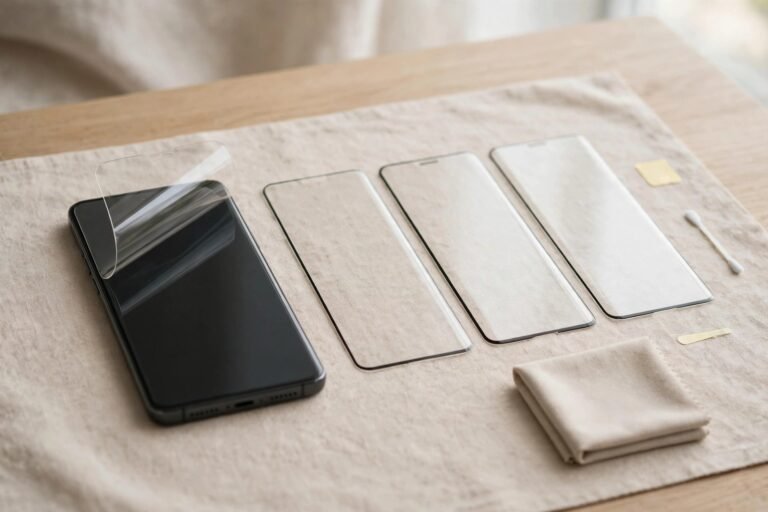
Fit a screen protector and a natural question follows: how long is it supposed to last? Some people peel theirs off within months because the edges have lifted and the surface is a map of scratches. Others keep the same sheet of glass for two years and it still looks respectable. The difference is rarely luck — it comes down to the material the protector is made from, how the device is used, and what “worn out” actually means for each type.
There is no single expiry date, because a protector does not usually stop working all at once. Instead, its structure and its surface coating wear at different rates, and once either fails, replacement is due. This guide sets realistic lifespan expectations for tempered glass, film and liquid protectors, and explains the signs that tell you yours has reached the end of its useful life.
Key Takeaways
- Tempered glass lasts until it cracks or chips — that can be a few weeks after an unlucky drop or the whole life of the phone.
- Film protectors scuff visibly within months of daily use and are usually replaced for appearance long before they fail structurally.
- Liquid coatings wear gradually over months and cannot be inspected visually, so they fade rather than end.
- The fingerprint-resistant coating wears out before the protector itself on most glass and film products.
- Lifting edges, cracks, haze and rough feel are the practical signals that replacement is due.
- How and where you use your device matters more than the calendar — dusty, active routines shorten any protector’s life.
Tempered Glass: Lasts Until It Breaks
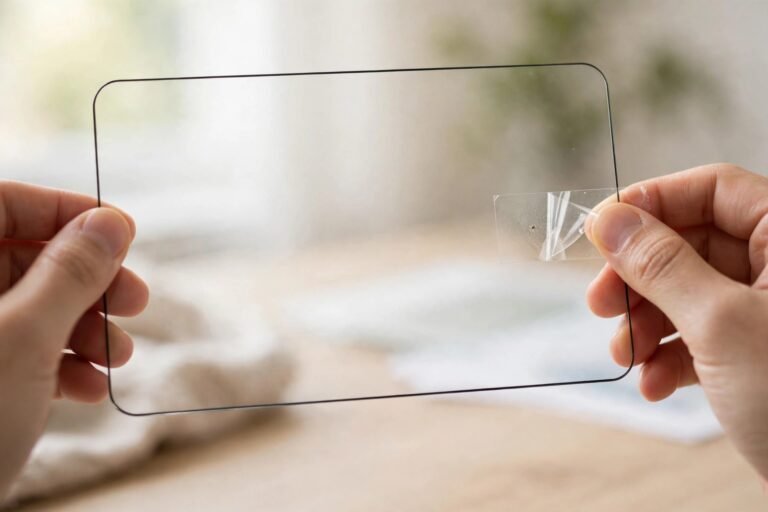
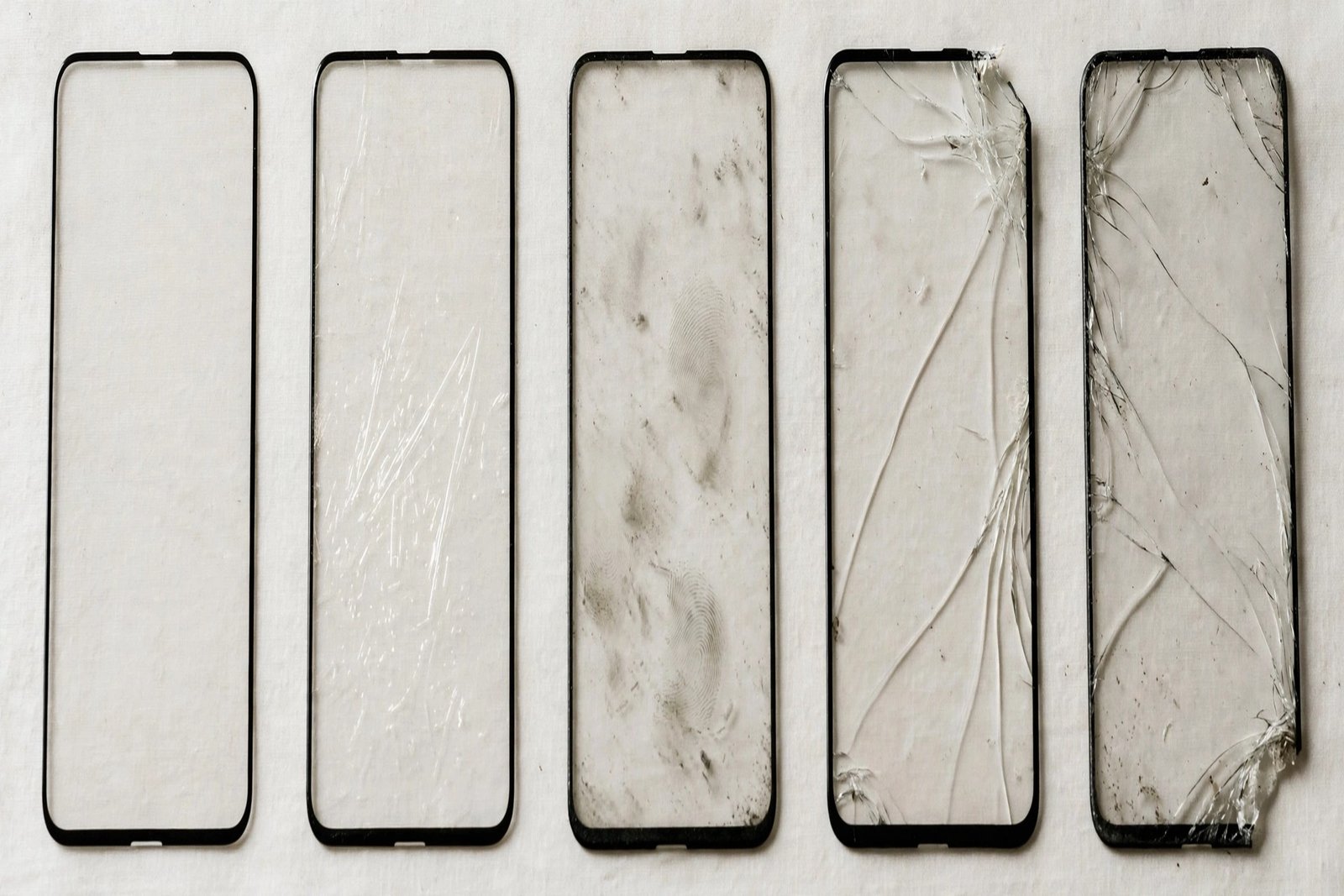
A tempered glass protector has no fixed lifespan because its end is usually decided by an event, not by gradual decay. Structurally, a good glass sheet can protect for as long as it remains intact — many owners keep one for a year or two, and some for the entire time they own the phone. But a single drop onto a hard surface can crack it on day three, and once cracked, chipped or lifting at a corner, its useful life is effectively over even if it still sits on the screen.
In practice, expect to replace a glass protector somewhere between every few months and every couple of years, depending on how often your phone meets hard floors and gritty pockets. Edge chips are the most common slow failure: a small chip at the border catches, lifts, lets dust under the adhesive, and the lifting spreads. Dirt creeping in from the edge tells you the bond — and therefore the protection — is going.
Film and Liquid: Gradual Wear Instead
Film protectors, whether basic plastic or more advanced self-healing types, wear on a schedule you can see. Fingernails, keys and everyday wiping gradually cover the surface with fine scuffs and a slight haze. Many films look noticeably tired after three to six months of typical use, and heavy users may find them shabby sooner. They rarely tear or fail suddenly; instead, people replace them because the screen no longer looks or feels good through them. A film that has yellowed or hazed has done its time, even though it may still be preventing new scratches underneath.
Liquid screen protectors are the hardest to judge because there is no visible layer to inspect. These products form a very thin coating that adds some resistance to fine scratches, and that coating is worn away gradually by friction, cleaning and everyday contact. Manufacturers’ claims about duration vary, and real-world wear depends heavily on use, but it is sensible to think in terms of months rather than years, with protection fading steadily rather than ending on a particular day. If you rely on a liquid coating, treat any suggested reapplication interval from the maker as a rough guide — there is no reliable way to test at home how much remains.
- Judge a glass protector by its edges and a film protector by its surface — edge lifting ends a glass protector’s life, while haze and scuffing end a film’s.
- If you use a liquid coating, note the application date in your calendar; since you cannot see it wear, the date is your only reminder.
The Coating Wears Out Before the Protector Does
One subtlety explains why a protector can be structurally sound yet feel finished. Phones and protectors carry an oleophobic coating — the invisible layer that makes glass feel slick and lets fingerprints wipe away easily. This coating is fragile and wears with every touch and clean. On a typical protector it may fade noticeably within a few months, sooner with frequent alcohol-based cleaning, after which the surface feels draggy, shows smudges constantly and needs firmer wipes.
Nothing is wrong with the protection itself at that stage — the glass underneath the coating still guards against scratches and knocks. But the daily experience declines enough that many people replace a protector for feel alone, and that is a perfectly reasonable decision. It also means headline lifespan claims need interpreting: a protector might protect for two years while only feeling factory-fresh for a fraction of that time.
Signs Yours Needs Replacing
Replace a protector when you see cracks of any size, chips on the edges, corners lifting or refusing to stay down, grit visible beneath the surface, persistent bubbles that were not there before, or a hazy, rough patch that cleaning does not shift. A protector that has started to peel is also a minor hazard — lifted edges can be sharp, and a partially detached sheet can catch and tear off at an awkward moment.
Your routine sets the pace more than any guideline can. Outdoor and manual work, sandy environments, phones carried loose with keys, and devices handed to children will all consume protectors faster — sometimes several glass protectors a year. A desk-based user with a good case might replace one only when upgrading the phone. Neither pattern is wrong; the sensible approach is to inspect your protector every month or so, replace on condition rather than on a fixed schedule, and keep a spare at home so a cracked protector never has to linger.
- Wipe the screen and hold it under a bright light at an angle — fine cracks, edge lifting and coating wear show up far more clearly than in normal room light.
- Avoid alcohol-heavy cleaners on protectors where possible; they strip the fingerprint-resistant coating faster and shorten the protector’s best-looking months.
Frequently Asked Questions
Can a screen protector last the whole life of a phone?
A tempered glass protector can, if the phone avoids hard knocks and the edges stay bonded. In practice many are replaced at least once along the way due to a crack, a chip or coating wear, but a careful user keeping the same glass for two or three years is not unusual.
How often should I replace a film protector?
Replace it on condition rather than by the calendar. For typical daily use, many films look and feel tired after roughly three to six months of accumulated scuffing and haze. If yours is still clear, smooth and fully adhered, there is no need to change it just because time has passed.
Does a worn protector still protect my screen?
Partly. A scuffed but intact film or glass sheet still prevents new scratches, and coating wear does not reduce structural protection. But a cracked, chipped or lifting protector has lost much of its value — it can no longer absorb impacts properly and may let grit reach the screen.
A protector’s job is to age in place of your screen. When it looks worn, cracked or tired, it is not failing you — it is showing you the damage your display never took.