

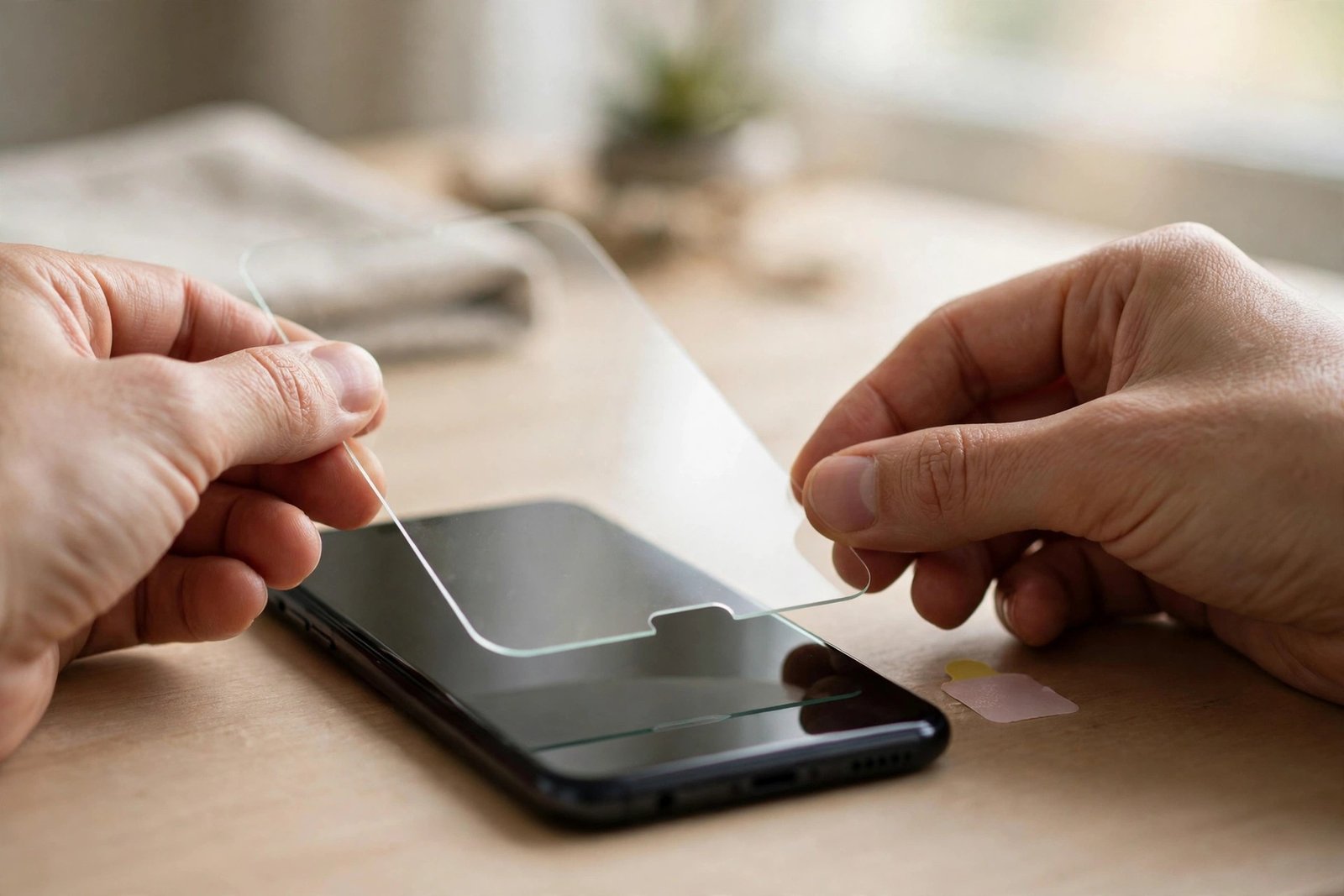
A screen protector that lifts at the corners or slides out of place usually is not broken — its adhesive has picked up dust, skin oil, or lint, and a dirty bond cannot grip. The encouraging news is that many protectors can be revived with nothing more than patience and a careful clean of both the sticky side and the screen itself.
This guide is deliberately honest about the limits. Cleaning can restore a bond that was only ever soiled, but it cannot rebuild adhesive that has worn away, stretched, or been contaminated with oils it has absorbed. Below you will find the revival method that gives a protector its best chance, and the clear signs that tell you the adhesive is finished and no amount of washing will bring it back.
Key Takeaways
- Most “dead” protectors are simply dirty — dust and oil on the adhesive are the commonest cause of lifting edges.
- Clean both surfaces: the protector’s sticky side and the phone screen. Reviving one and not the other rarely works.
- Use tape or a dust sticker to lift debris off the adhesive — never rub it with a cloth, which only spreads the grime.
- A protector removed within the first day or two has the best chance of going back on cleanly.
- If the adhesive feels dry, cloudy, or patchy, it has degraded — cleaning will not restore it.
- Work slowly and never touch the sticky surface with bare fingers during the refit.
Why Protectors Lose Their Grip
A protector’s adhesive is a thin layer of silicone-based glue designed to cling evenly across the whole screen. Every time the protector is lifted, flexed, or exposed to the air, that layer collects whatever it touches: pocket lint, dust from a desk, oils from fingertips. Each contaminant creates a tiny patch that cannot bond, and the patches spread until an edge lifts and the whole sheet starts to feel loose.
Age matters too. Heat from the phone, sunlight through a car window, and months of pressure gradually change the adhesive itself. It can dry out at the edges, turn slightly cloudy, or lose its even tackiness so that one corner grips while another floats. That kind of wear is not dirt, and it is the main reason revival attempts sometimes fail despite a thorough clean.
Clean Both Surfaces Properly
Start with the screen, because there is no point reviving a protector and laying it onto a dirty surface. With the old protector off, wipe the screen with a damp microfibre cloth, then buff it dry and finish with a dust-removal sticker, exactly as you would for a brand-new installation. Work somewhere calm and still, ideally a steamy bathroom, so airborne dust does not settle while you work.
Now the protector itself. Lay it sticky side up on a clean sheet of paper and inspect it under a bright light — you will usually see the specks and fibres that broke the bond. Press a fresh dust-removal sticker, or a loop of clean sticky tape, onto the adhesive and peel it away slowly; repeat section by section until the surface looks clear. For stubborn grime on a tempered glass protector, a gentle rinse in lukewarm water with the tiniest drop of washing-up liquid, followed by a thorough rinse and complete air-drying sticky side up, can lift oils that tape cannot. Film protectors should not be washed — tape only.
- If you wash a glass protector, let it dry completely — at least 30 minutes — before refitting. Trapped moisture under the glass causes fogging and weakens the fresh bond.
- Keep a second dust sticker in reserve for the moment of refitting; the adhesive will try to collect one last speck on the way down.
The Refit: Give It Its Best Chance
Treat the refit exactly like a first installation, because the conditions that made the original fitting succeed are the same ones a revival needs. Align the protector over the screen without letting it touch, using the speaker cutout and camera hole as your guides — or tape hinges along one long edge so it swings down in precisely the right place. Handle it by the edges only, and keep the sticky side facing down and sheltered from the air for as little time as possible.
Lower it from one edge and let the bond spread gradually rather than dropping it flat. Press gently from the centre outward once it lands, and give the corners and edges particular attention with a cloth-wrapped fingertip. Then leave the phone undisturbed — case off — for at least half an hour while the adhesive settles, and check the edges again after a day of normal use.
When the Adhesive Is Honestly Finished
Sometimes the clean works perfectly and the protector still will not stay down. Look for the tell-tale signs: the sticky surface feels dry rather than tacky when you brush the back of a knuckle near it, the adhesive looks milky or uneven under light, or specific patches refuse to bond no matter how clean everything is. A protector that has been peeled off and refitted several times, left sticky-side exposed for days, or baked on a hot dashboard has usually exhausted what its adhesive can do.
There is no shame in that outcome, and no sensible workaround — household glues, sprays, and tapes smeared under a protector can damage the screen, trap moisture, and make a later removal far worse. A protector is a consumable part that has done its job. If the revival fails, fit a fresh one from the pack and you will get the flat, firm bond that cleaning alone could not give back.
- Judge the result after 48 hours, not 48 minutes — a revived bond often improves as the adhesive flows back into full contact.
- If only one corner lifts after an otherwise good refit, check your case first: a tight case edge prising the corner up can look exactly like failed adhesive.
Frequently Asked Questions
Can I use tape on the adhesive without damaging it?
Yes — a dust-removal sticker or clean, ordinary sticky tape is the standard way to lift debris off the sticky side. Press it on gently and peel away slowly rather than scrubbing, and avoid strong industrial tapes, which can pull at the adhesive layer itself.
How many times can a protector be taken off and refitted?
Realistically, once or twice if it is handled carefully, cleaned each time, and refitted promptly. Every removal exposes the adhesive to more dust and flexing, so each attempt succeeds a little less well than the last — tempered glass generally survives the process better than thin film.
Will washing the protector ruin it?
Not if it is tempered glass and you wash it gently with lukewarm water, rinse it well, and let it dry completely sticky side up in a dust-free spot. Film protectors are different — their adhesive can cloud or separate when wet, so stick to the tape method for those.
A lifting protector is often one careful clean away from a second life. Clean both surfaces, refit it like a new one — and if the adhesive truly has given up, accept the verdict and reach for a fresh protector.


