A broken screen protector has done its job — it took the hit so your screen didn’t have to. But a cracked pane is no longer a single sheet of glass; it is a jigsaw of sharp-edged pieces, some still bonded, some loose. Peel it off carelessly and those fragments scatter across the desk, into your fingers, and possibly across the very screen you are trying to protect.
The safe method comes down to one golden rule: tape the whole face of the protector before you peel anything. The tape turns dozens of fragments back into one manageable sheet. This guide covers the full safety-first removal, from taping to sliver check to disposal.
Key Takeaways
- Tape the entire face first — overlapping strips hold every fragment together as one sheet.
- Work on a flat surface in good light, with a bin within arm’s reach for fragments.
- Peel slowly and low, supporting the sheet so pieces cannot spring free or scatter.
- After removal, inspect the bare screen carefully for slivers hiding along the edges.
- Pick up strays with sticky tape, never bare fingers, and wipe the area down afterwards.
- Wrap the removed protector before binning it — loose glass in a bin is a hazard for someone else.
Safety First: What Makes a Broken Protector Risky
The risks are small but real. Cracked tempered glass produces thin slivers along the fracture lines, and those slivers are sharp enough to prick skin or, worse, to scratch the phone’s actual screen if they are dragged across it under pressure. Pieces near the edges may already be fully detached, ready to drop the moment you pick the phone up.
So before anything else, change how you handle the phone. Keep it face-up and flat, do not press on the cracked area, and do not slide it across the table. If you wear glasses for close work, put them on — spotting hairline cracks and tiny slivers later depends on seeing clearly now. Children and pets are best kept out of the room until the glass is wrapped and binned.
Tape the Whole Face Before You Peel
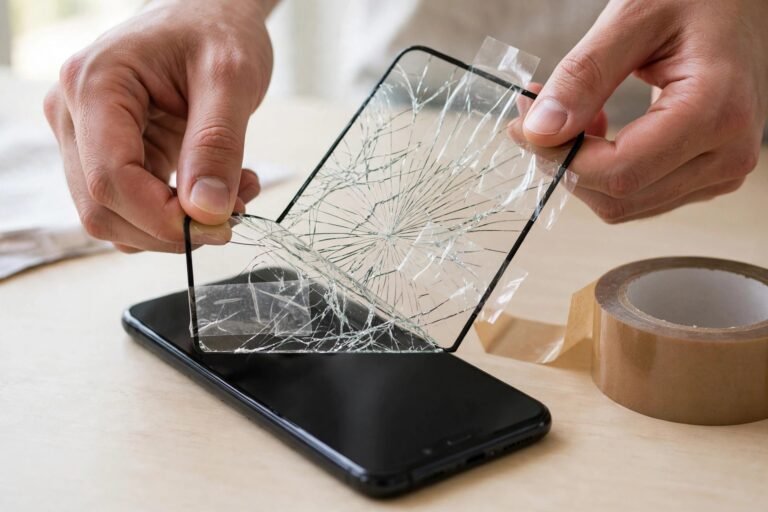
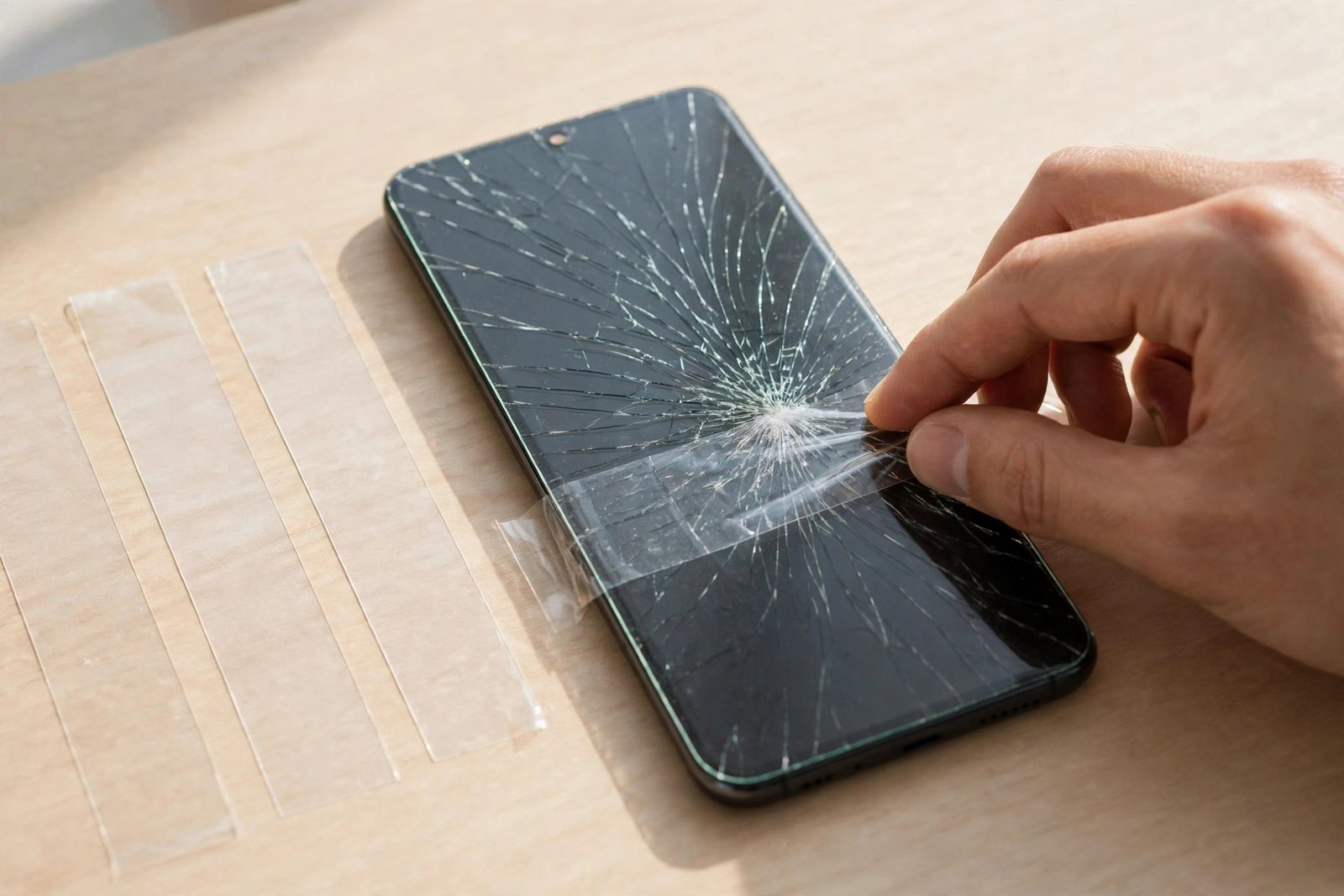
Take wide sticky tape — packing tape is ideal — and lay strips across the entire face of the protector, overlapping each strip over the previous one so no crack line is left uncovered. Press the tape down firmly all over, paying special attention to the edges and to any area where pieces look loose. You are building a single skin that holds every fragment in place.
Let a tail of tape extend past one corner of the protector. That overhang gives you a handle to start the peel with, which matters if the damage has left no corner intact enough for a fingernail. Gather the rest of your kit now:
- A bin or a sheet of paper to receive fragments
- A microfibre cloth and wet wipe for the clean-up afterwards
- Extra tape for picking up any stray slivers
- A soft plastic card, in case a section needs help releasing
- Press the tape down with the flat of your thumb through a cloth — firm pressure without dragging sharp edges across skin.
- If the screen underneath might also be cracked, tape and caution protect you either way; assess the damage after the protector is off.
Peel Slowly and Keep Fragments Contained
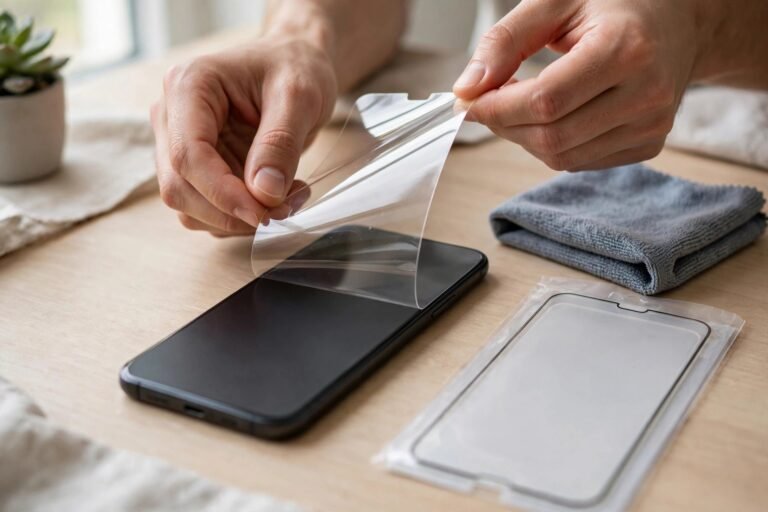
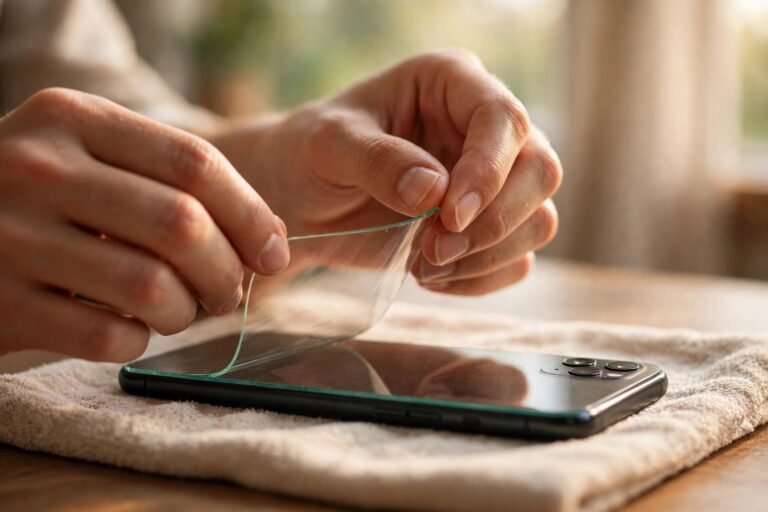
Remove the phone case, then start the peel from your tape handle or the most intact corner. Lift just enough to begin, then peel slowly, keeping the sheet low and close to the screen, supporting the freed section with your free hand so the tape skin carries the fragments. A section that resists is still bonded — ease a soft plastic card flat underneath it rather than pulling harder.
Work directly over the table, and as soon as the protector is free, fold the tape over its sticky, sharp underside or place it straight onto your waiting sheet of paper. If small pieces do escape onto the table, dab them up with a loop of sticky tape pressed gently over them — never sweep for glass with your palm, and never use a vacuum until every visible piece is accounted for, since fragments can lodge in the nozzle.
Check for Slivers and Clean Up Safely
With the protector off, inspect the bare screen in strong light, tilting the phone so reflections reveal anything left behind. Slivers love to hide along the edges and around the speaker and camera cutouts. Dab the whole screen with a fresh piece of tape to lift anything invisible, then wipe and buff as you would before fitting a new protector.
Wipe down the table surface too, and check the floor beneath where you worked. Then wrap the removed protector — still in its tape skin — inside the sheet of paper or its own packaging, and put it in the bin wrapped, so no sharp edge is exposed to whoever empties it. Wash your hands when you are done; microscopic glass dust is an irritant you do not want near your eyes.
- A bright torch held at a shallow angle makes slivers glint against the glass — the fastest way to confirm the screen is truly clear.
- Fit the replacement protector in the same sitting once the screen is verified clean; it guards against any speck you missed causing scratches.
Frequently Asked Questions
The protector shattered into tiny pieces — where do I start?
Exactly the same way: tape over the whole of it. Heavy shattering is actually where the tape method shines brightest, because the tape becomes the thing holding the puzzle together. Press the tape down gently but thoroughly, start from whichever corner lifts most easily, and peel even more slowly than usual, supporting the sheet fully.
Can a broken protector scratch the real screen underneath?
It can, if fragments are dragged across the glass under pressure while loose — which is why the taping and the no-sliding rule matter. In most cases, though, you will find the screen underneath completely unharmed once the protector is off: the cracks belonged to the protector, and it absorbed the damage as designed.
How do I dispose of the broken pieces safely?
Keep the fragments in their tape skin, wrap the whole lot in paper or the replacement protector’s packaging, and place it in your household bin wrapped, never loose. If your local recycling scheme has a specific route for glass, follow it — but ordinary phone-protector glass is not container glass, so most people simply bin it, safely wrapped.
Tape it all, peel it slowly, hunt the slivers, wrap the remains: a broken protector comes off safely when the fragments never get the chance to wander.