Few moments are worse than picking up a dropped phone and seeing a web of cracks across the front. Your first thought is an expensive screen repair — but hold on. If you have a screen protector fitted, there is a very good chance the damage stops at that sacrificial layer, and the screen underneath is completely untouched.
This guide shows you how to work out which layer is actually cracked before you spend a penny. You will start with simple visual checks that need no tools at all, then finish with the one test that settles the question beyond doubt: lifting a corner of the protector and looking underneath.
Key Takeaways
- A cracked protector and a cracked screen can look almost identical at first glance — never assume the worst.
- With the screen switched off and light raking across it, a crack in the protector sits visibly on the surface.
- Cracks that stop dead at the protector’s edge are in the protector, not the screen.
- If the picture and touch response underneath are flawless, the screen itself is very likely intact.
- Lifting one corner of the protector is the conclusive test — it takes ten seconds and ends all the guessing.
Step 1: Inspect With the Screen Switched Off
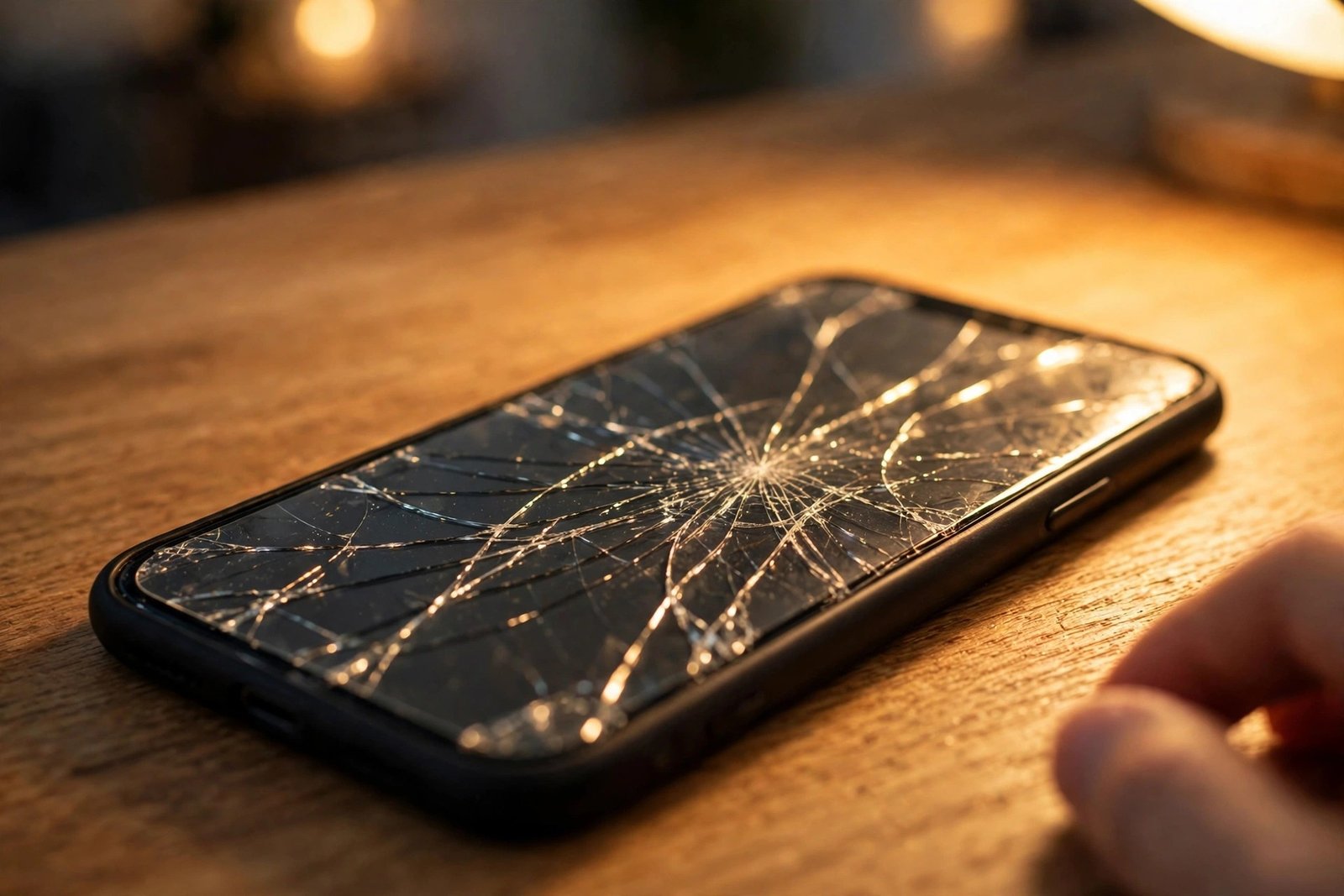
Switch the phone off completely, or open a plain black image and turn the brightness down. With the display dark, cracks stop competing with bright content and reveal themselves by reflection alone. Hold the phone under a lamp or beside a window and tilt it slowly from side to side.
A crack that lives in the protector will catch the light as a bright, sharp line sitting on top of the dark glass, and it will appear and disappear as the angle changes — exactly like a scratch on a windowpane. A crack in the screen itself tends to look deeper and duller, and it may show faint rainbow colours along its length where the fractured layers of the display separate the light. Neither clue is proof on its own, but together they give you a strong first impression.
Step 2: Read the Pattern of the Cracks
Next, look at where the cracks begin and end. Protector cracks almost always radiate outwards from the point of impact — the corner that hit the floor, or the spot where the keys landed — and they are contained within the protector’s outline. Trace any line with your eye towards the border of the phone: a crack that fades out or halts cleanly at the edge of the protector is a crack in the protector’s layer only.
The warning sign is the opposite: a hairline that continues past the protector’s edge onto the exposed glass margin near the bezel, or one that seems to run underneath an intact area of protector, suggests the screen itself has fractured. Also test the basics — swipe across every part of the display, and look for dead patches of touch or distorted colours along the crack’s path. A screen that is cracked beneath usually betrays itself in the picture or the touch response.
- Take a photo of the cracks with another phone or camera, then zoom in — fine hairlines and the exact point where a crack stops are far easier to see magnified.
- Run a fingernail very lightly across the crack. If your nail catches sharply on the surface, the fracture is at least partly in the top layer.
Step 3: The Corner-Lift Test — The Conclusive Check
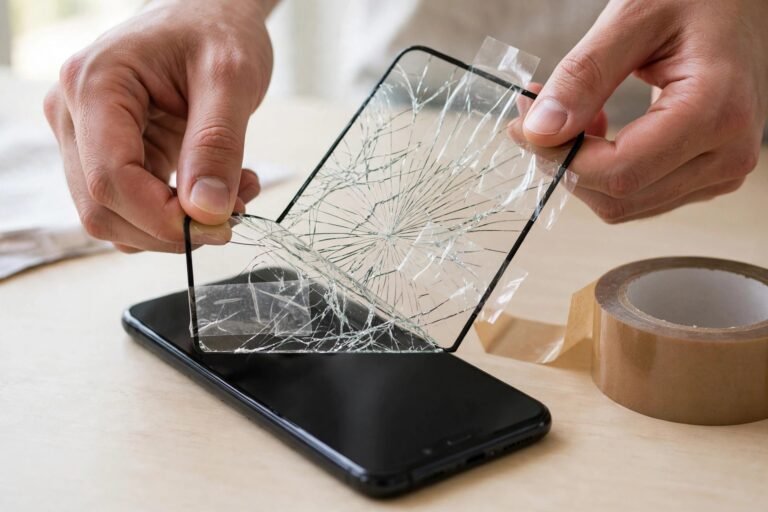
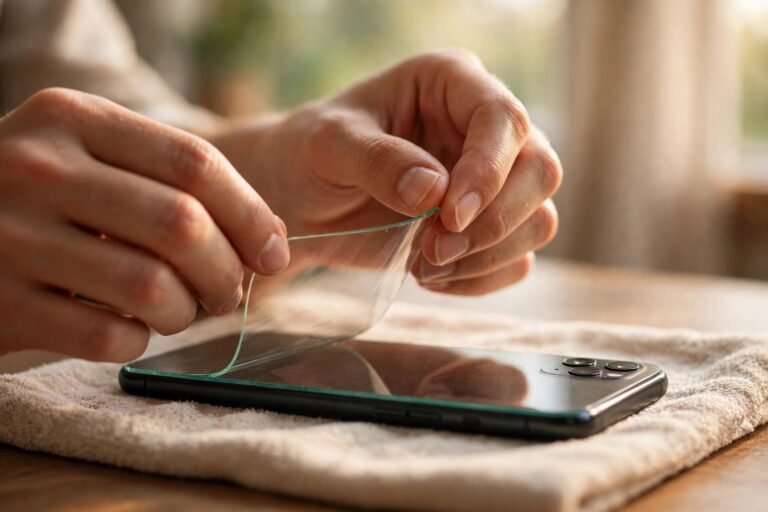
If the visual checks leave you in any doubt, this settles it. Choose the corner of the protector nearest to the cracks, slide a fingernail or the edge of a piece of tape under it, and lift it slowly — just a centimetre or two is enough. Work gently and keep the protector low; if it is tempered glass and heavily shattered, lay a strip of packing tape over the cracks first so the fragments stay together.
Now look at the glass revealed underneath. If the screen below is smooth, clean and crack-free, and the cracks lift away with the protector as you peel, you have your answer: the protector did its job and sacrificed itself. If, as the protector comes up, the crack stays behind on the phone — identical lines still visible on the bare glass — then the screen is cracked as well, or instead. There is no ambiguity with this test, which is why repair shops use exactly the same method.
What to Do Once You Know
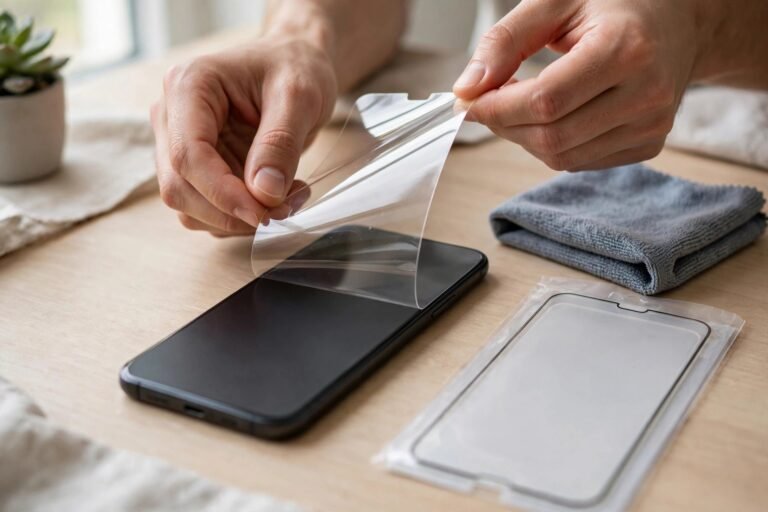
If it is only the protector, the fix is cheap and quick: peel the old one off completely, clean the screen thoroughly with a wet wipe and a microfibre cloth, and fit a fresh protector. Take a moment to enjoy the fact that a part costing very little just absorbed a blow meant for a screen that costs a great deal more to replace.
If the screen itself is cracked, back up your data first — a fractured screen can deteriorate, and touch failure can lock you out. A new protector fitted over a cracked screen is a reasonable temporary measure to keep shards contained and the surface smooth, but it is not a repair; get the display assessed, especially if cracks are spreading or the picture is affected.
- Do the corner-lift test over a table, not your lap — a shattered glass protector can shed tiny fragments as it peels.
- If the protector lifts but you are still unsure, peel it halfway and compare: the boundary between covered and uncovered glass makes any screen crack obvious.
Frequently Asked Questions
Can the crack be in both the protector and the screen?
Yes — a hard enough impact can fracture both layers. The corner-lift test reveals this clearly: some cracks lift away with the protector, while matching or additional lines remain on the bare glass underneath. Any crack that stays on the phone belongs to the screen.
Touch and picture are perfect — does that prove the screen is fine?
It is a very good sign, but not absolute proof. A fine hairline crack in the outer glass of the screen can exist while the display and touch layers beneath still work normally. If everything functions and the crack lifts away with the protector, you can be confident; if a line remains on the glass, treat it as screen damage even if it works for now.
Is it safe to peel off a cracked tempered glass protector?
Yes, with a little care. Cover the cracked area with packing tape before you start so the fragments peel away as one sheet, lift from a corner slowly, and dispose of the pieces wrapped in paper. Wash your hands afterwards to remove any glass dust.
Do not price up a screen repair on looks alone. Ten minutes of checks — and one careful corner lift — will tell you whether you need a new protector or a new screen.