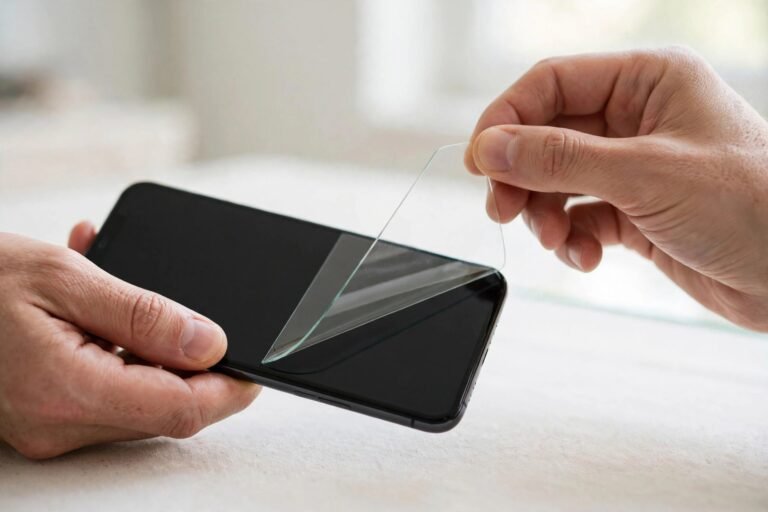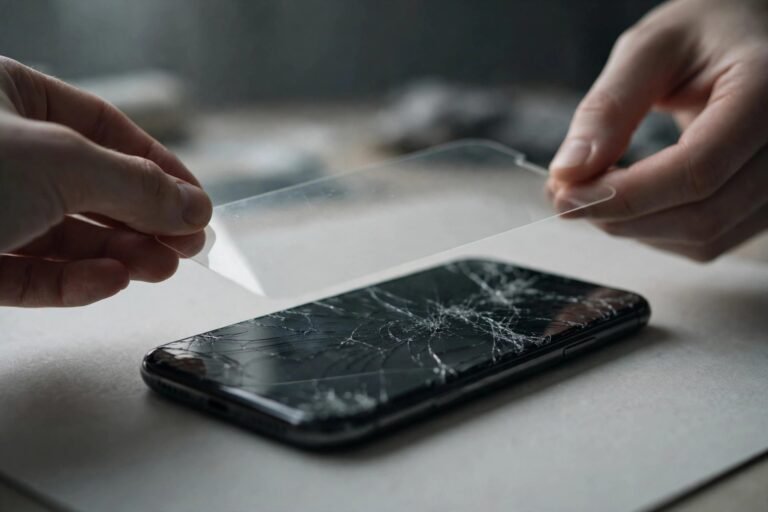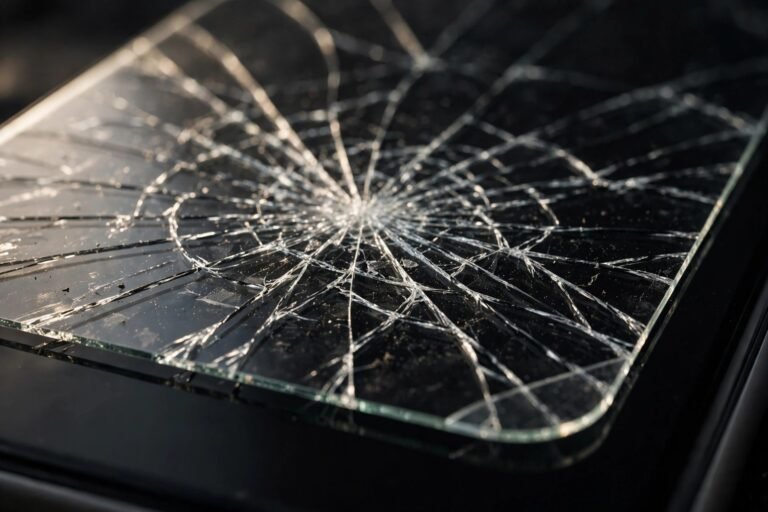
Most Apple Watch screen protectors peel off in seconds. But if yours has been baked on through months of workouts, swimming and sunshine, it can feel welded to the glass — and the harder you pick at it, the more it feels like something is about to break. If you can’t remove your Apple Watch screen protector, take heart: it will come off, and the secret is patience, warmth and the right kind of tool, not force.
A stuck protector is usually stuck for a simple reason: its adhesive has cured hard and bonded fully to the curved edges of the watch face. Brute force risks scratching the display, chipping the protector into sharp fragments, or levering against the watch case itself. This guide works through the safe methods in order — warmth, water, floss and plastic tools only — and explains how snap-on case-style protectors, which trap owners in a different way, come off altogether differently.
Key Takeaways
- Stuck protectors need softened adhesive, not more force — warmth is the single most effective trick.
- A short soak or rinse in warm (not hot) water loosens most adhesive films and softens glass protector glue.
- Dental floss or fishing line worked gently under a lifted edge saws through adhesive without touching the screen with anything hard.
- Use plastic tools only — a plastic pry pick, an old bank card, or your fingernail. Never metal: one slip can score the display or the case.
- Always work from an edge or corner, lifting a fraction at a time; never pry from the middle and never twist.
- Snap-on case-style protectors do not peel at all — they unclip, and forcing them like a film protector can crack the case or the protector.
Step 1: Soften the Adhesive With Warmth and Water
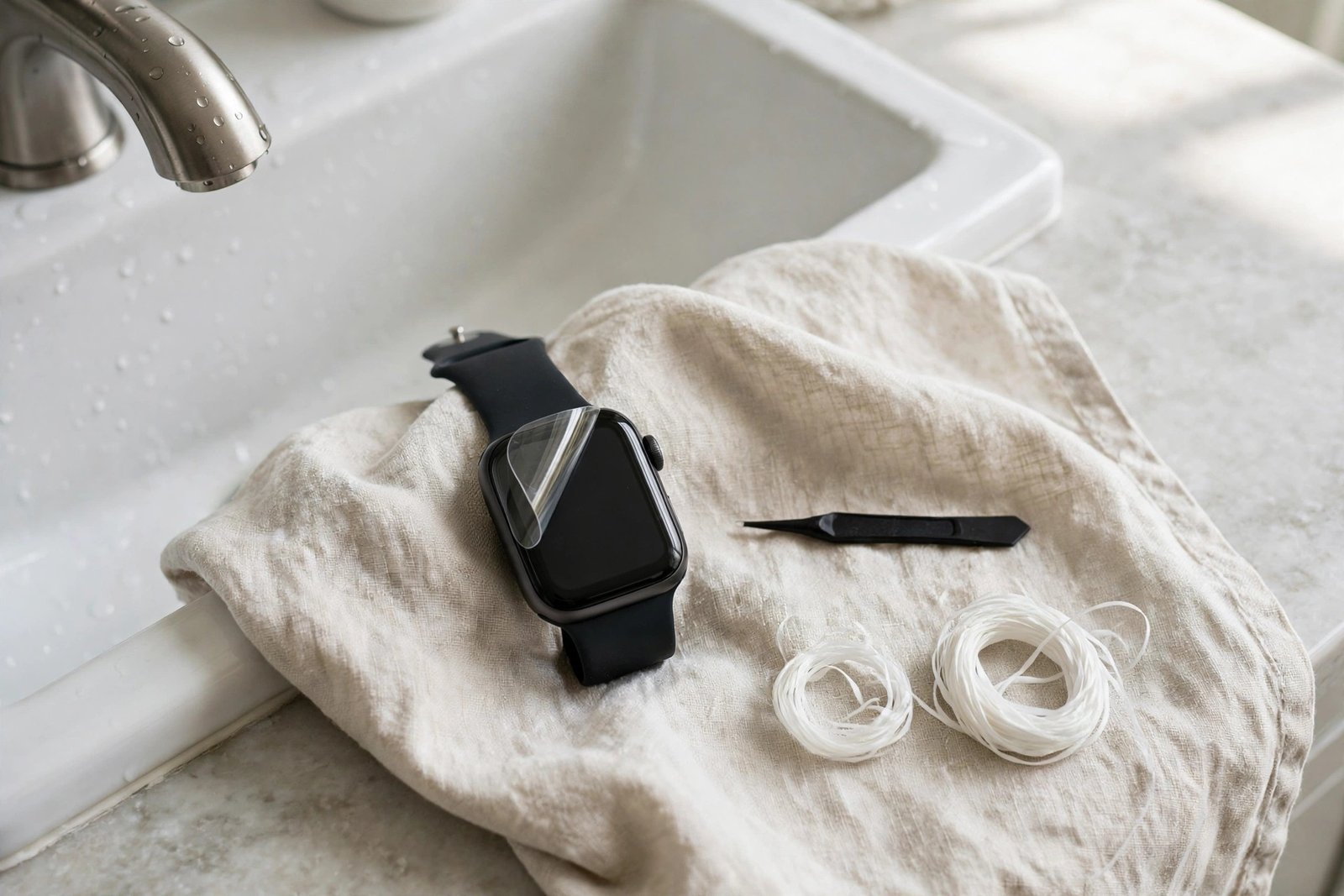
Start by taking the watch off your wrist and removing the strap if it detaches easily — you want full access to every edge. Then warm the protector. Holding the watch under a gentle stream of warm tap water for thirty seconds to a minute works well, and Apple Watch models are water resistant enough for a rinse, though you should avoid pressing buttons underwater and skip this entirely if the watch screen itself is already cracked, since water can get in through damage. Alternatively, a warm, damp cloth laid over the face for a few minutes, or a brief blast of warm air from a hairdryer held at a distance, achieves the same softening. Heat is your enemy here only in excess — warm, never hot.
Once warmed, try the edge again with a fingernail. Very often the adhesive that felt like concrete when cold gives just enough to let a nail into one corner. If it does, stop pulling upwards and move to the floss method below — the goal is to separate the adhesive progressively, not to win a tug of war with it.
Step 2: Saw the Adhesive With Floss
Take a length of dental floss or light fishing line, wrap the ends around your fingers, and slide it under the corner you lifted, keeping it flat against the glass. Work it back and forth in a gentle sawing motion, moving slowly across the watch face. The floss cuts through the softened adhesive layer without any hard object ever pressing or scraping against the display, which is why repair technicians use the same trick on phones. Keep the floss low and flat; if it keeps slipping out, re-warm the watch and try a different corner.
If there is no lifted corner to start from, create one with a plastic pry tool or the edge of an old plastic card: press it gently against the protector’s edge at a shallow angle, wiggle rather than lever, and work around the perimeter until some part of the edge gives. A drop of warm water at the edge can help capillary action creep under the adhesive. Take breaks and re-warm as needed — three patient attempts will beat one forceful one every time.
- Never reach for a metal knife, screwdriver or razor to start an edge. The watch face curves, the tool will slip, and a single scratch across the display costs far more than the protector you were trying to save. Plastic and patience only.
If Yours Is a Snap-On Case-Style Protector
Some “protectors” for Apple Watch are actually rigid cases with a built-in front cover that snap over the whole watch body. These do not peel, and sawing at their edges with floss gets you nowhere — owners who treat them like a stuck film protector sometimes crack the case or, worse, lever against the Digital Crown or side button. To remove one, find the seam where the case meets the watch body (usually along one side), and gently flex or pry the case open with a fingernail or plastic tool at that seam, working away from the crown. It should pop free with modest pressure in the right spot; if it will not move at all, check the maker’s instructions, because some designs have a specific release point.
After removal — whichever style you had — clean the watch face with a soft, slightly damp microfibre cloth to clear adhesive residue. Stubborn residue softens with warmth and gentle rubbing; avoid solvents on the watch. Check the edges of the display for any protector fragments before fitting a replacement, and if the old protector was tempered glass, shake out and wipe the area you worked over — small glass chips have a habit of hiding exactly where your fingers are about to press.
- If a tempered glass protector cracks while you are removing it, cover it with clear tape before continuing — the tape holds the fragments together so the protector comes away in one piece instead of shedding shards.
Frequently Asked Questions
Can I use a hairdryer on my Apple Watch?
Briefly and carefully, yes — warm air on a low setting, held well back and kept moving, softens adhesive effectively. Do not use high heat or hold it close: excessive heat can damage seals and the display. A warm water rinse or a warm damp cloth is the gentler option and usually all you need.
The protector is cracking as I lift it. What should I do?
Stop, lay clear tape over the whole protector to bind the fragments, then continue with the floss method, working slowly from the least damaged edge. Tape keeps the pieces together and protects your fingers and the screen from loose glass.
Will removing a stuck protector damage the watch?
Not if you stick to warmth, water, floss and plastic tools, and never lever against the crown or buttons. Damage stories almost always involve metal tools or twisting force. If the protector genuinely will not budge after repeated warming, a jeweller or watch repairer can remove it quickly with proper tools.
A stuck protector is a test of patience, not strength: warm it, floss it, lift it a fraction at a time — and it will surrender without a mark on the watch.