If you have just unboxed an iPhone 14, iPhone 14 Plus, iPhone 14 Pro or iPhone 14 Pro Max, you might be looking at the thin sheet covering the display and wondering whether Apple has already fitted a screen protector for you. It is an understandable question, because that sheet looks protective at first glance and many other brands do pre-apply a film before shipping.
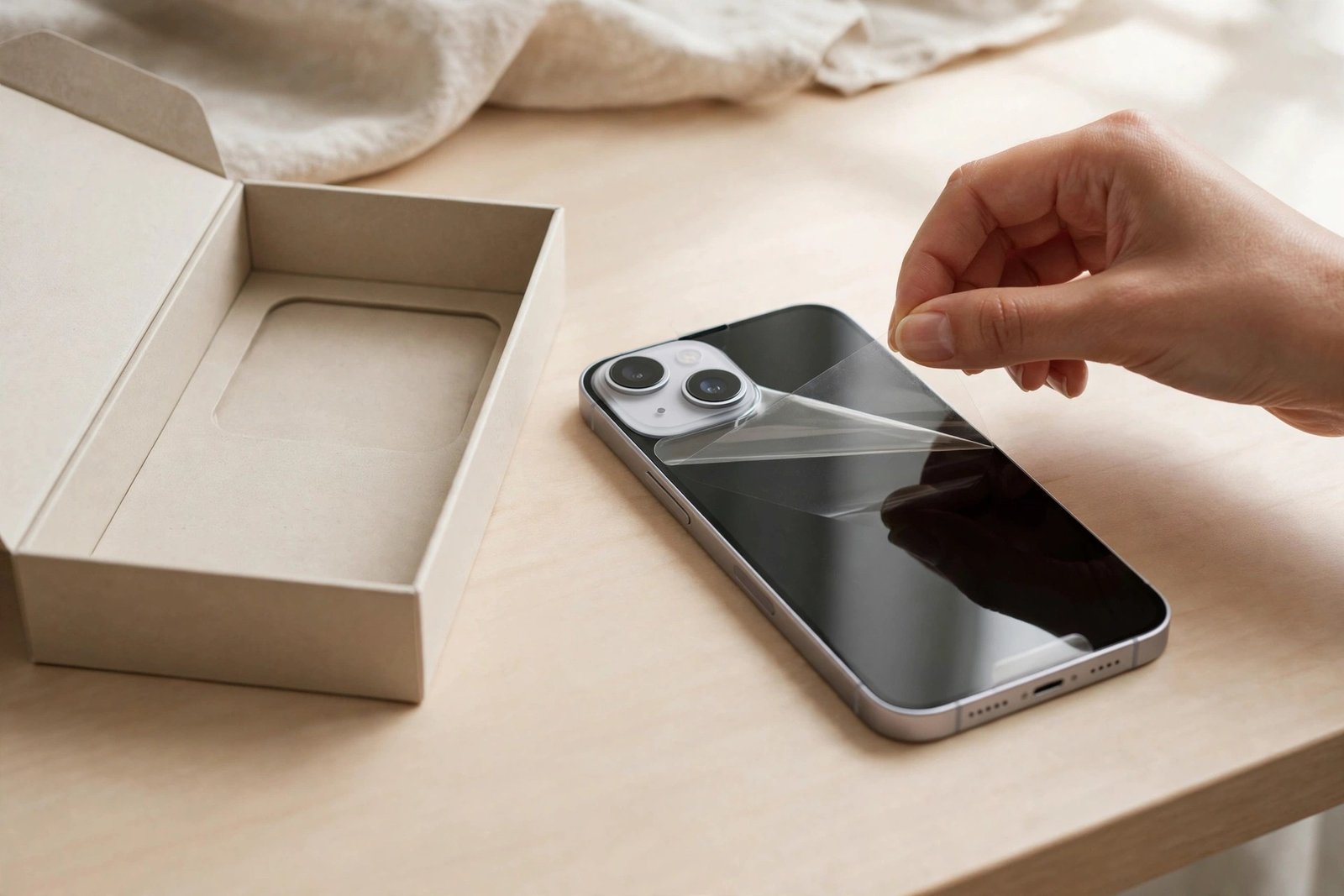
The short answer is no. No model in the iPhone 14 family comes with a proper screen protector fitted, and there is no spare protector hidden in the box either. What you get is a temporary transit film designed to guard the glass during shipping and handling only. Once you understand what that film is — and what it is not — you can decide how quickly you need to fit real protection.
Key Takeaways
- No iPhone 14 model includes a screen protector — not pre-fitted and not as a separate accessory in the box.
- The sheet on the screen from new is a temporary transit film for shipping, not a protector for everyday use.
- The same applies across the whole family: iPhone 14, 14 Plus, 14 Pro and 14 Pro Max are all supplied the same way.
- Apple relies on Ceramic Shield glass for toughness, but it can still scratch and can still crack in a drop.
- Fitting a tempered glass protector on day one, before the screen picks up dust or micro-scratches, gives the cleanest result.
- Remove the transit film only when you are ready to clean and fit your chosen protector or start using the phone.
What Is Actually in the Box
Apple kept the iPhone 14 packaging deliberately minimal. In the box you will typically find the phone itself, a USB-C to Lightning cable, and a small packet with documentation and an Apple sticker. There is no charger, no earphones, no case and no screen protector. The contents are broadly the same for all four iPhone 14 models, although exact box contents can vary slightly by region and retailer, so it is worth checking your own packaging if you bought through a carrier bundle.
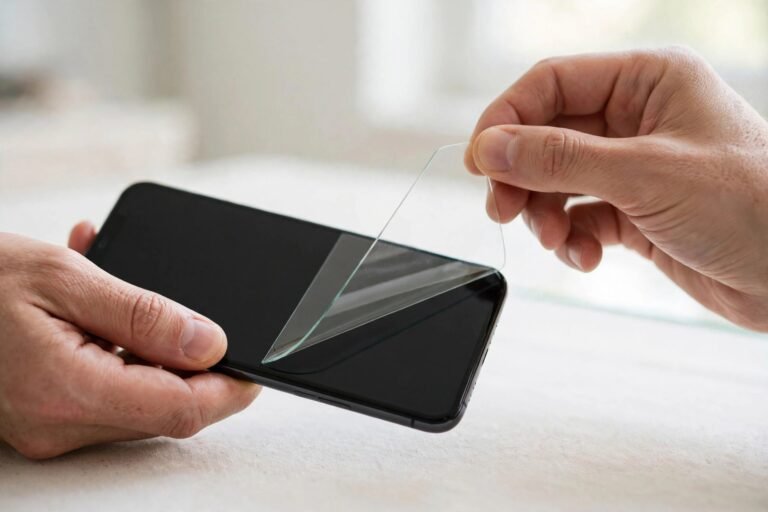
The film you peel off the display is part of the packaging rather than an accessory. It often has a small tab to help you lift it, and it is not cut with the precise speaker and sensor openings you would expect from a real protector. Leaving it on for more than a short period is not a good substitute for protection either, because it marks easily, lifts at the edges, dulls the display and can interfere with touch and clarity. It was never designed to stay on the phone.
Why Apple Ships Only a Transit Film
Apple’s position has consistently been that its display glass is tough enough for most people, and with the iPhone 14 range it promoted Ceramic Shield as a more durable cover material. That confidence is part of the reason the company does not bundle a protector. The other part is simplicity and waste reduction: a thinner box means less packaging overall, and Apple has moved steadily towards supplying fewer accessories with each generation.
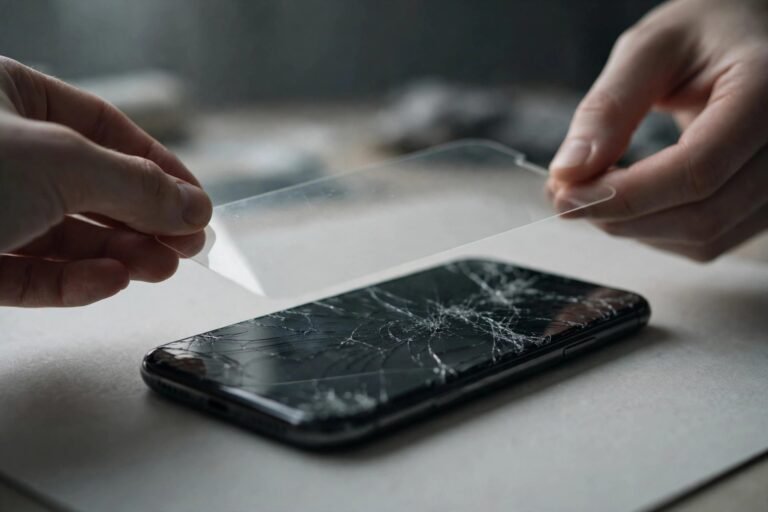
Durable glass, however, is not the same as undamageable glass. Hardness that helps resist a drop does not fully prevent scratches from keys, coins, sand or grit in a pocket or bag, and those fine marks are exactly what a protector is good at preventing. A protector also acts as a sacrificial layer. If it cracks, you replace an inexpensive sheet of glass rather than paying substantially more, in most cases, for a display repair. Prices for repairs and protectors vary by country and provider, so treat any figure you see as approximate.
- Do not throw the transit film away the moment you open the box if you are not fitting a protector straight away. Leave it in place until you are ready, so the pristine screen stays dust-free and scratch-free in the meantime.
Should You Fit a Protector on Day One?
For most owners, yes. The best time to fit any protector is when the screen is brand new, perfectly clean and free from the tiny scratches that accumulate surprisingly quickly in everyday use. Even a few days carried without protection can leave faint marks that then sit visibly under a new protector and cause small bubbles where dust has settled into them. Fitting on day one avoids that entirely and takes only a few minutes.
That does not mean a protector is compulsory. If you always use a case with a raised lip, keep your phone in its own pocket away from hard objects, and accept the small risk of cosmetic marks, you may prefer the feel of the bare glass. The decision comes down to how you use the phone and how much a scratched screen would bother you. What matters is making the choice knowingly, rather than assuming Apple has already protected the display for you when it has not.
Choosing and Fitting Your First Protector
Tempered glass is the most popular choice for the iPhone 14 family because it feels like the original screen, preserves clarity and offers a good balance of scratch and impact protection. Film protectors are thinner and less noticeable but generally offer less drop protection. Whichever you choose, make sure it is listed specifically for your exact model. The standard iPhone 14 and iPhone 14 Pro share a similar display size but are not identical devices, and the Plus and Pro Max are larger again, so protectors are not interchangeable across the range.
When you are ready to fit it, peel off the transit film, clean the screen thoroughly with the wipes supplied in most protector kits, and work somewhere with low dust — a steamy bathroom after a shower is a popular trick for this reason. Use any alignment frame included in the kit, lower the glass into place without touching its sticky side, and let the adhesive spread before pressing gently from the centre outwards. Small bubbles often settle within a day or so as the adhesive cures fully.
- Fit the protector before you put a case on for the first time. A case-friendly protector leaves a small gap at the edges so the case does not lift it, and fitting protector first makes alignment much easier.
Frequently Asked Questions
Is the film on a new iPhone 14 a screen protector?
No. It is a temporary transit film applied to protect the glass during manufacture, packing and shipping. It lacks the hardness, precise cut-outs and durable adhesive of a real protector, and it is meant to be removed before normal use.
Does the iPhone 14 Pro come with a protector because it costs more?
No. The iPhone 14 Pro and Pro Max are supplied in exactly the same way as the standard models, with a transit film only and no protector in the box. The higher price reflects the display technology, cameras and materials, not bundled screen protection.
Do I need a protector if my iPhone 14 has Ceramic Shield?
Ceramic Shield improves drop toughness, but it does not make the screen scratch-proof or crack-proof. A protector remains a sensible, relatively inexpensive way to guard against everyday scratches and to take the first impact in a fall, even on a phone with durable glass.
Your iPhone 14 arrives with packaging film, not protection — peel it off when you are ready, fit a proper protector while the glass is still pristine, and your screen will thank you for it months from now.