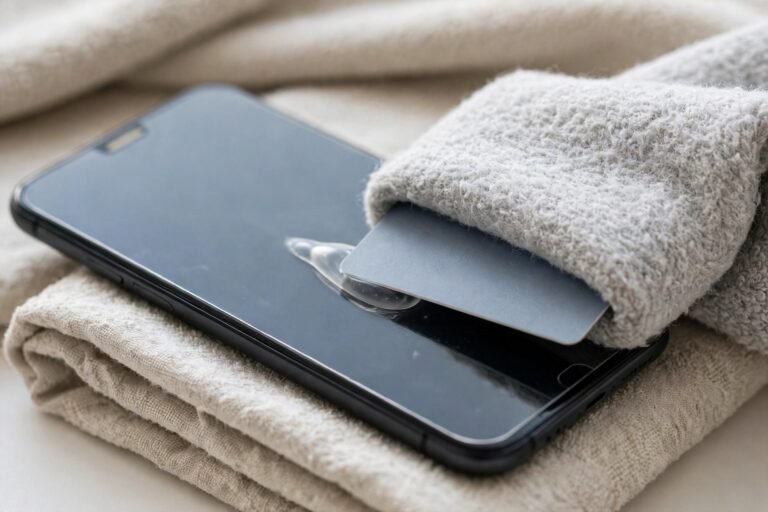
Phone glass has never been tougher, and every year the marketing says it is tougher still. So it is a fair question: with modern flagships surviving drop tests that would have killed older phones, do you actually need a screen protector at all? The honest answer is that it depends far less on the phone than on you — how you carry it, where it spends its day, and what a scratched or cracked screen would cost you in money and irritation. This guide lays out both sides so you can decide with your eyes open.
There is no universal right answer here, and anyone who gives you one is selling something. What follows is the practical case for and against, plus a simple way to judge which camp your own habits put you in.
Key Takeaways
- Modern phone glass resists cracks better than ever, but it still scratches at roughly the same rate it always has — hardness against drops is not hardness against sand and keys.
- A protector is sacrificial insurance: a cheap, replaceable layer that takes the damage instead of the screen.
- Your daily habits matter most — bare pockets with keys, building sites, beaches, and toddlers all push strongly towards fitting one.
- Resale and trade-in values reward pristine screens; a scuffed display can cost far more than years of protectors.
- The trade-offs are real but small: a slight change in feel, occasional fit quirks with cases, and a few minutes to fit.
- If you skip a protector, a case with a raised lip becomes non-negotiable — it is your last line of defence for face-down drops.
What Modern Glass Actually Protects Against
Each generation of phone glass is engineered primarily to survive drops without cracking, and by that measure the improvement is genuine. But there is a physical trade-off baked in: glass formulated to flex slightly and absorb impact is not necessarily harder at the surface, and hardness is what resists scratches. In practice, current flagship glass still scratches from the same everyday culprits it always did — sand, grit, dust in a pocket, and the minerals in soil, all of which are harder than any phone glass.
This is why so many people who have “never cracked a screen” still end up with a display covered in fine, hairline scratches that catch the light. They are cosmetic, they do not affect how the phone works, and some owners genuinely do not care. But they are effectively permanent — you cannot polish them out — and they accumulate from the most mundane contact imaginable. A phone carried loose in a pocket or handbag picks them up whether it is dropped or not.
The Case for Fitting One
The argument for a protector is essentially about asymmetry of cost. A protector is one of the cheapest accessories you can buy for a phone, and fitting one takes minutes. A screen replacement on a modern flagship, by contrast, is one of the most expensive repairs there is — sometimes a substantial fraction of the phone’s value — and even a successful repair means time without the phone and the risk of losing water resistance. Against that, a layer of glass or film that sacrifices itself looks like a very reasonable trade.
Then there is resale. Phones are routinely traded in or sold on, and graders are ruthless about screens: a display with visible scratches or a crack drops the valuation sharply, often by more than the total cost of every protector you would fit over the phone’s life. If you tend to sell your phones, a protector is close to free money. It also keeps the phone pleasant to use day to day — a smooth, unmarked surface, and a fingerprint-resistant coating that you can renew simply by swapping the protector.
- Think of it as an honesty test: have any of your previous phones ended their life with a scratched or cracked screen? If yes, your habits have already answered this question.
- Fit the protector on day one, before the first scratches land. A protector over an already-scuffed screen locks the damage in underneath it.
The Case for Skipping It
The arguments against are legitimate, and they are mostly about experience. A bare screen feels exactly as the manufacturer intended — the smoothest possible glass, the best clarity, and oleophobic coating applied to the display itself. Some protectors slightly reduce touch sensitivity or clarity, film ones can feel plasticky, and badly fitted glass can lift at the edges, collect dust, or fight with your case. If you are meticulous — phone in its own pocket, always in a good case, never on gritty surfaces — your real-world scratch risk is genuinely low.
There is also a philosophical camp: a phone is a tool to be used, not an heirloom to be preserved, and a few hairline scratches after two years of daily service are simply honest wear. If that is you, and the resale hit does not matter because you run phones until they die, skipping the protector is a perfectly coherent choice. Just be honest about the one risk you cannot mitigate: no amount of care eliminates the freak drop onto concrete, and bare glass takes that impact directly.
So, Which Camp Are You In?
Fit a protector if any of these sound familiar: your phone shares a pocket or bag with keys, coins, or tools; you work outdoors, on site, or anywhere near sand and grit; children regularly get hold of your phone; you plan to sell or trade it in; or a surprise repair bill would genuinely sting. That profile covers most people, which is why protectors remain so popular despite tougher glass.
Skipping is reasonable if you are consistently careful, always use a case with a raised lip, keep your phones until they are worth little anyway, and would honestly rather have the perfect bare-glass feel than protection against cosmetic damage. Whichever you choose, choose it deliberately — the worst outcome is drifting unprotected by default and discovering the cost of a screen the hard way.
- Undecided? Fit a protector for the first month with a new phone, when drops are likeliest while you adjust to its size and grip. You can always remove it later — scratches cannot be un-happened.
- If you go bare, enable any touch-sensitivity or glove settings your phone offers only if needed — and keep a microfibre cloth handy; a clean bare screen shows scratches far less.
Frequently Asked Questions
Does a screen protector affect how the phone feels to use?
Slightly. Tempered glass feels very close to the bare screen, which is why most people choose it; film protectors feel a touch softer and can show a faint texture. A well-fitted glass protector is something most users stop noticing within a day.
If my phone has very tough glass, can it still scratch?
Yes. Drop resistance and scratch resistance are different properties. Sand and grit contain minerals harder than any phone glass, so a day at the beach or a gritty pocket can leave hairline scratches on even the toughest current displays.
Is a case alone enough protection?
A case with a raised lip protects well against face-down drops onto flat surfaces, which are common. It does nothing against scratches from grit, or against impacts from uneven surfaces that reach past the lip. Case plus protector covers both failure modes; either alone covers one.
Tougher glass has changed the odds, not the stakes: if your habits or your resale plans make a damaged screen expensive, a protector remains the cheapest insurance your phone can wear.